
GLOBAL ENTERPRISE

China to adopt more targeted monetary policy to spur economy and high quality growth

Angela Tan
Angela Tan

Published Tue, Jan 10, 2023 · 08:00 PM
    • Natixis' Jianwei Xu says the Chinese economy will be supported by rising consumption, though he warned there could be potential shocks from the property sector.
    • Natixis' Jianwei Xu says the Chinese economy will be supported by rising consumption, though he warned there could be potential shocks from the property sector. PHOTO: AFP

    CHINA will adopt a monetary policy that is more targeted to fuel its economic recovery, a top official said, but economists fear that deep structural issues will challenge the growth.

    In a recent interview with Xinhua, China Banking and Insurance Regulatory Commission chairman Guo Shuqing said this year’s monetary policy would focus on expanding effective demand and deepening supply-side reform.

    “Converting the current total income into consumption and investment to the maximum extent possible is the key to faster economic recovery and high-quality growth, and financial services have a lot to offer in the process,” said Guo, who is also party secretary of the People’s Bank of China (PBOC). 

    Efforts will be aimed at increasing the incomes of low- and middle-income groups and those badly affected by the Covid-19 pandemic. This will be done through various channels, including encouraging spending on big-ticket items such as homes and automobiles, and bolstering support for service consumption.

    China will also drive infrastructure investments and funding as well as improve financial services for foreign trade, in particular with emerging economies and developing countries. Help will also be rendered to private enterprises by ensuring they have access to adequate funding, initial public offerings and bond issuance.

    Guo said the government has also concluded its investigations into the financial businesses of 14 Internet companies including Tencent, Baidu, Meituan and Didi, and promised to make supervision of the tech sector more predictable.

    “Next, we’ll promote healthy development of Internet platforms,” said Guo. “We’ll encourage them to come out strong in leading economic growth, creating more jobs, and competing globally.”

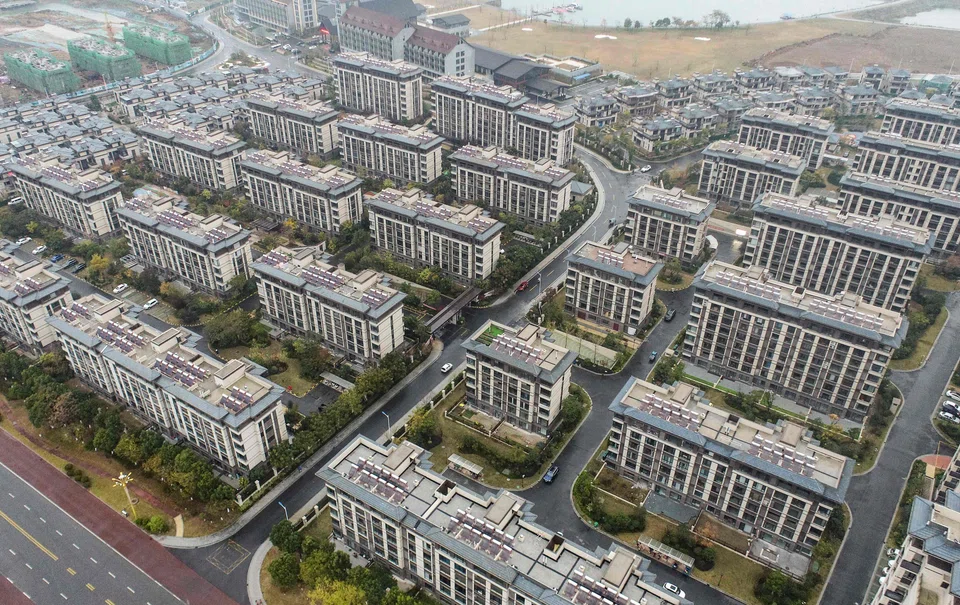
    On China’s beleaguered property sector, he said efforts will be made to ensure the delivery of pre-sold housing. The government will also prioritise improving the balance sheets of leading real estate developers. 

    Last November and December, Chinese regulators rolled out a series of measures to bolster liquidity in the sector, with the country’s biggest state-owned banks pledging at least US$162 billion in fresh credit to ease a cash crunch.

    Most regional stock markets kicked off 2023 with a big bang on optimism over China’s economic recovery as the mainland reopens, but some economists warned that structural challenges will weigh on its longer-term growth.

    Year to date, the MSCI Asia Pacific Excluding Japan Index has gained 5.8 per cent, led by China (10 per cent) and South Korea (8.8 per cent) but dragged down by Indonesia (-2.1 per cent), Malaysia (0.7 per cent), India (0.5 per cent) and Japan (-1.0 per cent). It fell 20 per cent in 2022, from the year before.

    Timothy Moe, chief Asia-Pacific strategist at Goldman Sachs, said: “China’s reopening is the key macro driver now that China has exited its zero-Covid policy. Beijing is also easing up on other fronts.” 

    The PBOC maintained a pro-growth monetary stance at its fourth-quarter meeting, with banks encouraged to support both infrastructure investment and completion of housing projects.

    All these indicate accommodative fiscal and property policy.

    Regulatory tightening that has hurt platform private owned enterprises is also loosening. Moe said: “Together, this supports our expectation of improving economic activity, a recovery in earnings growth and our overweight equity market view.”

    The Wall Street bank has raised its 2023 gross domestic product (GDP) forecast for China to 5.2 per cent, from 4.5 per cent previously.

    Moe reckoned that the strongest growth improvement should be felt in the second quarter of this year.

    Jianwei Xu, senior economist of Greater China at Natixis, said the Chinese economy will be supported by rising consumption, though he warned there could be potential shocks from the property sector.

    Despite Beijing’s efforts to increase funding channels for property developers, housing projects remain uncompleted. Most of these projects are left in the hands of local governments to find private companies to finish the construction work.

    Rising government debt and the liquidity crunch facing local governments are also a major concern. 

    Some economists fear the actual liquidity support from the relaxation of the “three red lines” may not be meaningful, as quality names and state-owned enterprises have been more conservative on land investments since the second half of 2022 given the weakened physical market outlook.

    As for the liquidity-strapped names, economists say they may not be able to meet the deadline anyway.

    Beyond the near term, China faces the challenges of an ageing population, decelerating income and an urgent need to find a new growth engine. 

    Natixis estimates that China’s GDP growth for 2024 could be 4.5 per cent, before decelerating towards 2 per cent without a new growth engine.



