



Golden hotels and luxe apartments: The rise of Vietnam's ultra-rich

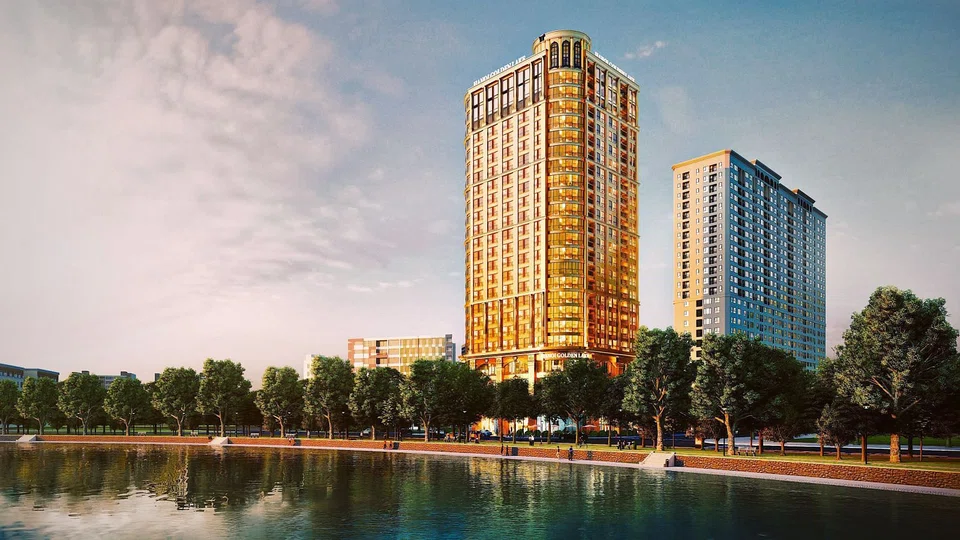
WITH 441 rooms, along with restaurants, shops, conference halls and even a gold -tiled infinity pool, the Dolce by Wyndham Hanoi Golden Lake hotel oozes plenty of style and luxury.
It's quite clear that no expense has been spared with furniture and fittings alike all coated in 24-carat gold. Even the building's exterior is coated with the precious metal, with the owners billing the 5-star property as the world's first gold-plated hotel.
Towering above Vietnam's capital Hanoi, it stands out in sharp contrast to the dusty, potholed and well-worn streets down below.
It is easily one of the most expensive hotels in the city, if not all of South-east Asia - both to construct, and to spend a night at.
About a tonne of gold was used to adorn the entire hotel. One has to fork out upwards of US$140 a night, even for the most basic room. To put that amount in context, the current minimum wage in Hanoi is only US$181 a month.
Once one of the poorest countries in the world, Vietnam's economy is now booming and the World Bank describes it as one of the most dynamic and emerging countries in the entire East Asia region.
Knight Frank's latest Wealth Report estimates there were about 19,500 high-net-worth individuals in Vietnam in 2020, defined as those with assets of at least US$1 million. By 2025, that number is expected to grow by almost 25 per cent to top 25,000.
This is somewhat remarkable for a country founded on socialist principles which have governed its politics for over 50 years.
So what has caused this transformation, and what is fuelling Vietnam's very obvious wealth boom? And how are the increasingly affluent Vietnamese people spending this new-found wealth?
Rags to riches
The story of Vietnam's wealth boom began almost 40 years ago in 1986, when the economy was re-orientated in favour of free market economics. The official title of this move was Doi Moi, loosely translated as "The Renovation".
As a result of these economic changes, for the next 4 decades the economy grew by leaps and bounds.
Foreign direct investment poured into the country, along with a gamut of multinational corporations all determined to take advantage of the myriad expansion opportunities and Vietnam's cheap labour.
As a result, Vietnam's gross domestic product, which in 1985 was just US$14 billion, had by 2019 increased some 18-fold to reach US$261 billion, according to figures from the World Bank.
This was, of course, reflected in real incomes too. From just US$246 in 1996, the average Vietnamese resident in 2018 took home an annual income of US$2,235.
This sharp rise has given the Vietnamese people access to goods they never could have afforded just a couple of decades earlier, with domestic consumption playing an ever more prominent role in the growth of the economy.
And it is this new paradigm that has attracted some of the world's biggest brands to the bustling South-east Asian nation.
Bicycles to flashy cars
At the turn of the century, the streets of Vietnam's 2 biggest cities - Hanoi and Ho Chi Minh City - were filled with thousands of bicycles as people pedalled their way to and from work or school.
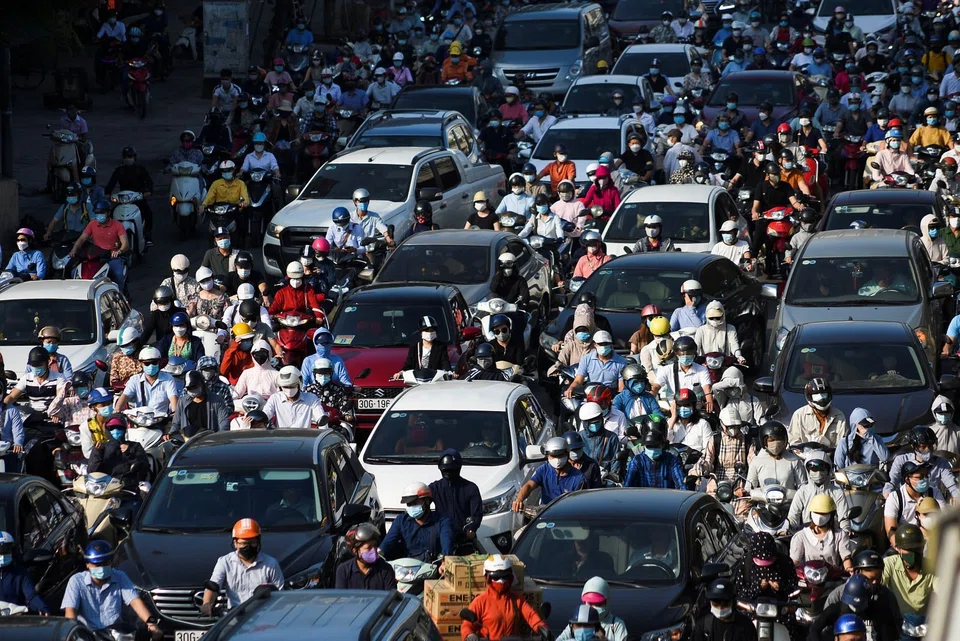
But as the economy developed, people swapped those manual 2-wheelers for motorcycles, and in recent years the number of cars on the roads soared as more people could afford them.
In fact, Vietnam has even started to produce its own vehicles through VinFast, a subsidiary of the country's biggest conglomerate Vingroup.
Its bread-and-butter is its traditional gas-powered models, but it has recently launched a line of electric vehicles (EVs), with designs on being a world leader in green automobile manufacturing.
But it is not just domestic businesses that have noticed the surging demand for 4-wheeled vehicles. Neither are they the only businesses that have observed Vietnam's new-found love of luxury goods.
In March last year, Porsche, recognising Vietnam's uber-elite had a penchant for expensive cars, opened its first Porsche Studio concept store in Hanoi.
Porsche is just one of a number of big-name global car brands that are all vying for a piece of the Vietnamese luxury car market.
BMW and Mercedes-Benz are common on the streets of both Hanoi and Ho Chi Minh City, weaving among the countless motorbikes that traverse the roads each day.
Arthur Willmann, the chief executive officer of Porsche Asia-Pacific, feels that the opening of the company's concept store may be just the beginning.
"Thanks to a loyal and growing base of customers in the country and a strong partnership with our local colleagues, Vietnam has developed into one of the most exciting and promising markets in the Asia-Pacific region for Porsche," said Willmann.
"We have a strong belief that our sports cars will continue to spark fascination for a further growing group of sports car enthusiasts and EV pioneers alike."
Love for fine dining
How the Vietnamese eat these days has also changed alongside the country's rapid economic development.
Although still prevalent, local wet markets in many places are being replaced by both domestic and multinational supermarket chains, selling foods imported from all over the world.
Australian meat, French cheeses and American produce are commonplace in supermarkets all around the country.
That said, it is in eating-out that a big shift in tastes can be seen.
Despite being known for street food that is both tasty and cheap, in recent years Vietnam has seen a plethora of fine-dining establishments cropping up in Ho Chi Minh City and Hanoi.
El Gaucho Argentinian Steakhouse, La Villa French Restaurant, and The Deck Saigon are just a handful of high-end restaurants serving fare priced upwards of US$70 a dish.
In contrast, a bowl of beef pho from a local street vendor can be had for as little as US$2 a bowl, or even less.
And it is not just international cuisine that commands such high prices. In 2017, the old and the new collided when fine-dining restaurant Anan Saigon gave the traditional Vietnamese banh mi a twist, adding top-shelf ingredients including foie gras and a truffle mayonnaise for dipping. It also came with an eye-watering US$100 price tag.
Luxury apartments
It is in Vietnam's city skylines that the results of a wealth boom gone gangbusters can really be noticed.
There are photographs of Hanoi at the turn of the century with blue skies that stretch right out to the Ba Vi mountains some 150 km north-west of the busy capital.
Nowadays, aside from the thick smog that blankets the city on most days, that view is obstructed by high-rises and apartment buildings that, despite being built at breakneck speed, are failing to meet overwhelming demand.
That said, although the bulk of the demand is coming from the working middle class, the high-end luxury apartment market is also experiencing a renaissance.
The Ritz-Carlton Hanoi sold out all of its 104 luxury apartments currently under construction - in less than a day. The reported asking price was a whopping US$25,000 per square metre (sq m).
For contest, the average price per sq m in Vietnam, according to the Global Property Guide, is just US$2,280.
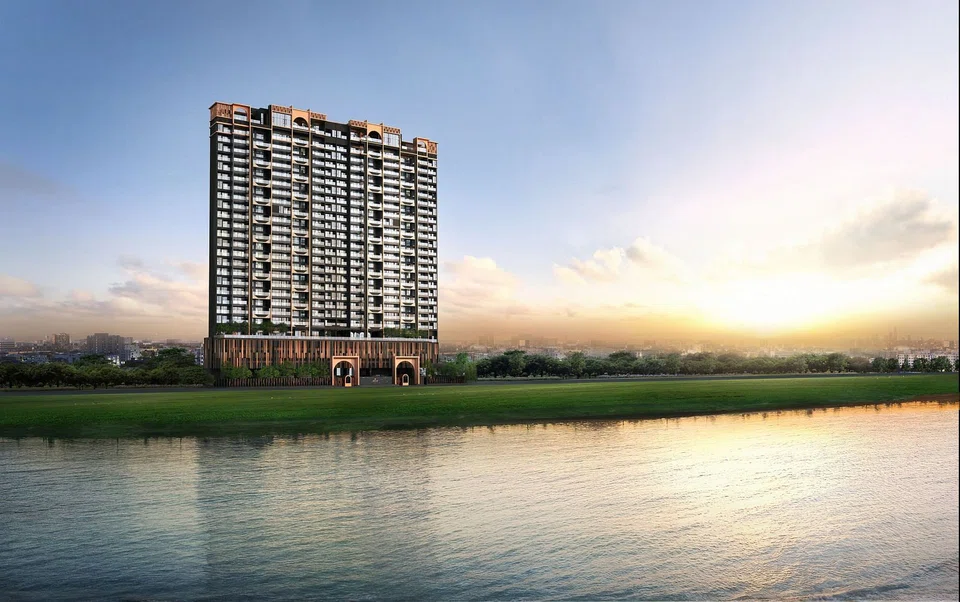
Singapore's CapitaLand is among the many developers that have seen strong demand for its Vietnam projects, including its latest luxury property, Define, in Ho Chi Minh City.
Last December, CapitaLand Development announced that it had sold all 88 units of Define within 2 hours of its exclusive weekend preview, with all units sold above 23 billion dong, The residences went at an average price of 125 million dong (S$7,431) per sq m, which works out to about 11.6 million dong or S$689 per square foot.
"The popularity of luxury apartments in Vietnam has increased in tandem with Vietnam's robust economic growth and urbanisation," Ronald Tay, the CEO of CapitaLand Development Vietnam, said via email.
And CapitaLand does not see this demand slowing down any time soon.
"We expect demand for luxury apartments to remain strong, particularly in the Tier 1 cities such as Ho Chi Minh City and Hanoi. Vietnam has witnessed a significant rise of its affluent class," said Tay.
"More wealthy Vietnamese, in particular successful entrepreneurs and high-net-worth individuals, are looking for luxury residential projects to invest or to stay in."
Key drivers
All of this has been made possible by a range of factors, not least of which is Vietnam's unique geographic position, which has given it an edge. Major manufacturers like Samsung and Apple that have been looking to diversify their supply chains out of China have seen its southern neighbour as a logical next step.
The abundance of cheap labour and a relatively stable government have created the ideal conditions for large-scale manufacturing to happen.
Vietnam's global outlook, too, has been a key catalyst for change. It has signed a plethora of free trade deals in the last decade, including the Regional Comprehensive Economic Partnership, the European Union-Vietnam Free Trade Agreement, and the Comprehensive and Progressive Agreement for Trans-Pacific Partnership.
These have removed trade barriers, and it has resulted in a huge boost in goods flowing into and out of the country.
That said, not everyone in Vietnam is feeling the benefits of this new-found wealth. According to the World Bank, there are still around 8 million Vietnamese living in poverty as of 2018.
On a brighter note, in that same year, the World Bank clocked a Gini coefficient - a measure of inequality in which the lower a country scores, the more equal it is - of 35.7 for Vietnam. This puts it on about par with most developed economies.
For some perspective, as of the 2021 Knight Frank Wealth Report, the gap between Vietnam's poorest citizen and its top 1 per cent was a net worth of only about US$160,000.
This does put it well above its neighbours in Indonesia and the Philippines, which are sitting on US$60,000 each.
Regardless, Vietnam's changing demographics have sparked the interest of a broad range of investors and big brands alike, and that interest appears to be growing. As a result, what was once an impoverished backwater is now a booming economic powerhouse that is settling well into its shiny, new look.
TRENDING NOW

OCBC mobile, online banking services restored after Friday afternoon disruption

SGX CEO Loh Boon Chye to step down; succession planning under way

Waymo founder predicts ‘landslide’ robotaxi adoption in Singapore, driven by high car costs

Vietnam’s northern provinces, not Hanoi or Ho Chi Minh City, are powering near 10% GDP growth

