Hong Kong's Hang Seng overhaul could offer investors more opportunities

Singapore
GIVEN the historical anomaly that Hong Kong's Hang Seng Index (HSI) is skewed - with over 40 per cent in financial companies - proposed changes to the 50-year old index is positive but unlikely to make much difference to total market trading volume.
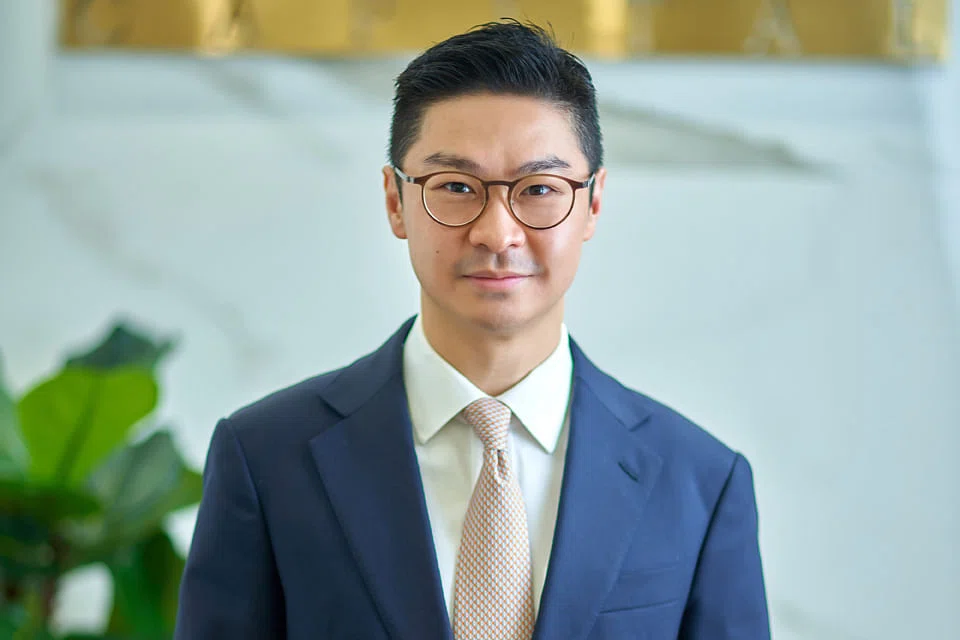
Ronald Chan, founder and chief investment officer of Chartwell Capital - a Hong Kong-based boutique asset manager and value-focused investor - said the Hang Seng Indexes Co's wide-ranging proposals for Hong Kong's stock benchmark would broaden the industry coverage and dilute the influence of its largest companies.
"... it is positive news that they are trying to broaden the industry coverage," said Mr Chan, who is also a member of the Listing Committee Panel of the Hong Kong stock exchange.
"In reality, on a day-to-day trading basis it will not make much difference to total market trading volume or liquidity. However, from an investor perspective, it will shine a light on more opportunities with Hong Kong's blue-chip companies that have typically been overlooked," he told The Business Times.
Hang Seng Indexes Co is proposing to increase the number of constituents in the benchmark to between 65 and 80 to achieve a reasonable representation for each industry and keep at least 25 Hong Kong firms as constituent stocks to address concerns about falling representation.
It is also considering lowering the weighting cap to 8 per cent and fast tracking new listings.
Launched in 1969, the HSI started out with 33 constituents, rising to 38 in 2007 when it began to include H-share firms. In 2012, it expanded to 50, covering about 60 per cent of the total market capitalisation.
Today, the HSI has 52 stocks, with weights limited to 10 per cent. Secondary listings or shares with unequal voting rights are capped at 5 per cent. As of end-November, 11 financial services companies have a weighting allocation of about 46 per cent, while 10 in properties and construction have 8 per cent and three in information technology close to 19 per cent of the index.
Hang Seng is soliciting feedback on the proposals until Jan 24. The changes would affect tens of billions of dollars in pension fund assets and exchange-traded funds that track the index.
The proposed overhaul to the index comes amid significant changes in the Hong Kong stock market as a wave of Chinese mega caps choose Hong Kong as a preferred venue to list their shares. This year, the proportion of mainland companies increased to 79 per cent of the index, compared to 41.6 per cent in 2005, Hang Seng said in its consultation paper.
Asked about the potential impact on fund allocations, Mr Chan - the author of two investment books, Behind the Berkshire Hathaway Curtain: Lessons from Warren Buffett's Top Business Leaders, and The Value Investors: Lessons from the World's Top Fund Managers - said institutional investors do not track the HSI as closely as before.
"MSCI indices have been more popular nowadays. This is not surprising when you look at the performance returns from last year. The Hang Seng Index was up 0.2 per cent in 2020 compared to the MSCI Asia ex Japan Index which was up 25 per cent.
"Obviously, Chinese companies and the skew to technology names amplified the difference, but nevertheless it clearly shows why the Hang Seng Index is in need of a review," Mr Chan said.
The top 100 largest stocks in Hong Kong account for 70-75 per cent of daily trading volume, and therefore going from 52 stocks to 65, or even 80 stocks, is unlikely to affect strategic allocations as new constituents are likely to be among the largest market capitalised companies, he noted.
Healthcare, consumer staples and infrastructure companies are expected to benefit if the changes better reflect the evolving business landscape in Hong Kong, according to Mr Chan.
"Personally, I would like to see some of the Hong Kong family-controlled conglomerates better recognised by the market. Many are significantly undervalued and have survived numerous global crises and offer solid, stable returns to investors," Mr Chan pointed out.
Today, the HSI is near its lowest level versus the MSCI World Index in 17 years. The gauge's abundance of old-economy financial stocks had made it look outdated in an age when China's tech giants have grown in importance.
Hang Seng Indexes Co said the move was to cooperate with various optimisation proposals, which is why the number of constituent stocks should be expanded.
"The objective of an index is to represent the local market, not the local economy," noted Kenny Wen, wealth-management strategist at Everbright Sun Hung Kai, when the overhaul was first announced late last year.
"So, yes, the benchmark will inevitably lose its Hong Kong colour. The index could have higher valuations and greater volatility if these changes lead to the inclusion of more tech and health-care firms. It will be easier to trade," Mr Wen said.
While Mr Chan believes the proposed changes will improve market experience for all participants, he is concerned that indices are backward-looking and markets are forward-looking.
"Investing in an index is almost 'valuation agnostic' - so you are not asking whether you are paying the right price for owning a particular company through an index. This case is strong when markets are rising, but in a risk-off environment when everyone is heading for the door at the same time, it is well-known that index stocks are in the eye of the storm," he warned. "As an intelligent investor, I would like the peace of mind knowing that I paid a reasonable price going forward, which will limit the downside during those moments of panic. This is fundamentally why I believe that keeping a close eye on the index to gauge market sentiment is important, but individual stock picking by focusing on the fundamentals and paying the right price is the best approach in markets which lack depth," he advised.