



In S-E Asia, two-wheelers rev up the EV race

Singapore
THE global push for electric vehicles (EVs) is gaining momentum, and in South-east Asia, it is the two-wheelers that are revving up the decarbonisation race. For EV adoption to take off in the four-wheel (4W) segment, success depends on government policies to make EVs more affordable, and not just a luxury item coveted by the wealthy for its technological novelty.
Home to more than 670 million people, the region is where motorised two- and three-wheelers such as motorcycles, scooters and tuk-tuks are main modes of transportation.
According to the Pew Research Center, more than 80 per cent of households in Thailand, Vietnam, Indonesia and Malaysia own a scooter. And the next tier of motorcycle owners are all in Asia: China at 60 per cent, India at 47 per cent and Pakistan at 43 per cent.
"We see greater EV adoption at the 2W (two-wheel) segment in the Asean market for it has a ready-made commercial solution currently - that is, smart batteries (swaps and share) and infrastructure," said Liaw Thong Jung, Maybank Kim Eng's regional head of oil and gas and automotive research.
He made the comments at a Maybank Kim Eng webinar, where he highlighted that battery swaps for such vehicles are easily deployed and addresses range-anxiety issues, charging infrastructure availability and upfront capital cost concerns.
"This would appeal to the mass market, especially those in the rural areas," he explained.
Historically, EVs face three road bumps - lower range, higher price and poor supporting infrastructure. Technological progress in battery and charging technology has alleviated range anxieties. As for the other two problems, governments play an important role as a provider of infrastructure and incentives.
Beyond that, consumers must buy in. Global EV penetration rate is at an embryonic stage of 4 per cent as EV costs are still prohibitive compared to internal combustion engine vehicles (ICEVs). Those who own an EV are mostly from the high income group, which also own ICEVs.
For EV adoption to take off in the 4W segment in South-east Asia, experts said that a clear policy, coupled with government incentives to change consumer behaviour and attract investments, is necessary.
The road map must not only deal with advantages of EVs but also disadvantages, including high investment to develop charging points, indirect pollution and environmental threats from increased power generation, and the toxic waste from batteries.
Eirik Barclay, Yinson Holdings group executive vice president of new ventures and technology, said: "Having clear timelines for EV adoption and phasing out of ICEVs, together with incentives for EVs and disincentives for ICEVs, will boost electrification. Investments will follow suit, including on charging infrastructure and stability of power."
He disagreed that government subsidies are necessary, and said plug-in hybrid models - seen by many automakers as a bridge to all-electric cars - confuse policy makers.
"South-east Asia needs to stop subsidising fossil fuels. Most of these countries are net importers of oil, so this does not make sense. Also, battery technology is improving very fast and costs are coming down. Let's forget hybrids and focus on EV development," he added.
Citing the experience of Norway, which boasts of the highest share of new EV purchases worldwide, Mr Barclay said that no subsidies were given to EVs. Instead, the government increased taxes on ICEVs and fuel.
"This also meant that the government did not lose revenue," he said, adding that these measures and the removal of fuel subsidies would result in consumers choosing EVs over ICEVs due to cost of ownership.
Lee Yuen How, a director at EV Connection, said that all stakeholders such as automotive original equipment manufacturers (OEMs), oil and gas companies, utility companies, charge point operators and the government should work together to build the infrastructure.
"If you leave it to the private sector, they will only build the charging infrastructure where there are high concentrations of EV users, leaving the semi-urban and rural areas to become EV-charging deserts. Therefore the government plays an important role in ensuring investment across all areas," he noted.
To lower the costs of EVs, Jinsi Lee, founder and chief executive officer of Oyika, espoused a separation between the EV and the battery for environmental and regulatory benefits.
"The party that sells the vehicle must be responsible for the battery across its entire life cycle, instead of transferring ownership to the vehicle buyer. The seller will be required to take the battery back, recycle and reuse it as second life storage, decommission it and so on," he said.
"From a consumer's point of view, if the battery is leased, then one can buy a second-hand EV and still get the latest battery technology. We are doing this for motorbikes, I don't see why we can't do it for vans, trucks and cars," he said, adding that the logistics sector is the best place to start, before moving to the consumer segment.
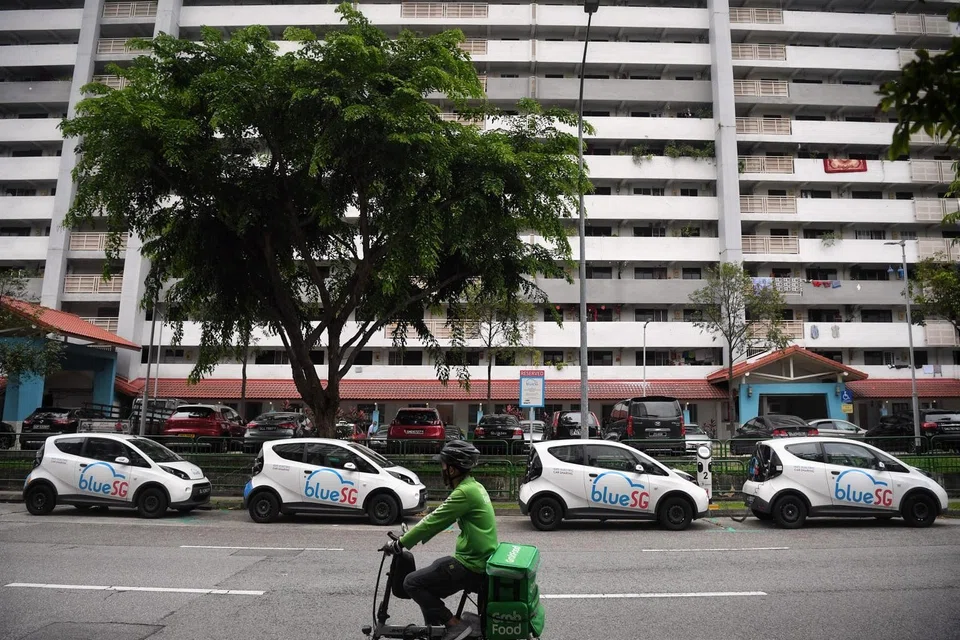
Within the region, Singapore is seen as the most forward-looking and the fastest to embrace e-mobility, with a target to phase out ICEVs by 2040. The government has refined its EV policy in its last Budget, and intends to spend S$30 million over the next five years to roll out EV-related initiatives.
To encourage EV adoption, costs differential between EVs and ICEVs will be narrowed; road tax structure will be revised to bring the cost of ownership of EVs closer to ICE vehicles and some 60,000 charging points are targeted by 2030.






