Indonesia: accelerating urban transportation development with public-private partnership
The country's rapid urban transportation development is creating vast opportunities for collaboration and investments for the private sector.
Indonesia's steady economic growth in recent years has spurred rapid urbanization across the archipelago. According to the World Bank, the growth rate of cities in Indonesia is 4.1 per cent per year - faster than that in many Asian countries. Further, 68 per cent of Indonesia's population are expected to live in cities by 2025.
This rapid urbanization, like two sides of a coin, can bring higher economic growth from increased employment and labor productivity, but also puts a strain on existing infrastructure.
Traffic congestion is one such issue as a result of under-capacity in infrastructure. Global SaaS and DaaS company INRIX reported that Jakartans spent 15 per cent more time in congestion in 2017 compared to the previous year. Not surprisingly, the Jakarta Provincial Government has turned to unconventional policies such as the three-in-one initiative, and the recent odd-even license plate regulation, to mitigate the issue.
However, the fundamental issue of inadequate infrastructure remains, and the need for a well-developed urban transportation system is becoming more urgent.
The urban transportation landscape
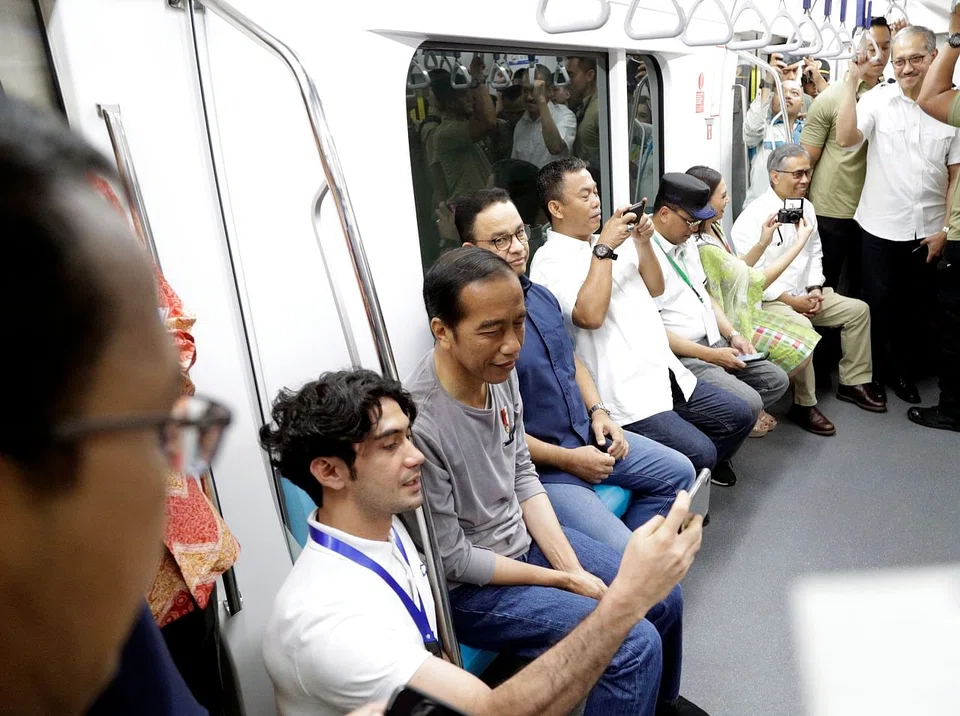
The urban transportation system in Indonesia consists of buses, trams, light rail, metro, rapid transit and ferries. Particularly, urban rail-based transportation, such as light rail and mass rapid transit (MRT), provides mobility for people and goods, and access to the urban area. On 24 March 2019, the President of Indonesia, Mr. Joko Widodo launched the first MRT system in Indonesia.
The first phase of the planned MRT system spanning 16 km and serving 13 stations from Lebak Bulus to Bundaran HI, connecting South Jakarta to Central Jakarta. These are economical, energy-efficient, and require less space than private transportation. Thus, these are suited to support busy and high-density urban areas.
The railway business in Indonesia is split into two main components: infrastructure (railway) and train (rolling stock). According to Indonesia's Law No. 23/2007, the government is responsible for providing and maintaining the railway. The operator, currently PT Kereta Api Indonesia (KAI) - and the sole train operator in Indonesia - pays track access charge to the government for using the railways. For supporting the maintenance of the railway, KAI also receives infrastructure maintenance and operation fees from the government.
Today, urban rail-based transportation is among the Indonesian government's priority agenda for infrastructure development, and a number of projects have been started or announced.
Development plans ahead The government's plans and strategies for urban transportation development are stipulated in the Ministry of Transportation's strategic plans (Renstra), as well as development documents such as the National Medium Term Development Plan (RPJMN) and the government's Workplan (RKP). The recurring themes are Transport Oriented Development (TOD), mass rapid transit development, and transportation demand management.
In reviewing the Renstra, RPJMN, and RKP, urban transportation project pipelines have been started or announced by the government, with a focus on MRT and LRT in Indonesia's largest and busiest cities.
Issues and challenges Collective efforts from the government and relevant stakeholders are needed to accelerate urban transportation and infrastructure development, as the country seeks to overcome prevalent issues and challenges including:
Lack of financial resources: An Asian Development Bank report estimated that in 2016, investment has remained at 3 per cent of gross domestic product (GDP), while at least 7 per cent of GDP is required for new investments and capital replacement.
Complex regulatory framework: There is a plethora of regulations that transportation projects (and their stakeholders) need to comply with. Hence, a deep understanding of those regulations is critical. In some cases, new regulations are required to accommodate transportation projects. If not anticipated accordingly, this may result in long delays in the delivery of projects.
Bureaucracy and conflicts of interests: Most transportation project stakeholders are public entities with rigid bureaucracies. These factors often lead to slow decision-making and frequent changes in project structures or arrangements, causing inefficiency in the planning and implementation of projects.
To minimize the above, the government and other stakeholder should pay attention to these areas when developing urban rail:
Well-prepared feasibility study: Project failures are commonly attributed to inadequate or non-existent feasibility study, including (but not limited to) unrealistic traffic forecasts and undefined contribution of funds.
Suitable scope: The scope of the project should be determined at an early stage as it establishes stakeholders' roles and responsibilities. This would minimize the likelihood of delays due to a change in project scheme at a later stage.
Regulatory compliance: The development of a project needs to take into account the intricate and often overlapping regulations and regulatory bodies in Indonesia's transportation sector.
Financial support: It is imperative that the tariff is within commuters' ability to pay. In cases where commercial tariff is far above commuters' ability to pay, there needs to be additional financing (e.g., government subsidy in the short term) to lower the tariff
Drive to increase private sector participation
The government recognizes the need and importance of private sector involvement in realizing its plans and strategies, and has taken remarkable efforts to put more projects in the market. It has revised existing public-private partnership (PPP) regulations with the most recent being the Presidential Regulation No. 38/2015; established institutions such as Indonesia Infrastructure Guarantee Fund, PT Sarana Multi Infrastruktur, and PT Indonesia Infrastructure Finance as financing instruments; and initiated Komite Percepatan Pembangunan Infrastruktur Prioritas (KPPIP) to support and oversee the progress of key projects.
To minimize land acquisition issues, the government set up Lembaga Manajemen Aset Negara, which manages compensation payment to landowners whose land is being acquired for infrastructure projects.
Going forward, reliance on private financing is likely to continue, and efforts from the government is needed to ensure that PPP can flourish and be implemented effectively in Indonesia. The government can look to more mature PPP markets such as the UK, Canada, and Australia, and adapt best practices accordingly.
Urban transportation development in Indonesia is still in its infancy. There is much to be done, and the government cannot do it alone. The good news is that the government is heading in the right direction by opening up the urban transportation sector to private investors, and taking initiatives to support its growth. Now is the time for the private sector to seize the opportunities for collaboration and investment.
The writer is Partner, Transaction Advisory Services at PT Ernst & Young Indonesia. The views in this article are those of the author and do not necessarily reflect the views of the global EY organization or its member firms.
Share with us your feedback on BT's products and services