Indonesia's Bukalapak poised for growth under new CEO
Rachmat Kaimuddin aims to put e-commerce marketplace platform on path to profitability, and wants to build it into an entity that will last 100 years
Jakarta
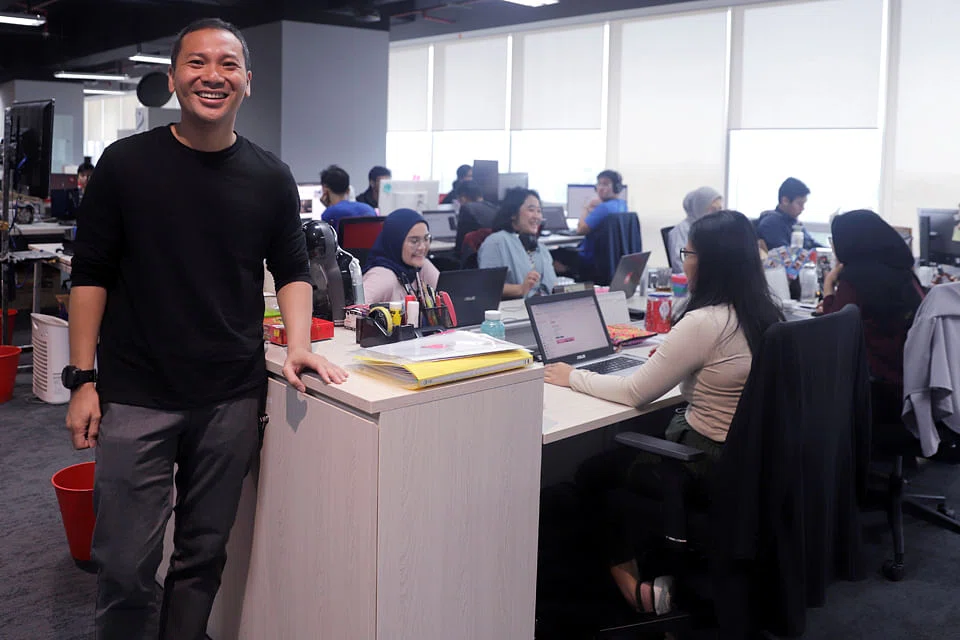
RACHMAT Kaimuddin may have been destined for the job he currently holds.
A graduate from MIT and Stanford University in the United States, his early career led him to work for the Boston Consulting Group, several private equity firms and the International Finance Corporation, before landing at Indonesian conglomerate Bosowa Group.
But in an exclusive interview with The Business Times, the new chief executive officer of e-commerce marketplace platform Bukalapak.com admits he feels most at home leading a tech company.
"I became CEO in January this year and it has been an interesting change from my previous work experience. I am technologically trained, but after graduating from college, I worked in management, finance and investment, but I always wanted to come back to tech," said the 42-year-old Makassar native.
"I am a nerd at heart so leading Bukalapak.com is like coming home," he added. "I truly believe in the mission and vision of Bukalapak as they are aligned to my own values."
When he took over, his first task was to gain a better grasp and understanding of the company's business model, its customers and stakeholders.
But then Covid-19 hit Indonesia and the rest of the world, and Mr Kaimuddin and his team had to go into overdrive to adjust to a fast-changing business environment.
"Covid-19 changed a lot of things for us. In some ways it accelerated a lot of processes we had planned to introduce, but we no longer have the luxury of meeting people physically and testing our ideas. We had to hit the ground running," he said.
As he drives the company forward, his immediate task is to put it on a path to profitability. His ultimate goal, he said, is to build Bukalapak into an entity that will last 100 years.
To this end, he has initiated a number of programmes, including working with banks and e-wallet companies to provide better financing solutions, improve logistics networks, and provide capital to its merchants.
Bukalapak is already working with 12 logistics companies to ensure cheaper and faster delivery of goods purchased on its platforms, and Mr Kaimuddin intends to expand this aspect of the company's operations rapidly.
"What we try to perfect is being a good and trusted intermediary to all our clients," he noted. "This includes providing working capital to our merchants and keeping our eyes and ears open to new opportunities."
With Covid-19 keeping more people at home, Bukalapak is also offering its platform to companies that provide training and self-help online programs.
"Any form of activity that requires two partners to transact, we can play a role," he added.
As Mr Kaimuddin sees it, the company's path to profitability is not only to continuously build its marketplace platform and to go beyond being an intermediary for just physical goods, but also offer services such as finance, education, training, healthcare and others.
"Every year, we have managed to grow our revenue and improve the profitability situation, but we are not yet profitable," he said. "I will definitely tell the market when that happens."
As it grows its topline, it will also continue to raise fresh capital, but Mr Kaimuddin stressed that raising capital must be done prudently and with clear objectives. "We don't consider raising money as an achievement in itself. If we lose money, people will say we are burning cash so we must act prudently."
Filling the huge shoes of the three co-founders, who have exited from active management of the e-commerce marketplace portal was never going to be an easy task for him, especially as the company transitions from being a startup to becoming a sustainable business entity.
The company has been laser-focused on growing its merchant and consumer base, even as it has looked to raise funds.
Over the past three years, it has increased the number of merchants from eight million to 11 million, with 40 per cent comprising of local warungs, Indonesia's version of mom-and-pop shops.
Mr Kaimuddin said Bukalapak has, from the start, strived to serve small and medium-sized enterprises (SMEs) and the lower middle class consumer segment of the population, but it soon realised that this segment was uncomfortable with transacting online.
With Covid-19 impacting consumer spending and behaviour, he and his team have also pivoted in terms of the type of items offered for sale on the platform.
Indonesian consumers are today buying items that provide comfort at home, such as nicer pyjamas, rather than clothes for going out and looking good.
There has also been a sharp increase in the purchase of health and wellness products such as vitamins, herbal drinks and exercise equipment.
According to Mr Kaimuddin, the sale of bicycles in particular has been fast-paced.
"I am a runner more than a biker but this trend is clearly evident," he noted. "Consumers are much more cost-conscious and saving more in what I call a shift towards hyper realism where function and price are paramount."
A confluence of factors - the Covid-19 pandemic, changing consumer behaviour, greater Internet connectivity and online payment gateways - are driving the growth of e-commerce in Indonesia.
In a recent report, management consulting company Redseer projected that Indonesia's online retail gross merchandise value (GMV) will surpass India's by the end of the year.
The report noted that Indonesia's 2020 e-commerce GMV would reach US$40 billion, ranking the country third in the world, surpassing India's GMV of US$38 billion.
Such growth will provide ecommerce players such as Bukalapak with the underpinnings to embark on long-term sustainable expansion and a path to profitability.
The challenge for Bukalapak is thus internal rather than external, as recognised by Mr Kaimuddin.
"A simple goal for us is to be a company that can last for 100 years. To achieve that goal we need to have strong systems, procedures and talent development. I have been asked to provide that transition and to build the organisation as an entity," he pointed out.
Ten years after its founding, Bukalapak is now poised for its next level of growth as it moves into a more mature period of its life cycle. With Mr Kaimuddin at its helm, the startup is keeping to its core values even as it institutes lasting change.
In October 2019, Bukalapak closed Series F funding that raised its valuation to over US$2.5 billion, allowing it to join the ranks of Indonesia's unicorns.
Its September 2019 financials showed that Indonesian media conglomerate Emtek Group owns a 35.22 per cent stake. Other investors include Alibaba subsidiary Ant Financial, Singapore sovereign wealth fund GIC and South Korea's Mirae Asset-Naver Asia Growth Fund.