Indonesia's national solar programme can pull in up to US$14.4b in investment: report
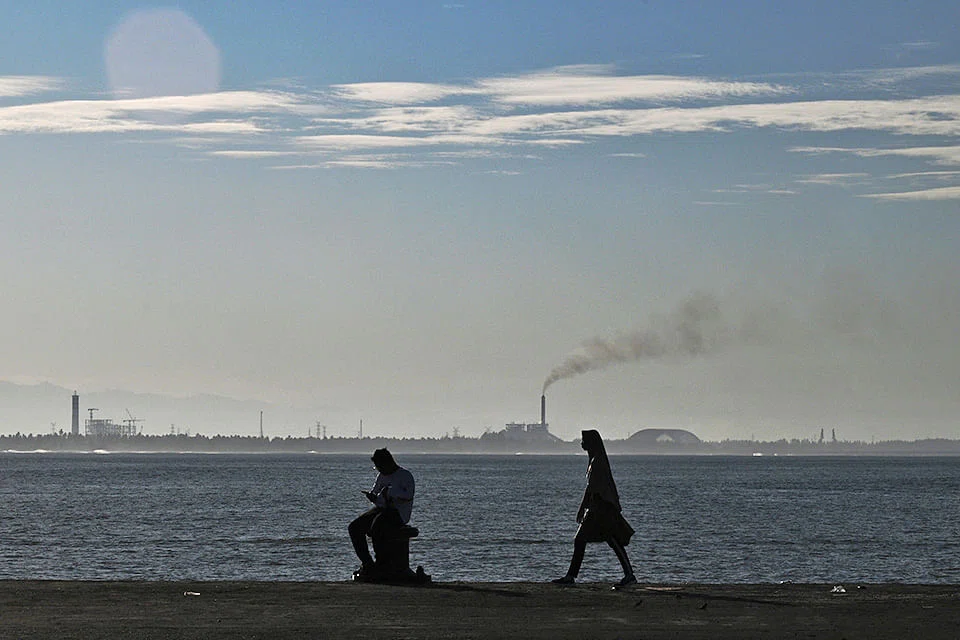
Jakarta is targeting to achieve 23 per cent in renewable energy by 2025; for now, the country's power supply is still heavily dependent on coal-fired power plants
Jakarta
INDONESIA'S national solar programme has the potential to attract as much as US$14.4 billion in new investments, and help bring the country to its target of achieving 23 per cent in renewable energy by 2025, a new report has stated.
The study, titled Scaling Up Solar In Indonesia: Reform And Opportunity, was produced by Bloomberg New Energy Finance (NEF) and the Jakarta-based Institute for Essential Services Reform (IESR), and supported by Bloomberg Philanthropies.
IESR executive director Fabby Tumiwa and BloombergNEF chief Jon Moore wrote in a foreword for the report: "Indonesia could fundamentally transform how it produces, delivers and consumes energy, but only if policy-makers take swift, concrete actions to transition away from coal toward lower-carbon energy sources.
"Over the last few months, there have been public pledges to undertake change. Such verbal commitments must be followed with specific policies to trigger real change," they added.
The report stated that solar energy holds the key to the decarbonisation of the country's power sector.
The power sector can achieve the target of having renewable energy account for 23 per cent of primary energy by 2025 by installing 18 gigawatts (GW) of photovoltaic (PV) systems over the next four years.
This would amount to a 100-fold increase in solar capacity from the 154 megawatts currently installed, but the report described the target as "achievable", given that PV can be deployed quickly.
Installing the 18GW of PV would require US$14.4 billion in investments, which is over 50 times the US$287 million invested in Indonesian PV deployments between 2005 and 2020.
The report also noted that Indonesia, the largest economy in South-east Asia, has rich coal resources that have long dictated the country's energy policies.
Mr Tumiwa and Mr Moore wrote: "Coal dominates the electricity supply and is an important export commodity that generates economic benefits to the government.
"Meanwhile, Indonesia's vast renewable energy resources - wind, solar and geothermal - remain largely under-utilised."
The report said that solar power, with the advances in technology and declining production costs, is central to Indonesia's clean-energy goals.
Indonesia's Minister of Energy and Mineral Resources Arifin Tasrif, who endorsed the report, said on Thursday that the acceleration of energy transformation "has become the government's commitment to support green economy, green technology and green products", in line with the implementation of the Paris Agreement.
"Solar energy will become a mainstay in the strategy to develop renewable energy, in an effort to promote the realisation of net-zero emission in 2060 or sooner, because of its enormous potential and more competitive prices," he said.
The report also made the point that tapping into the abundant potential for solar energy will require "bold policy actions" to overcome existing regulations that stack the odds against clean-energy generation technology.
"Solar power can be an affordable source of electricity for Indonesia if the country undertakes necessary power-market reforms," said Antoine Vagneur-Jones, an energy transitions analyst at BloombergNEF.
Indonesia's power supply is heavily dependent on coal-fired power plants, with solar and wind currently accounting for under one per cent of the total power capacity.
Indonesia's moratorium on new coal power plants and the long-term net-zero target creates an opportunity for rapid solar expansion, the report said.
It added that Indonesia should consider removing subsidies for coal-fired power, lift caps on payments to renewable developers, and remove constraints on behind-the-meter PV net-metering revenues.
The government should also implement a transparent and clear PV procurement programme in order to attract more investment, the report said.