



Keppel Land aims to double revenue share from Asean in five years
Developer honing business strategy in each local approach to emphasise recurring income, in a move away from land-banking and home sales alone


Singapore
PROPERTY developer Keppel Land aims to more than double its revenue share from the South-east Asian market (excluding Singapore) in the medium term, with plans to ramp up its Vietnam footprint and overhaul its approach to the Indonesian market.
Speaking to The Business Times, Keppel Land chief executive Louis Lim said that the envisioned regional expansion is very much part of blue-chip parent Keppel Corp's Vision 2030 strategic transformation road map: "It is about really accelerating what we're doing across markets and diversifying, for us, out of a China-led business. I think we want to make sure that we have legs in more geographies, without being too diversified."
At the same time, Keppel Land is honing its business strategy in each local approach to emphasise recurring income, in a move away from land-banking and home sales alone.
Ideal revenue contribution from the Asean region would be 15 per cent now, rising to 30 per cent in five years, said Mr Lim. Keppel Land last reported net profit of S$368.1 million for the 12 months to Dec 31, 2020, on revenue of S$1.28 billion.
Vietnam is the third-largest market for the company, after China and Singapore, with Mr Lim saying that these three countries "each contribute a sizeable portion of our profits".
Despite the economic fallout of the Covid-19 pandemic, Keppel Land wants to continue to ride on the market potential of Vietnam's urbanising population, he said, singling out the country as "a bright star within the region". While Keppel Land's presence is concentrated in Ho Chi Minh City, he has plans to return to Hanoi - where he sees demand for landed homes.
The company also wants to scale up in India and Indonesia, Mr Lim added. "We believe that there is inherent value in Indonesia and so that's an area we are focused on as well."
As Keppel Land grows in South-east Asia, Mr Lim stressed that the company is looking not only for development and trading opportunities, but also for new engines of growth.
He named senior living facilities, management services for sustainable offices, and digital services for smart cities as some types of projects that could support recurring revenue.
An expansion of such activities would mark a sea change for Keppel Land. Turnover from the property trading segment - which develops residential properties - is more than 10 times the size of the commercial properties, hotels and serviced apartments investment arm. The property trading unit posted S$1.18 billion in sales in 2020 against S$86.8 million for property investment.
In the Asean region, Mr Lim said, Keppel is "targeting projects with shorter gestation periods, because I think that will really improve the returns that we have for our shareholders and our ability to recycle our assets faster".
Keppel Land has been playing in its regional backyard for decades. The company has been active in Indonesia since 1989, and in Vietnam since 1991. Other assets in its Asean portfolio include a hotel in Myanmar, as well as commercial properties in Myanmar and the Philippines.
Stressing that "real estate is a very local business", he noted that the company "essentially paid a lot of tuition fees, and we gained a lot of learning scars" over the years in Vietnam.
The same could be said of Keppel Land's involvement in other parts of the Asean region, where the management appears to have re-thought its approach to property investments.
In the last decade, Keppel Land's overseas disposals include Sedona-brand hotels in Manado in Indonesia and Mandalay in Myanmar. It also let go of land in Surabaya's central business district, and a West Bali site originally meant for a luxury resort.
When asked about the rationale for divestments like these, Mr Lim said that "it goes back to a fundamental shift in the Keppel Group's strategy, where we're moving away from asset-heavy businesses to an asset-light approach - where we're also moving away from land-banking".
In line with the shift, he signalled that Keppel Land has also become more selective about its businesses in each regional market, since "we want to make sure we don't play in segments where we might risk a glut on the supply side".
For example, "when we look at China and Vietnam, we see . . . that we can do well not just in residential, but in commercial, retail, as key segments to focus on", Mr Lim said, citing the developer's track record and experience in these countries, as well as ongoing market opportunities.
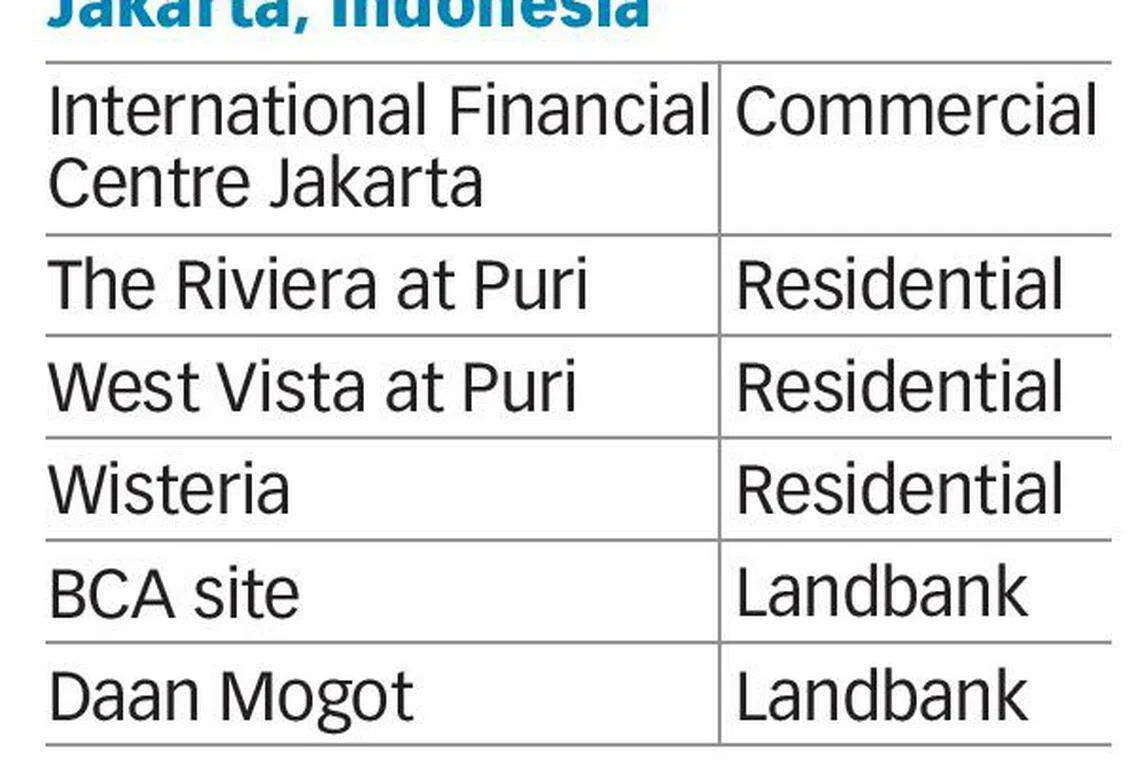
On the other hand, he identified an over-supply of commercial space in Indonesia, as well as a relative lack of buyer appetite for high-rise residential developments. As such, the company's focus in Indonesia is on the landed residential business and more of the large-scale precinct township-like type of projects, he said.
"The likelihood is we won't do it alone," he added of the regional scale-up. "As we build our business in South-east Asia, we will always be looking at the right partner for us to work with."
TRENDING NOW

If Europe goes to war, the fallout will be felt in East Asia

Shanmugam says firms linked to haze probe pledge cooperation; government to table changes to haze law

Indonesia stocks suffer worst plunge in nearly 30 years as MSCI proposes standalone status

Keppel seeks US$1 billion for Vietnam investments as it joins country’s international financial centre

