



Legal certainty critical for Indonesia's gig economy
Disputes involving Gojek, Grab reveal gaps in existing laws to cover riders, users


Jakarta
INDONESIA'S digital sector has been one of the bright sparks in a year when the economy has been decimated by the coronavirus outbreak and a sharp downturn in consumer spending.
According to a recent report by Google, the country's digital economy is set to expand by 11 per cent in 2020 to US$44 billion, from US$40 billion in 2019.
The pandemic has been a blessing for the overall gig economy, which is projected to churn out a total of US$124 billion in gross merchandise value by 2025.
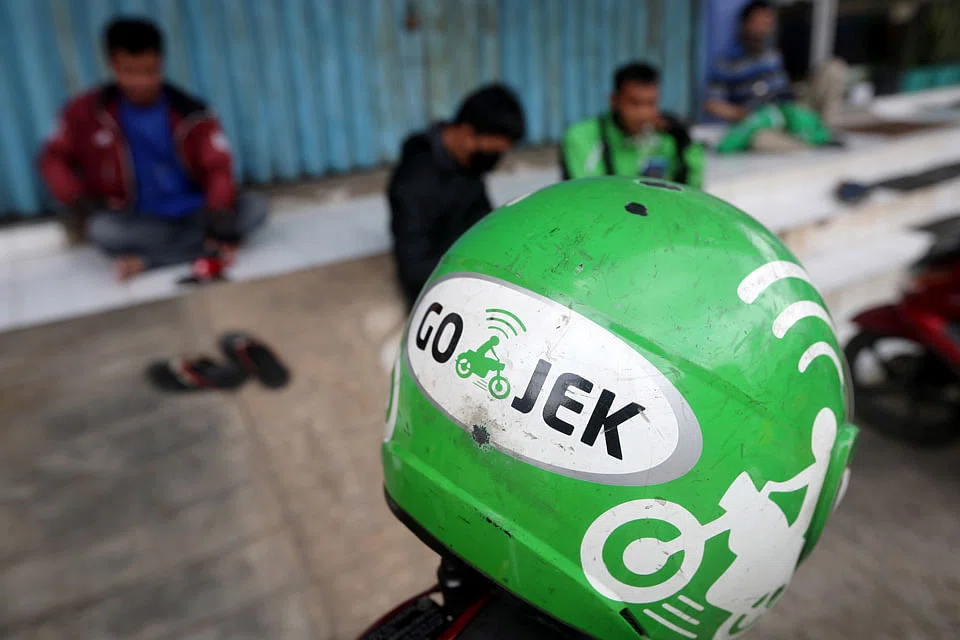
The country's two leading tech giants, ride hailing and food delivery firms Gojek and Grab, have over the past decade become poster boys for the potential of the digital sector.
Both are now decacorns with Gojek valued at US$10 billion and Grab, which is Singapore-based, valued at US$15 billion.
But news of a possible merger between the two has upset the more than four million motorbike operators and riders that serve them.
Thousands of them grouped under Garda Nasional have threatened to take to the streets if the companies and the government do not include them in the merger discussions.
Garda Nasional is a union that represents 100,000 Grab and Gojek drivers across the country.
Speaking to The Business Times, union chairman Igun Wicaksono said his members are worried the merger would cause them to lose their livelihoods and create a monopoly. "Usually when corporations take merger action, they will focus on capitalisation and efficiency, and we are worried that many of our members will be laid-off," he noted. "Secondly, we do not want one player to dominate the market as it will create unhealthy conditions for us."
He added that his members are urging the government, especially the Ministry of Maritime and Investment; the Ministry of Cooperatives and SMEs; the Indonesia Investment Coordinating Board, and the Business Competition Supervisory Commission (KPPU) to get involved in the merger discussions.
While Mr Wicaksono and his members have some legitimate concerns given that many motorbike operators serve both Gojek and Grab, they do not have any legal standing.
Garda Nasional is neither a member of the Indonesian Workers Union Confederation (KSPI) nor recognised by the Ministry of Manpower.
"Legally, the drivers are not employees of Grab or Gojek," said Alvin Lie, a member of the Indonesian Ombudsman Commission. "They do not have a transport or business licence so they are not regarded as public transport providers."
Mr Lie compared the operators to vendors who provide goods to supermarkets where revenue from the sales is shared. "Both Gojek and Grab offer a marketplace for the drivers to sell their services. As such they are not employees."
The concerns raised by the motorcycle operators over the merger have, however, unveiled one of the major loopholes in the digital economy.
Unlike the real sector where employees and employers are governed by laws and regulations, the digital sector is lightly regulated which puts service providers at a disadvantage.
The solution, according to Mr Lie, could lie in having both Gojek and Grab being registered as public transport companies. This would bring them under the purview of the Ministry of Transportation with motorcycle operators also having to register their vehicles.
"There are millions of people working in this sector and both drivers and the public are users of the platform provided by Gojek and Grab," he noted. "This is why the government has been slow to act because if it legalises the drivers, it will raise costs for both the drivers as well as the users."
But without adequate protection and legal certainty, he argued that larger problems could arise in the future. Currently, riders use the services of Gojek and Grab at their own risk as the companies are not liable in the event of an accident or injury.
"It is just a matter of time before legal problems arise because under the current system and practice, there is no legal certainty for either the drivers or the users," Mr Lie said. "This is detrimental to the longer term sustainability of the digital economy and to the emergence of future tech players."
Gojek and Grab have transformed Indonesia's public transportation sector, allowed millions of Indonesians to earn a living and created whole new sectors.
The country's digital economy is poised for strong growth in the coming decade but as the uproar caused by the potential merger of Gojek and Grab has illustrated, the government needs to create greater legal certainty for all actors concerned.






