



Malaysia economy likely to stay afloat despite policy flip-flops, political instability: analyst
Businesses will steer towards more profitable ventures that will see more people employed
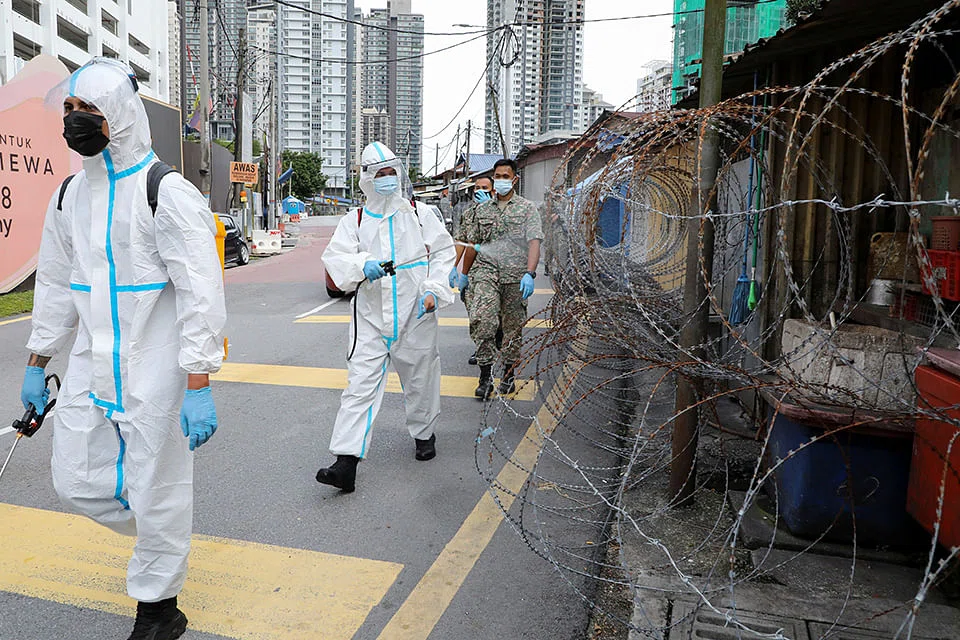
Kuala Lumpur
MALAYSIA'S economy is still expected to stay afloat despite the combination of inconsistent government policies, the ongoing Covid-19 pandemic and the political uncertainty in the country, an analyst said at a webinar on Thursday.
Oh Ei Sun, a senior fellow with the Singapore Institute of International Affairs (SIIA) and based in Kuala Lumpur, noted that Malaysia has remained commercially-driven and can rely on its natural resources such as palm oil, rubber, oil and gas.
"Those productions will go on and continue providing some revenue to the country. The government may set multiple policies, but in the end, businesses will steer toward more profitable ventures that will see more people employed," said Dr Oh.
The online session, titled Crisis in Malaysia: Politicking amid the pandemic, was moderated by SIIA chairman Simon Tay.
Dr Oh is also a principal adviser at the Pacific Research Centre of Malaysia, and previously served as political secretary to former prime minister Najib Razak.
At the webinar, Dr Oh said that Malaysia's economy is "more or less on auto-pilot mode", even as the country is in need of clearer and more consistent industrial and investment policies.
"Frankly, these are not forthcoming. There is a lot of self-help going on in both the commercial sector as well as the civil society in Malaysia because people don't seem to pin as much hope as before on the government, regardless of who is in charge," he said.
Dr Oh added that many lower-income Malaysians are living hand-to-mouth due to the economic downturn and impact of the pandemic.
"People are (at their wits' end) in terms of how to survive the pandemic. Many of them survive on daily wages but unfortunately due to the lockdown of particular sectors, they are not able to work and therefore their livelihoods are greatly affected," said Dr Oh.
Some Malaysians pin the blame of the Covid-19 situation on the government's series of policy flip-flops.
"For example, imposing very stringent lockdowns on one hand, but also opening up a lot of economic sectors for apparently not quite scientific reasons (and allowing them to) operate. There is a sense that the government is losing the plot in terms of balancing lives and livelihoods," he said.
The Malaysian economy is expected to grow sharply in the second quarter of this year from a low base in the same period a year ago, according to a Reuters poll of 20 economists earlier this week.
The economy is seen growing 14.3 per cent year-on-year between April and June. The overall growth forecast for 2021 could be lowered due to new lockdown measures, the government said in June.
How the economy performs in the next few months largely depends on whether there is political stability, with Prime Minister Muhyiddin Yassin subjecting himself to a vote of confidence at the next Parliament session in early September.
It was reported on Thursday that Malaysia's king had asked Mr Muhyiddin to bring forward the vote during a weekly pre-Cabinet meeting, although it was unclear if the premier had agreed to do so.
Dr Oh, however, remains sceptical that Mr Muhyiddin would go so far as to introduce such a motion at the Parliament sitting.
"He has been delaying Parliament sittings and the confidence motion, and also cancelling Parliament sessions (because) of the pandemic. We have no idea how high the infection numbers will surge (in the next few weeks), which the government could use once again to delay Parliament," he said.
Close to 30 per cent of Malaysia's population are already fully vaccinated, while nearly half have received at least one dose.
On Thursday, the Health Ministry reported a record 21,668 infections, taking the country's total to 1.34 million cases to date. There were also 338 new fatalities, with the death toll at 11,691.
TRENDING NOW

He built the Vingroup empire. Now South-east Asia’s richest man is handing some key roles to his sons
Developers rush to build homes on Vietnam’s breathtaking coast, testing a new urban model
US dollar falters after Iran’s offer to reopen Hormuz sends oil lower

Tokyo reverses baby bust with AI matchmaking and generous subsidies

