Malaysian businesses reposition to target local consumers
Shopping malls and retailers shift their focus on rejuvenation efforts as absence of overseas visitors hits their revenue
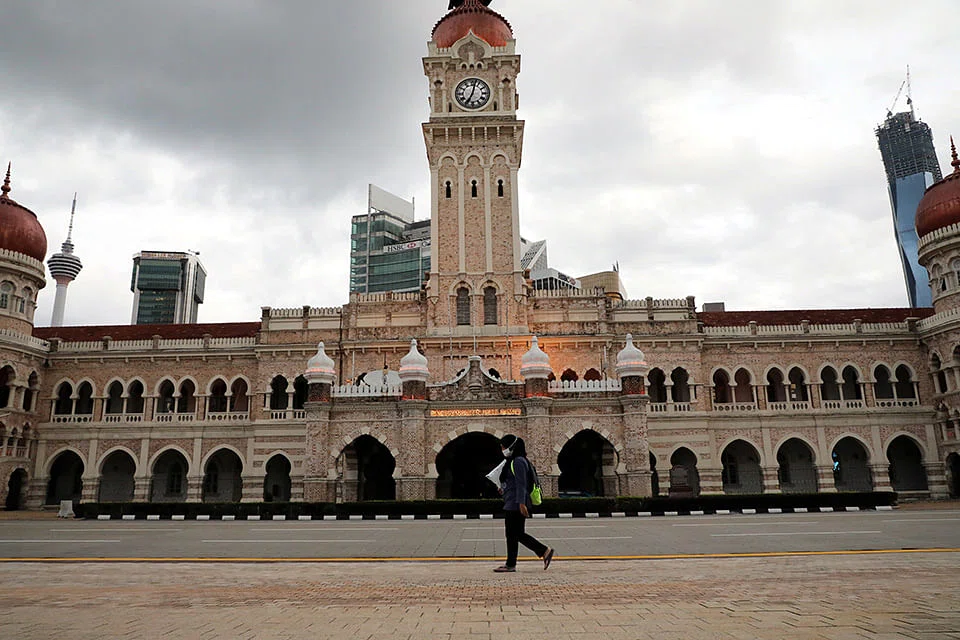
Kuala Lumpur
AFTER almost a year of closed international borders, Malaysian businesses that previously relied heavily on tourists - especially from neighbouring Singapore - to drive sales are repositioning to target local consumers.
There is a realisation that the country's rising Covid-19 infections is likely to keep overseas visitors out for a good part of 2021, especially after the recent announcement that Malaysia has entered into a state of emergency that could last until Aug 1.
Tourist arrivals to Malaysia dropped 78.6 per cent in the first nine months of 2020 to 4.3 million, down sharply from 20.1 million for the whole of 2019, according to figures from Tourism Malaysia.
For the first nine months of 2020, Malaysia saw a total of RM12.6 billion (S$4.1 billion) in tourism receipts, a decrease of 81 per cent compared to RM66.1 billion in 2019.
This mirrored a global trend as the world's tourism industry buckled under the pandemic that grounded international flights and sent countries into lockdown mode.
Puteri Harbour, a waterfront mixed township in Johor, used the lull period to revamp its Marina Walk retail centre, refining its concept and tenancy mix to focus more on domestic tourists and residents within the state, said Sara Fang Horton, the head of retail strategy at UEM Sunrise, landowner and master developer of the area.
Prior to the outbreak, overseas guests made up 60.5 per cent of total tourist visitors at Puteri Harbour, half of which were Singaporeans.
From January to early December 2020, sales of non-essential products and services at retail properties within the township, including the Mall of Medini, Anjung Neighbourhood Centre and Marina Walk, have fallen 57 per cent compared to 2019 numbers.
"Singaporean tourists used to be our main target for foreign visitors before the pandemic. When the borders were closed, our retailers were greatly impacted. However, we saw the opportunity to look inward and focus on our rejuvenation efforts," Ms Horton told The Business Times. "We have been able to quickly change our concept and positioning to one that is more pandemic-resilient as well as more sustainable in the short and mid-term."
Some retail areas were re-zoned to introduce curated concepts that appeal to a more balanced local and international visitors, while an artisanal bazaar and yoga sessions are being planned to liven up Puteri Harbour.
Malaysia began imposing movement and travel restrictions in mid-March last year, easing and tightening those rules several times since then as the government struggles to strike a balance between controlling the spread of the virus and saving jobs.
Earlier this week, the government announced the tightening of Covid-19 restrictions, placing five states and three federal territories under the Movement Control Order again for two weeks until Jan 26.
Malaysia has reported over 142,000 Covid-19 infections so far, with 559 deaths.
The pandemic forced the government to cancel the planned Visit Malaysia 2020 campaign, which had aimed for RM100 billion in tourist receipts last year.
The absence of overseas visitors prompted shopping malls on the tourist trail to offer discounts and promotions to entice local shoppers. Others saw it as a signal to embrace e-commerce in a bigger way in order to stay afloat.
Suria KLCC Sdn Bhd, the operator of the mall at Kuala Lumpur's iconic Petronas Twin Towers, is creating back-to-back promotional campaigns to attract shoppers, its CEO and executive director Andrew Brien said.
He added that the company expects business to improve slightly in 2021 with the arrival of the vaccine in February, and is hopeful that the tourism industry will be revived when borders are eventually opened. A spokesperson for WCT Malls Management, which operates the Paradigm Mall in Johor Bahru and gateway@klia2 retail centre at the Kuala Lumpur International Airport, said the pandemic is "radically reshaping" consumer behaviour.
"With the changes and impact on the offline retail landscape, WCT Malls is working towards an omni-channel retail strategy," the spokesperson added.
Apart from Singapore, the other countries in Malaysia's top 10 tourist-generating markets are Indonesia, China, Thailand, India, Brunei, South Korea, Japan, Australia and the Philippines.