



More Malaysia Airlines flights to be powered by biofuel in next 12 months
Neste, Petronas are suppliers
Tan Ai Leng
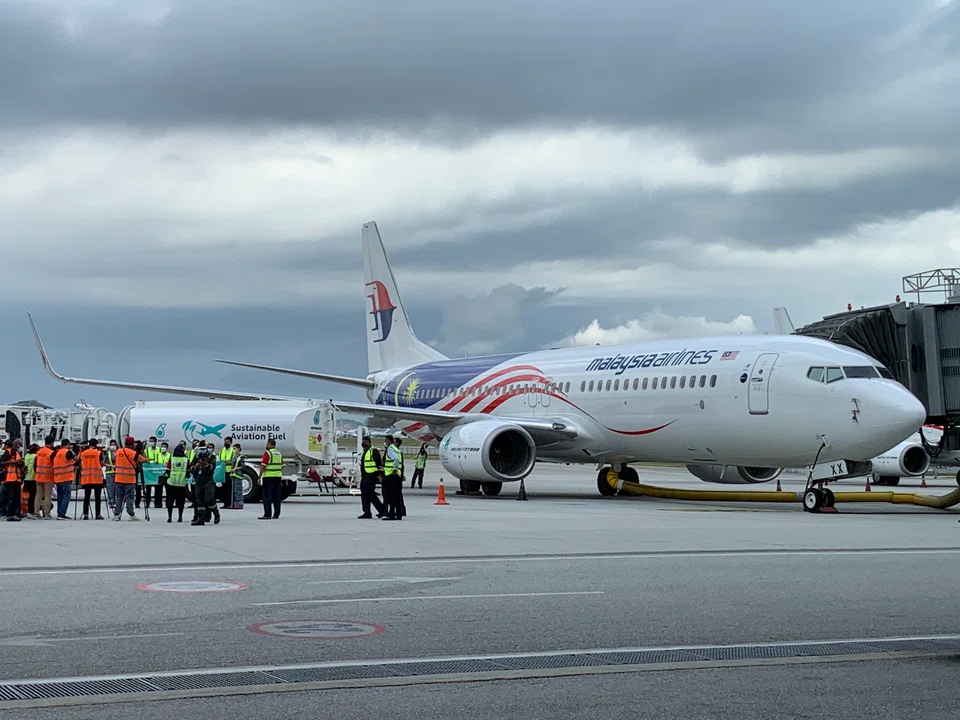
MALAYSIA Aviation Group, the parent company of Malaysia Airlines, is looking at rolling out more flights using sustainable aviation fuel (SAF) in the next 6 to 12 months, as part of efforts to achieve net-zero carbon emissions by 2050.
Philip See, the chief sustainability officer of Malaysia Aviation Group, said this initiative will include passenger and cargo flights under the subsidiary groups of Malaysia Aviation Group — including Firefly.
He added that the usage of SAF in passenger flights is one of the measures to reduce the group’s carbon footprint and Malaysia Aviation Group aims to be a pioneer in using SAF for flights in Malaysia.
“We cannot do it alone (in achieving the net-zero target); with the commencement of our first passenger flight using SAF, we encourage passengers to join us on this journey,” See told reporters at Kuala Lumpur International Airport on Sunday (June 5) during the send-off event for the airline’s first passenger flight powered by SAF.
In conjunction with World Environment Day, Malaysia Airlines has operated its first passenger flight using Neste MY SAF on flight MH603 from Kuala Lumpur to Singapore.
The dedicated SAF-powered flight was operated on the Boeing 737-800 aircraft, using a blend of conventional jet fuel and approximately 38 per cent of SAF — made from 100 per cent renewable waste and residue raw materials such as cooking oil.
See noted that the usage of SAF could reduce greenhouse gas emissions by up to 80 per cent.
The SAF was produced by Neste, the world’s largest SAF producer, and supplied through a supply deal with PetcoTrading (UK), the Europe-based marketing and trading arm of Petronas, while product handling and refuelling was carried out by Petronas Dagangan.
Prior to this, Malaysia Airlines had commenced the usage of SAF on a commercial cargo flight — MH7979 from Amsterdam to Kuala Lumpur — in December last year.
“This proved that SAF is a cleaner and viable fuel option for the aviation industry. Although for now it’s more expensive than conventional jet fuel, if we are able to achieve economies of scale, the cost will be reduced in the future,” said See.
The cost of SAF depends on the technology used to produce the fuel, he said, adding that generally the cost could be 4 to 5 times that of conventional fuel.
Using SAF will not affect Malaysia Airlines’ cost structure as currently the usage of SAF is minimal, See said. “The ticket price will not be affected by the SAF usage,” he added. “Prices will be determined by the market demand.”
Azrul Osman Rani, managing director and chief executive officer of Petronas Dagangan, said Petronas is evaluating planned developments of greenfield and brownfield biorefineries as well as co-processing at existing facilities.
This is in anticipation of the Carbon Offsetting and Reduction Scheme for International Aviation mandatory phase in 2027.
“With this strategic growth, Petronas will be well-positioned to supply SAF domestically and internationally, with additional operational flexibility to also produce hydrogenated vegetable oil or renewable diesel,” he added.
TRENDING NOW

World’s largest offshore wind platform by Seatrium consortium on track to be completed by 2028

Is stamp collecting enjoying an analogue revival or are its best days over?

GovTech retrenches another 38 staff in second round of layoffs

MBS adjusted property Ebitda falls 20.6% in Q3 with fewer high-roller visits, weaker hold

