Palm oil export ban lift to send global CPO, share prices in different directions: analysts

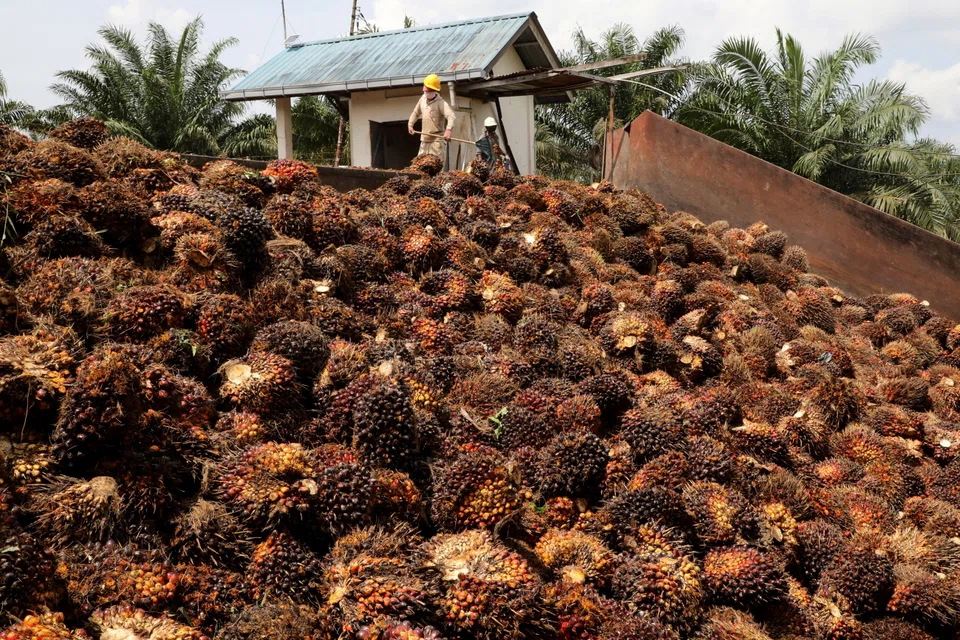
ANALYSTS view the anticipated lifting of Indonesia’s ban on palm oil exports as largely beneficial to plantation players whose operations are largely based in the country – but not so much for those in Malaysia.
This comes after President Joko Widodo’s Thursday (May 19) announcement that the country will lift its palm oil export ban from May 23, less than a month after it was implemented on Apr 28.
RHB, CGS-CIMB and Maybank Securities are staying “neutral” on the region’s plantations sector ahead of the ban reversal.
All 3 brokerages generally expect listed Indonesia-based growers in both Indonesia and Singapore to benefit from the move as the global market’s oil supply shortage eases.
Growers and producers with estates and refineries based in Malaysia, on the other hand, stand to lose out in their view – as they no longer enjoy the advantage as the main supplier of palm oil. The country’s CPO (crude palm oil) prices are also anticipated to fall, as consumers and producers return their focus to exports from Indonesia instead of Malaysia.
Maybank foresees an overall softening of global CPO prices with the ban lifted, with the current gap between Malaysian and Indonesian CPO prices to gradually narrow to RM2,533 per tonne. This should reflect the maximum CPO export taxes applicable at the current price of US$575 per tonne given ample supply of CPO in the domestic market, said analyst Ong Chee Ting in a report on Friday.
Singapore-listed agribusiness plays First Resources and Golden Agri-Resources were among the potential winners named by CGS-CIMB.
Both have been rated “hold” by the brokerage at the respective target prices of S$2.10 and S$0.30. Every US$10 per tonne change in net CPO price assumption could impact the companies’ FY2022 net profit by 2.4 per cent and 2.8 per cent, respectively, said CGS-CIMB on Thursday.
The brokerage has an “add” recommendation and S$5.69 target price on Singapore investment holding company Wilmar International. While Wilmar’s upstream estates and a downstream processing business in Indonesia will be able to resume palm oil shipments with the lifting of the ban, CGS-CIMB said this could be partially offset by lower profitability from the group’s palm business in Malaysia.
It estimates every US$10 per tonne change in net CPO price assumption to impact Wilmar’s FY2022 net profit by 0.3 per cent.
On the other hand, RHB said it sees profit-taking opportunities from the upcoming ban reversal. This is given continued uncertainty in Indonesia and a potential increase in export levies, which could hurt the profitability of companies.
“While CPO prices could come off as a result of this news, share price of planters with Indonesian operations may rise,” stated the brokerage in a Friday report.
Aside from First Resources and Golden Agri, RHB has identified Singapore Exchange-listed Bumitama Agri as another potential beneficiary. The stock has been rated “buy” with a S$0.95 price target.
“We believe there could be further announcements from the government since prices have still not come down to the desired level and as the lifting of the ban could result in the domestic shortage recurring,” added RHB.
Likewise, OCBC highlighted that while the national average price of bulk cooking oil now stands at a lower 17,200-17,600 rupiah per litre, this remains “some distance away” from the initial target of 14,000 rupiah per litre.
“The fact that the ban ‘experiment’ did not move the needle downward much on price should mean that its removal should not necessarily result in a spike (in inflation),” said OCBC economist Wellian Wiranto in a report on Friday.
“The whole episode did show, however, that the sticky cooking oil prices may have more to do with structural issues such as biofuel policy and a lack of domestic refining capacity, rather than exports. After all, domestic needs constituted just 35 per cent of total palm oil production to begin with, which should leave more than enough for the rest of the world.”