Petrol hikes spark criticism in the Philippines
Manila
AMID petrol hikes fuelled by the Russia-Ukraine conflict, the Philippines government has announced discount vouchers for agricultural workers and is looking at fuel subsidies for public transport drivers. But this may not suffice, say detractors, who are calling for changes to oil-related laws and taxes instead.
Drivers of jeepneys - the ubiquitous small buses that are a key part of urban public transportation - are among the most affected and vehemently critical of soaring oil prices.
According to national transport group Piston, public utility vehicle drivers take home around only 300 to 400 pesos (S$7.80 to S$10.40) after a 16-hour workday, even less than Metro Manila's minimum wage.
"Each increase in gas prices is a major hit to our daily income," said Piston chairperson Mody Floranda.
He added that most Jeepney passengers will add an extra peso to their fare in sympathy with drivers. While the current minimum fare is 9 pesos, Piston says it is open to increasing it to 10 pesos to ease the burden on drivers, "even a little".
But Floranda stressed that a fuel price rollback would be more beneficial to the greater public.
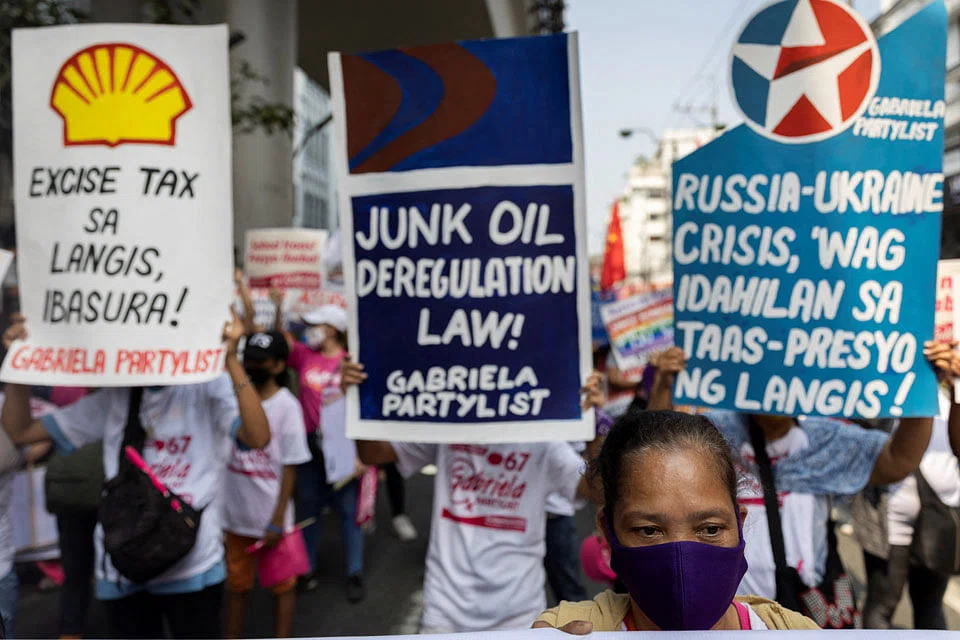
"Big oil companies are enabled by the oil deregulation law which allows for uncontrolled oil prices in the local market. It is a malicious law that disenfranchises most Filipinos," he said.
In 1998, the state surrendered many of its powers to regulate the oil market with the introduction of a deregulation law. Piston's view is that this has solidified oil industry monopoly pricing and enabled oil companies to unilaterally determine prices.
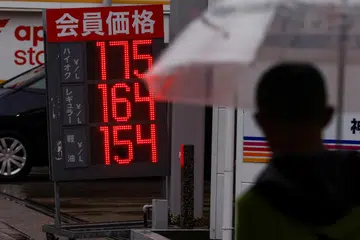
On March 8, major oil firms in the Philippines including Shell, Petron and Caltex announced the biggest price increase of the year, capping off a 10-week streak of hikes. The per-litre cost rose by 5.85 pesos for diesel, 4.10 pesos for kerosene, and 3.60 pesos for petrol.
This brought the total rise since January to 17.50 pesos for diesel and 13.25 pesos for petrol. In contrast, for the full year of 2021, prices only rose by 15.80 pesos and 16.30 pesos respectively.
A day before the latest hike, gas stations were swamped with motorists filling up their tanks in anticipation of another week of escalating prices.
The government has cited the conflict between Russia and Ukraine as the main reason behind market instability and spiking prices. Speaking on live television on the day of the hikes, the Department of Energy (DOE) said that world market trends inevitably affect local prices and that the public would just have to wait out the crisis with the government.
"Our country, as an importer of petroleum products, is again at the mercy of global price movements," said DOE chief Alfonso Cusi.
Sonny Africa, economic expert and director of the think-tank Ibon Foundation, said that although Russia is the world's third-largest oil producer and second-largest oil exporter, "the conflict has actually not yet affected global oil supplies and its speculators are betting on price movements that in turn are driving global oil prices up".
The loosening of quarantine restrictions across the world is also boosting demand for oil, he noted, adding: "The reopening of major economies worldwide since last year equals more economic activity that also drives demand for oil with upward pressure on prices."
Ahead of the latest hike, the Economic Development Cluster within the Cabinet of President Rodrigo Duterte pressed for greater fuel subsidies of up to 5 billion pesos for public transport drivers. Meanwhile, the DOE announced discount vouchers worth 500 million pesos for farmers and fisherfolk.
But the rising oil prices have provided fuel for the opposition. Congressman and minority leader Carlos Zarate of the Bayan Muna (People First) Party-list believes that Duterte is not doing nearly enough to address the spate of price increases.
In his view, the administration is busy focusing on his allies' current electoral campaign for the May 2022 polls and spending considerably less time on stabilising prices.
"Even if fuel subsidies are doubled, this won't be enough for the long term," Zarate told The Business Times. "Besides, it only helps one section of the workforce when the entire population is in need."
Fuel subsidies promised in previous years have not even been distributed yet, he reminded.
Beyond handouts, the government should question and even repeal tax laws, said Ibon Foundation's Africa: "The government can lower oil prices immediately by taking away the oil excise taxes. It can also restore powers to more actively regulate prices."
According to the Ibon Foundation, since March 2020, around 18.4 million Filipino families have seen their savings depleted and their income levels fall, because no unemployment aid was provided during pandemic lockdowns.
"Oil-driven price increase means they will consume even less than before. Unabated oil price hikes just make this situation worse," Africa explained.