



RCEP a boon to access and attractiveness for developing economies as investment destinations
With ongoing global health and economic crisis, the agreement can help ensure an unimpeded flow of essential goods within the region
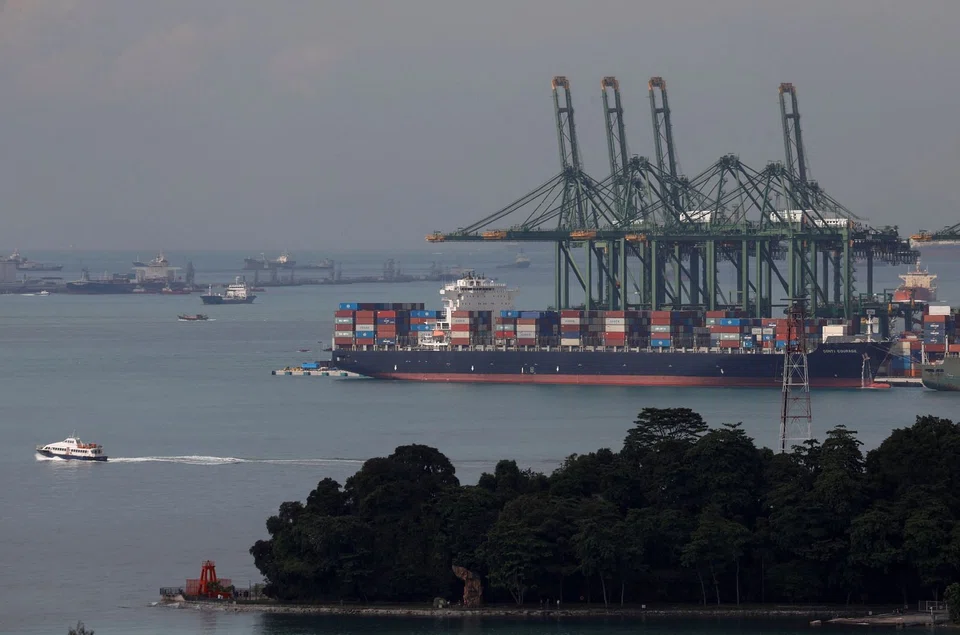
THE Regional Comprehensive Economic Partnership (RCEP) - the world's largest free trade agreement (FTA) - finally entered into force on New Year's Day, having been ratified by 10 of its 15 signatories so far.
The agreement needed 8 long years of negotiations and was signed in 2020 in Hanoi by all 10 Asean member states - Brunei, Cambodia, Indonesia, Laos, Malaysia, Myanmar, the Philippines, Singapore, Thailand and Vietnam - as well as Australia, China, Japan, South Korea and New Zealand.
The RCEP covers a market of around 2.2 billion people and about US$26.2 trillion of global output. It covers 30 per cent of the world's total gross domestic product (GDP), trade and population.
By 2030, it is projected to have an impact on global GDP by US$186 billion annually, which will lift the Asia-Pacific region's GDP by 0.86 per cent by 2035.
This is set to boost the region's competitiveness as a location for supply chains.
It will help to draw in investments, offer companies abroad an array of production locations with comparative advantages, and the opportunity to export at preferential tariff rates to a wide free trade area comprising both high-income consumers and a large and growing middle-income segment.
Although the region already has existing bilateral and Asean-Plus-One FTAs, the RCEP brings together key upstream high-tech manufacturers from countries such as Japan and South Korea, midstream producers including Thailand and the Philippines, and nations with relatively low labour costs such as Cambodia, Laos and Myanmar, providing more opportunities for firms to enhance supply and trade linkages.
Accordingly, businesses will have the option to choose which to use among these FTAs depending on the degree of commitments and preferential arrangement secured in each FTA.
This is not to mention that the wider sourcing of raw materials and inputs can boost the manufacturing sector in the region.
Economic partnerships
While the Philippines and other economies in South-east Asia are already benefiting from existing FTAs with these same trading partners, it is incumbent upon the Philippines to be more strategic in finding its comparative advantages in the region.
With this, complementary domestic programmes and economic reforms will play a vital role.
Establishing an economic partnership is mutually beneficial and will create employment, market opportunities, and boost economic growth and development within the region.
In a study conducted by the Philippine Institute for Development Studies, the RCEP is estimated to improve the Philippines' trade balance by as much as US$51.7 million.
The FTA will also increase overall welfare by US$573.7 million, contribute to a 0.84 per cent real GDP growth, and lower poverty incidence by 4.97 per cent in 2030.
As the Philippines continues to develop, the RCEP will support the nation in further attracting foreign direct investments. More specifically, it presents an enhanced platform for investments in export-oriented manufacturing sectors.
Developing nations involved in the RCEP should take full advantage of the opportunities that the agreement brings.
The Philippines' impending ratification of the RCEP will greatly boost the nation's economic activity and recovery, and enhance Philippine businesses' participation in the global value chains.
This is through the facilitation of more investments into the region aside from allowing a freer flow of goods among the 15 participating countries.
Through that, the Philippines can benefit from the RCEP through 4Cs:
- Cheaper costs for sourcing key inputs of the manufacturing sector;
- Convenience for businesses in trading with key FTA partners;
- Competitiveness for Philippine industries;
- Complementation of existing government support programmes.
Manufacturing companies from non-RCEP participating countries can also expand their operations in the Philippines if they are looking into dealings with other RCEP countries.
The RCEP provides business-friendly mechanisms to facilitate trade with the country's key trading partners through clear and transparent procedures.
There is also secure market access for cheaper raw materials and intermediate goods to sustain and improve its export and local industries.
The Philippines' participation in FTAs is one of the avenues by which the government is able to raise the country's profile as an attractive investment destination.
Under the scope of Asean, there are on-going discussions with the European Union and Canada for an FTA, while Asean's FTAs with existing Dialogue Partners also undergo regular upgrade negotiations.
Boosting foreign investment
With the ongoing global health and economic crisis, the RCEP can help to ensure an unimpeded flow of essential goods within the region.
There is the promise of improved market access for all goods in the Asia-Pacific region, making cheaper goods available for manufacturers, making trade more convenient, and making micro SMEs part of the global value chain.
Being part of an FTA is not only about market access but also about making countries more attractive as investment destinations.
The RCEP should be viewed as a platform encouraging more investments and service providers in vital sectors such as manufacturing, creative sectors, financial services, research and development, information technology-business process outsourcing, professional services, and energy.
- The writer is Secretary of Trade and Industry of the Philippines.
TRENDING NOW

Government to bring forward raising of retirement age, give employers more financial support to create flexi-load jobs

If Europe goes to war, the fallout will be felt in East Asia
Indonesia stocks suffer worst plunge in nearly 30 years as MSCI proposes standalone status

Vietnam’s northern provinces, not Hanoi or Ho Chi Minh City, are powering near 10% GDP growth

