Robo-advisor StashAway out to woo Thailand's wealthy investors
Singapore-based fintech is aiming at slightly different demographic than private banks
Bangkok
SINGAPORE-BASED robo-advisor StashAway, which expanded its operations into Thailand earlier this month, joins a growing number of private banks, mutual funds and local digital portals keen to facilitate the outflow of Thai baht from the kingdom into higher-yielding stocks and bonds abroad.
The fintech wants to reach out to Thailand's risk-averse market of wealthy investors who have traditionally shied away from moving their cash abroad, or were prohibited from doing so not too long ago.
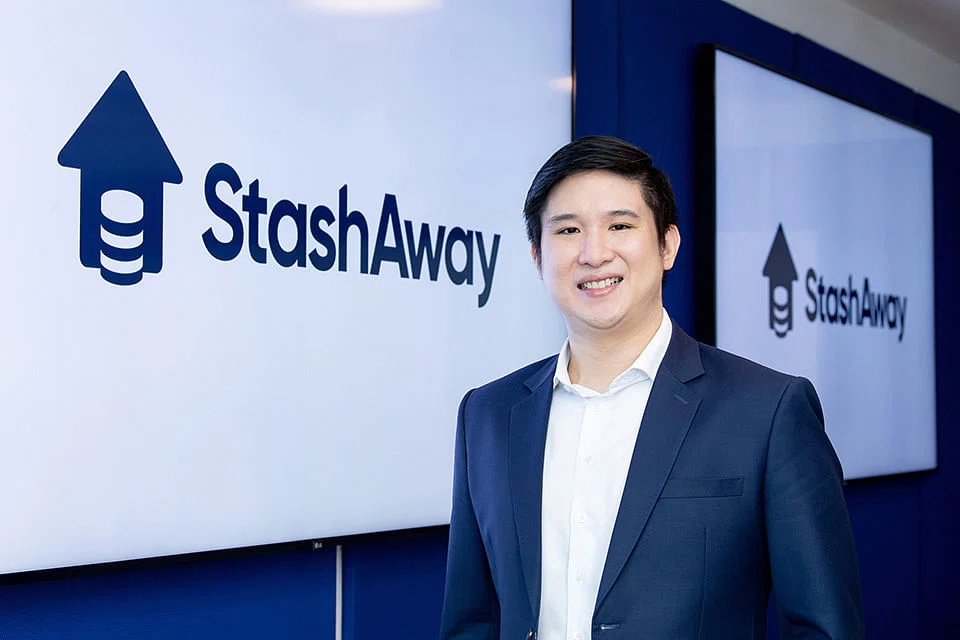
Tim Niranvichaiya, the managing director of StashAway Asset Management (Thailand), said the company is trying to help Thai people invest overseas, and to do so in an easy and cost-efficient manner
StashAway Asset Management (Thailand) is is licensed under the Securities Exchange Commission (SEC) of Thailand, the market regulator.
A few years ago, such a service would have been deemed illegal in South-east Asia's second-largest economy.
The Bank of Thailand (BOT) only relaxed restrictions on outflows of baht and investments in foreign portfolios in December 2018, paving the way for a take-off in professional wealth management services aimed at high-net-worth-individuals and well-paid professionals.
The relaxation was in part an attempt for the central bank to weaken the strong baht - thanks to a hefty current account surplus - which was undermining the competitiveness of Thailand's exports.
Due to the liberalisation, a cluster of wealth management operations were established in 2019.
These include a joint venture between Siam Commercial Bank and Europe's oldest wealth management bank Julius Baer; a partnership between Singapore's DBS Bank and its Thai affiliate DBS Vickers Securities (Thailand); a partnership between Kasikorn Bank and the Swiss-based Lombard Odier Group; and another between Krungsri Bank and BlackRock, one of the world's leading asset and wealth management groups.
Credit Suisse also expanded its Thailand operations in 2019 to further its wealth management services. The Zurich-based bank has often ranked Thailand as one of the most unequal societies in the world.
Besides a dozen billionaire businessmen, DBS estimates that there are about 122,000 high-net-worth individuals in Thailand, classified as having assets of more than US$1 million.
Separately, Kasikorn Research Center estimates that there are some 265,000 "affluent" people, defined as those with annual incomes of more than US$200,000.
Thai investors have traditionally shown a high home-bias, but this is gradually changing.
The home-bias index of Thai investors declined from an average level of 95 per cent between 2015-2019 to 93 per cent in 2021, according to the central bank.
The home-bias index between 2015-2019 was 89 per cent in Malaysia, 88 per cent in South Korea, 36 per cent in Singapore, and 32 per cent in Hong Kong.
Thailand's portfolio outflows hit 570 billion baht (S$23 billion), compared with an average of US$3.1 billion between 2010 and 2019, according to BOT data.
The outflow was assisted by the relatively poor performance of the Stock Exchange of Thailand during that quarter.
StashAway is aiming at a slightly different demographic than the private banks, whose services are highly personalised and seen as expensive.
"We are targeting a younger demographic but in terms of the level of sophistication and income range we are not much different," said Mr Niranvichaiya. "Essentially, we are hitting all those segments, but the people who are drawn to our product tend to be millennials."
StashAway is pursuing an "aggressive online acquisition strategy that has been successful in other markets", said Mr Niranvichaiya, adding that the company advertises on Google and other forms of social media.
Besides the prestigious private banks that have traditionally handled wealth management, and the mutual funds, StashAway will also be up against a bevy of similar platforms offered by the five largest Thai banks.
"In Thailand, we (Thai banks) have a lot of digital wealth management platforms mainly integrated in our core mobile banking applications," said Ruangroj Poonpol, chairman of the Kasikorn Business Technology Group.
But StashAway argues that its platform offers a greater variety of investment options than the local rivals.
The platform does not allow investors to select their own investments, but rather sets investment parameters designed to appeal to the risk-adverse players.
"You just choose your appropriate risk level and your target for investment growth and then we compile the best combination of ETF (exchange traded funds) based on your growth target and risk level," added Mr Niranvichaiya.