



S-E Asia is open for business, but tourism recovery seen elusive for now
Despite several countries' relaxation of border controls, economists say pickup in travel likely measured due to restrictions, with spending moderate

Singapore
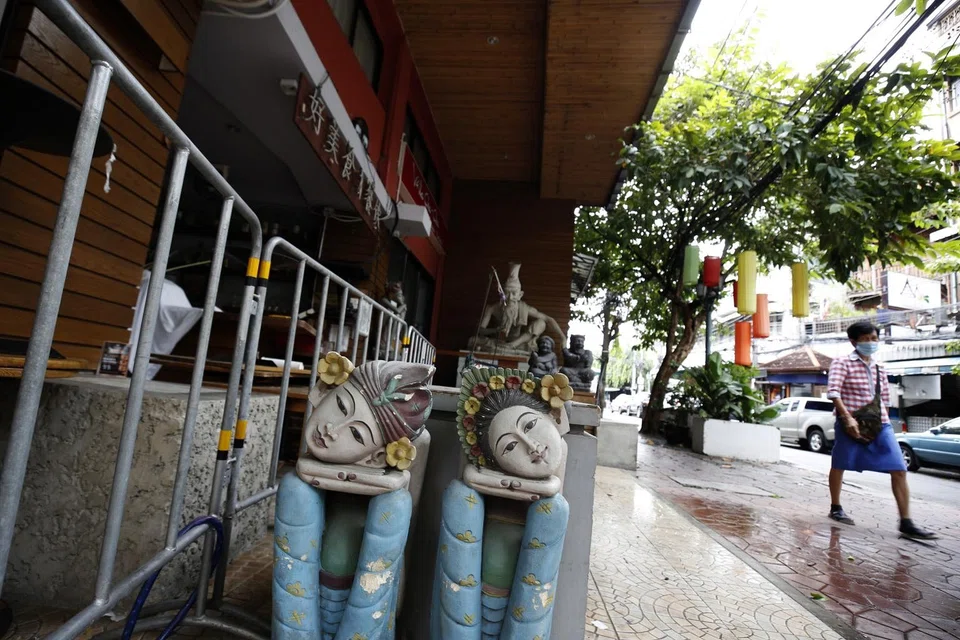
SOUTH-EAST ASIA is back in business again, going by several countries' apparent zeal to declare a relaxation of border controls, but economists told The Business Times that this may not necessarily translate to a swift recovery for the region just yet.
Despite the pent-up demand for travel, the pickup is likely to be measured and "subject to diminished multipliers", said Vishnu Varathan, head of economics and strategy for Asia and Oceania treasury at Mizuho Bank.
"For one, the reopening at these early stages is still targeted and conditional rather than unfettered. Accordingly, the pickup will be measured in the extent of upswing to make up for pre-Covid-19 shortfall. Moreover, the varying restrictions on tests and pre-travel confinements will also mean that tourism pickup from travel may initially be more subdued, with a more restricted positive spillover," he said.
Over the weekend, Singapore announced 9 new Vaccinated Travel Lanes, although none of them involve countries in the region.
Meanwhile, Malaysia said it will allow interstate and overseas travel from Oct 11, while Prime Minister Ismail Sabri Yaakob a week earlier signalled the country's plans to welcome foreign travellers in December.
On Monday (Oct 11), Thailand unveiled plans to scrap quarantine for vaccinated travellers from 10 countries, including Singapore, from Nov 1. On the same day, Indonesia said it would allow visitors from 18 unnamed countries into Bali and the Riau Islands with a shortened 5-day quarantine, although Singapore is not on the list.
These announcements, all made within a week, come shortly after several regional watchers downgraded their growth outlook for the region.
The Asian Development Bank's forecast for South-east Asia was lowered to 3.1 per cent in late September, from an April forecast of 4.4 per cent. The Asean+3 Macroeconomic Research Office (Amro) is now predicting a 6.1 per cent growth for Asean+3, down from a 6.7 per cent projection in March.
While the announcements are likely to bring relief and optimism to the heavily battered tourism sector, one of the biggest casualties of the Covid-19 pandemic, economists told BT that they are holding their forecasts for now.
In the case of Thailand, UOB economist Barnabas Gan said that any boost from tourism may be felt only in the last 2 months of the year, which is why he is keeping to a full-year outlook of 0.7 per cent.
Gan's colleague and fellow economist Enrico Tanuwidjaja said Bali's opening is not sufficient to lift Indonesia's tourism, since tourist numbers and spending are likely to be moderate, compared with pre-Covid-19 levels, even though he noted that undergoing quarantine in Bali could turn out to be a "fairly pleasant experience" for visitors, with the variety of hotels at competitive prices.
For the region as a whole, a "meaningful and steady return of tourism revenue" to pre-pandemic levels will come only when countries in the region are fully confident to open travel borders with one another, Tanuwidjaja said.
"At this juncture, the 'tourist bubble' is a cheer but the party is not going to carry through, predictably, if there is no confidence in one another as the region needs to benefit as a whole," he added.
Apart from the cautious posture, economists point to downside risks stemming from China's energy crisis that is clouding the region's outlook.
DBS economist Chua Han Teng said: "China's slowing economy arising from the power crunch and supply chain disruptions are adding further uncertainty to Asean's economic outlook, given that the region counts China as one of its key export destinations."
It is also for this reason that Varathan is not upgrading his Asean growth forecast. "Rising inflation risks led by energy prices... is going to erode profit margins and discretionary household incomes in most regional economies, hampering growth," he noted.
He added that weaker regional currencies as a consequence of higher net energy import bills for most of the region could translate into impediments to growth as macro stability risks emerge, especially if regional central banks are forced to "trade off some policy accommodation" to address inflation risks at the still-nascent stages of recovery.
This uncertain bleeding into the economy and financial markets could cast a shadow on year-end recovery and dampen the hoped-for tourism fillip, Varathan said.
At the same time, with the Covid-19 situation not quite under control, a potential resurgence or new variants of the coronavirus are key risks that may lead to a policy U-turn. In such a scenario, consumer confidence could turn out to be the biggest casualty, Varathan said.
"Regressing back into tighter borders after initial opening may introduce more doubt about subsequent reopening, and the thing is that doubt and confidence deficits are usually correlated negatively to consumer spending and business investments," he said.
Chua added that a delayed recovery would increase the potential of medium-term economic scarring.
TRENDING NOW
DBS remains analysts’ pick ahead of Q3 earnings after Singapore banks’ share slump
Singapore identifies 7 firms responsible for haze fires, notices issued urging action: Grace Fu

Good Class Bungalow market activity picks up pace on ‘realistic’ pricing
High Court rules against Julius Baer’s Singapore trust arm in US$50 million family trust dispute

