Singapore Infrastructure Dispute-Management Protocol introduced to aid big infrastructure projects
Parties in such projects will set up a Dispute Board of neutral experts to quickly resolve issues as they crop up

Janice Heng
Singapore
TO MAKE mega infrastructure projects more bankable, a Singapore Infrastructure Dispute-Management Protocol has been introduced to help parties manage disputes, thus minimising the risks of time and cost overruns.
It has already attracted interest from parties keen to incorporate it into their projects estimated to be worth S$500 million or more, the Ministry of Law said on Tuesday.
The protocol was launched at the eighth Asia-Singapore Infrastructure Roundtable of Enterprise Singapore (ESG) on Tuesday, alongside the official launch of Infrastructure Asia
Infrastructure Asia is an organisation set up by ESG and the Monetary Authority of Singapore (MAS) to connect firms in the infrastructure ecosystem with government officials to develop, finance and execute infrastructure projects in the region.
Noting that few governments have the resources to meet infrastructure needs on their own, Minister for Finance Heng Swee Keat raised the need to "crowd in private capital", making projects bankable, investible and visible to attract investors.
Bankability can be improved by standardised terms, proper planning, and structuring projects to secure finance at various stages, he added. During construction, banks specialising in project finance could be involved; once operational, the expected payment stream can be securitised and sold as a long-term asset.
Bankability can also be improved by mitigating risks. Under the new protocol, parties will set up a Dispute Board at the start of a project, rather than do this only after disputes have arisen.
These dispute boards will comprise three neutral professionals - experts in fields such as engineering, quantity surveying and the law - and follow the project from start to end. They will proactively help to manage issues that arise through customised dispute avoidance and resolution processes.
The protocol provides for approaches such as mediation, opinion and determination. Full professional and administrative support will be provided through the Singapore International Mediation Centre (SIMC) and the Singapore Mediation Centre (SMC), which can help with identifying and appointing Dispute Board members, as well as providing meeting, escrow and other administrative services.
The protocol was developed by a working group comprising private-sector infrastructure and dispute-resolution specialists, the SIMC and the SMC, convened by MinLaw in January.
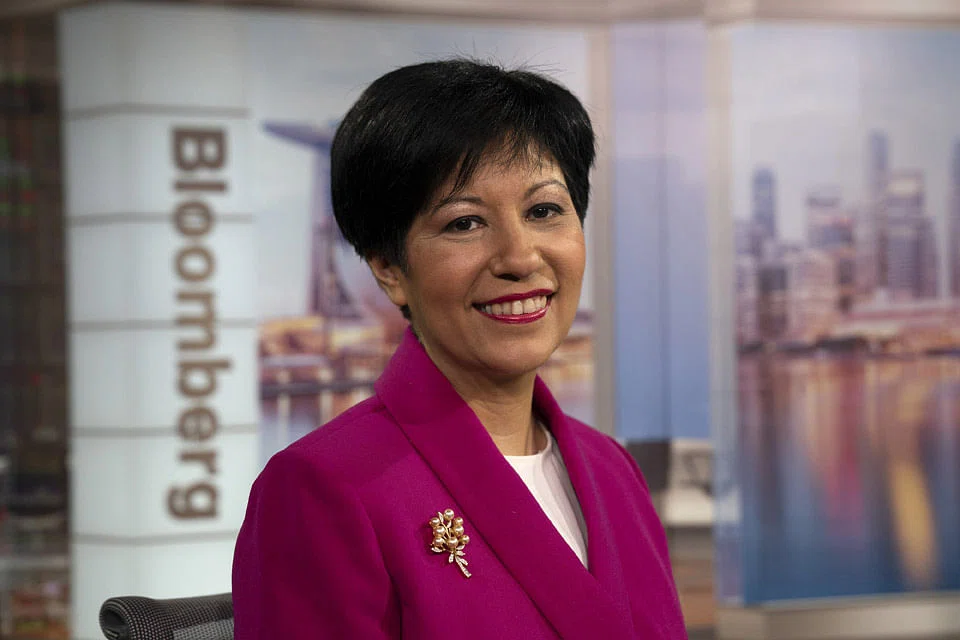
Noting Singapore's role as a leading international dispute resolution hub and an infrastructure hub for Asia, Second Minister for Finance Indranee Rajah said: "We realised that there is a critical gap in the infrastructure space - the need for more cost- and time-efficient resolution of infrastructure disputes, facilitated by experts."
The protocol was developed "specifically to address this need". The idea is "to help shortcut what could be very long, costly, contentious disputes", she told reporters at the event. The Dispute Board can advise, for instance, whether an issue requires just a practical solution or actual legal adjudication.
On Tuesday, Infrastructure Asia signed two memoranda of understanding. One was with the World Bank Group for mutual leverage of networks and expertise, as well as collaboration to help Asian countries strengthen capacities for infrastructure project structuring, financing, implementation and operation. The other was with the Singapore Business Federation to bring regional opportunities to the attention of Singapore-based companies, and match firms with opportunities.
Said Infrastructure Asia executive director Seth Tan: "Infrastructure Asia will work closely with the private sector, governments, commercial and multilateral development banks to provide solutions that are customised to meet the local market's specific needs and requirements.
"We will also offer advice to relevant countries and work with them on capacity building," he added. "With better knowledge, skills and resources, we can improve project feasibility and bankability, enabling project leads to become viable commercial projects."
In the next 12 months, Infrastructure Asia will hold capacity building workshops with the MOU partners, step up engagement with the local authorities in regional markets, and intensify connections between global infrastructure players and regional infrastructure ecosystems, said ESG chief executive officer Png Cheong Boon.