



Sub-region growth triangles can narrow development gaps among Asean members
With pandemic ravaging regional economies, it may be right time for Singapore, Indonesia and Malaysia to revive three-way Sijori free trade triangle
Jakarta
IT was the perfect plan for the perfect time.
Riding on a wave of dizzying economic growth, Singapore, Indonesia and Malaysia joined hands in 1989, announcing the creation of a three-way, free trade economic development triangle to continue a run they thought would last forever.
Everyone would bring something to the table for the so-called "Sijori Growth Triangle", and all would share the pot.
Singapore desperately needed land, had money to invest and was a market for goods.
Indonesia and Malaysia, meanwhile, had plenty of land and needed more job opportunities for their people including technical and manufacturing positions.
But then a losing streak changed everything.
The 1997 Asian Economic Crisis, political upheaval in Indonesia, and regional terrorism dampened the euphoria of "Sijori" - an acronym for Singapore, Johor province in southern Malaysia, and Riau province in western Indonesia.
"The main factors accounting for its unanticipated limited progress include uneven regional economic performance, divergent individual interests at all levels, rising social problems, and uncertain external environment," according to a 2019 study by Xu Xiaodong of China's Guangxi Normal University.
Today, the triangle rarely gets mentioned in the media or by its governments, with some analysts cheekily calling it "an acronym that no one remembers" and "the Bermuda Triangle."
Not that investment into the triangle has vanished without a trace. Multinational corporations continue to operate in Johor and in Indonesia's Batam island, and total investment into the triangle zone continues to rise, albeit at a slow pace.
Singapore was happy with the desperately needed land, and cheaper production costs it gets in Indonesia, and Jakarta was happy to provide an endless supply of cheap labour.
Malaysia has found a middle ground, providing land, skilled workers, and luring Singaporean residents to buy homes there, into the mix.
"They are considered sub-regional development initiatives, which are key to narrowing the developmental gaps among Asean member states (part of the Asean Economic Community's 2025 fourth objective)," said Kaewkamol Pitakdumrongkit, an associate professor at the S Rajaratnam School of International Studies in Singapore.
She noted that Cambodia, Laos, Myanmar, Thailand and Vietnam developed a similar partnership - known as CLMTV - and were able to amend agreement details to make the framework better cope with changing threats including economic, social and environmental.
With the Covid-19 pandemic ravaging regional economies and forcing borders to shut out workers and tourists this year, now may be the time for the Sijori triangle's participating governments to do the same.
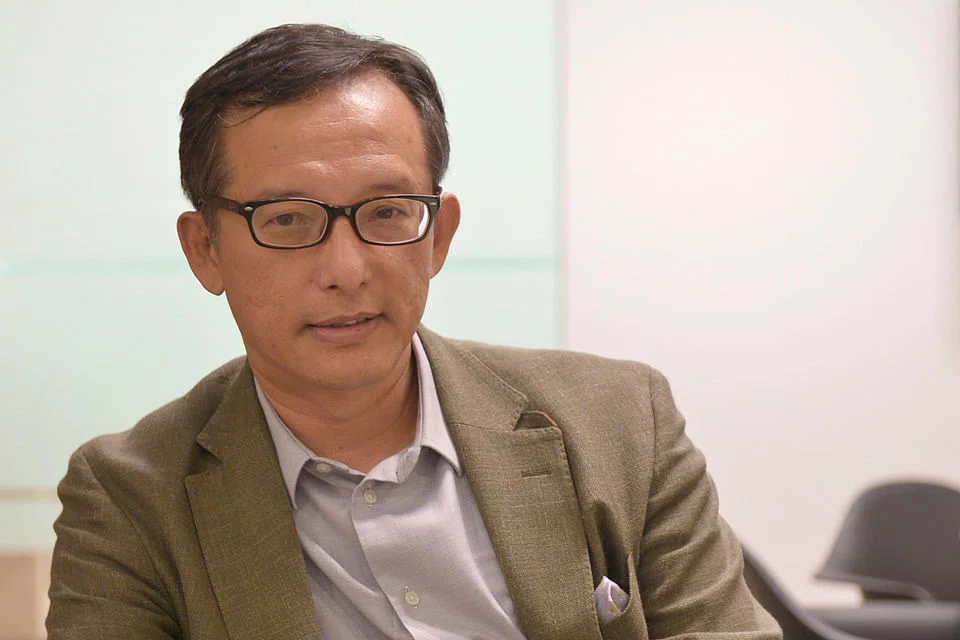
Simon Tay, the chairman of the Singapore Institute of International Affairs, says there needs to be a substantial rethink of the triangle's purpose, as well as revised regulations that benefit all sides.
"My own thinking about Sijori has come back due to the pandemic, as before, it was more of a historical thing - an acronym that no one remembers," he said.
"The pandemic has shown that there is interdependence among Singapore, Johor and Bintan and Batam" in Indonesia's Riau Province, he added.
"Especially the flow of trade of goods and services, but also the flow of people. Both sides shut down due to the pandemic and it wasn't just Singapore that suffered; tourism in Bintan went down the tubes," Associate Professor Tay pointed out.
"Safety and health are critical. There must be a new design to improve the interdependence. How do we make it more resilient?"
China's economic rise in the 1990s was the catalyst for Singapore to embrace the idea of a free trade zone in the first place, according to analysts.
But whether Sijori continues to expand like China's special economic zones or the European Union grouping - depending on whether Britain can reach a post-Brexit trade deal, that is - remains to be seen.
Much of the South-east Asian region's attention has for years been focused on further cementing the economies of Asean - which includes Singapore, Malaysia and Indonesia - to compete with China.
Prof Tay said Singapore would again need to "up its game" to help Indonesia and Malaysia on the triangle pact.
According to Prof Xu, the triangle has undeniably promoted regional economic development and was regarded as a model of development for other regional cooperation initiatives, "but at the same time, this study also shows that the progress of Sijori-GT lacks sustainability".
Prof Xu added: "The reasons are various, but political. Therefore, the best stimuli to encourage further cooperation and development relies on improved political coordination both regionally and internationally."






