Sunny days are over for Vietnam's solar power industry
Hanoi
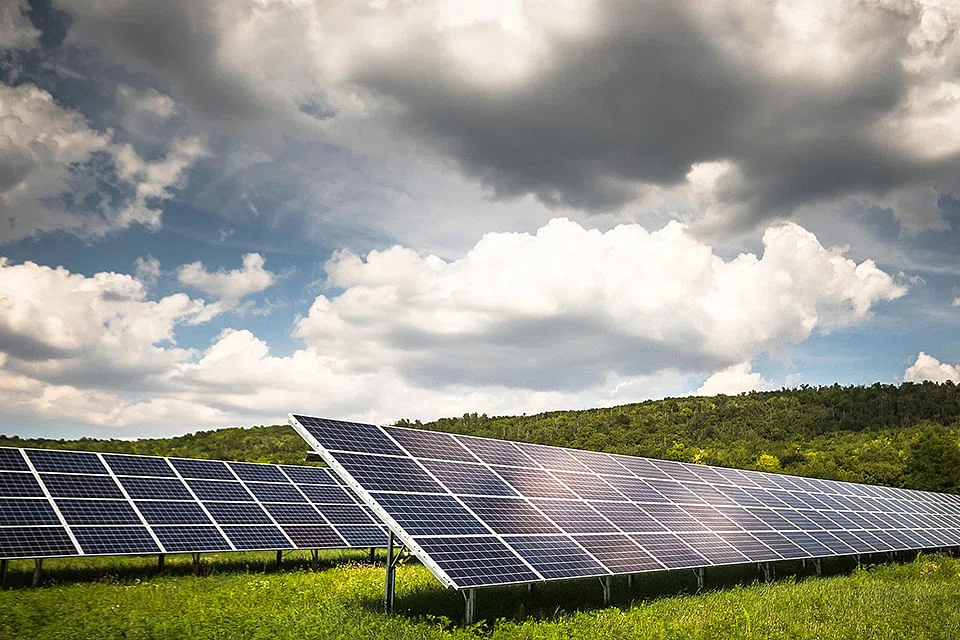
SOLAR farm operators in Vietnam's second-largest province, Gia Lai, have threatened to sue the state power provider, Vietnam Electricity (EVN), after it told operators they must reduce the amount of power they generate by up to 70 per cent.
This comes on the back of a rapid increase in the amount of rooftop solar capacity in the country from just 794 mega-watt peak (MWp) in June 2020 to 9,296 MWp in December, a nearly 12-fold increase.
Attractive feed in tariffs and Gia Lai's average of just under seven hours of sunshine a day has made it an attractive destination for investors.
But the rapid growth, which the Institute for Energy Economics and Financial Analysis (IEEFA) have dubbed as Vietnam's "extraordinary rooftop solar success", is proving too much for its electricity infrastructure to bear.
"The main reasons include an underprepared transmission grid and imprecise planning of demand and supply," said Thang Nam Do, a research fellow at the Australian National University (ANU).
Dr Do is a part of ANU's Grand Challenge Program on Zero Carbon Energy for the Asia-Pacific and co-authored the study, Vietnam's solar and wind power success: Policy implications for the other Asean countries.
"Better electricity system planning and a greater focus on system flexibility and energy storage would help... avoid the need to curtail intermittent energy sources," the study found.
The planning stage, however, has long since passed for solar producers in Gia Lai and for many the situation is becoming increasingly dire.
This year, EVN estimates that unused capacity in renewables may reach 1.68 billion kWh and in September, a group of 40 solar power investors publicly announced that many of them were on the brink of bankruptcy.
There are, however, few options for recourse. Local producers are relying on purchasing power agreements made with EVN to mount a legal case for compensation.
These were dubbed "unbankable" by the British Chamber of Commerce in their Vietnam Renewable Energy Report released earlier this year. They cited a range of reasons, most notably no international arbitration and no stabilisation clause.
EVN has suggested private investors look to energy storage systems and batteries in order to boost their electricity sales.
But Thomas Jakobsen, managing director of Indochina Energy Partners (IEP), said that battery storage is unlikely to solve the problem. "Battery storage is still some time away simply because there is a lack of legislation."
IEP is the representative office of Norsk Solar, a solar power producer, investor and developer, and a subsidiary of Norway's NV Group.
According to Mr Jakobsen, regulations would need to be in place with clearly defined parameters around how batteries could be used. For example, whether or not they could charge from the grid or charge at night and then discharge during the day and how that would be managed.
"In principle we could finance battery storage banks in the same way as we do with solar panels," he added. "There is no difference. But to put US$5 million worth of batteries up at some solar farms.. and then in eight months be told our curtailment problem is over, this is not a bankable proposition. That's the problem, There is no visibility."
The lack of adequate power infrastructure, however, has been clear for some time.
"They all knew that before they invested. That's also why the tariffs were so high. Because there was a significant risk associated with this business model. A risk that we chose not to take," noted Mr Jakobsen.
"Our general point of view, because the grid infrastructure is what it is - and generally that goes for the whole of Asean - is that we are not very focused on any business model that sells power to the grid."
Dr Do, however, does see at least one positive coming out of the recent cuts to solar power generation. "Indeed, it triggered faster progress in transmission projects," he said.