Tall order to meet H1 2024 target to relocate capital to Borneo: observers
Jakarta
INDONESIA wants to relocate its capital to Borneo's East Kalimantan province in the first half of 2024, but observers are unsure if the government can complete the move in full with that self-imposed deadline just a little over 30 months away.
After the pandemic put this relocation plan in limbo for several months, South-east Asia's largest economy says it is ready to shift the capital from Jakarta to an area of roughly 56,800 hectares in East Kalimantan, adjacent to Brunei.
As things stand, Parliament is on track to pass the Capital City Bill into law by the end of the year, which will give the green light to the 489 trillion rupiah (S$46.3 billion) project well ahead of the 2024 presidential election.
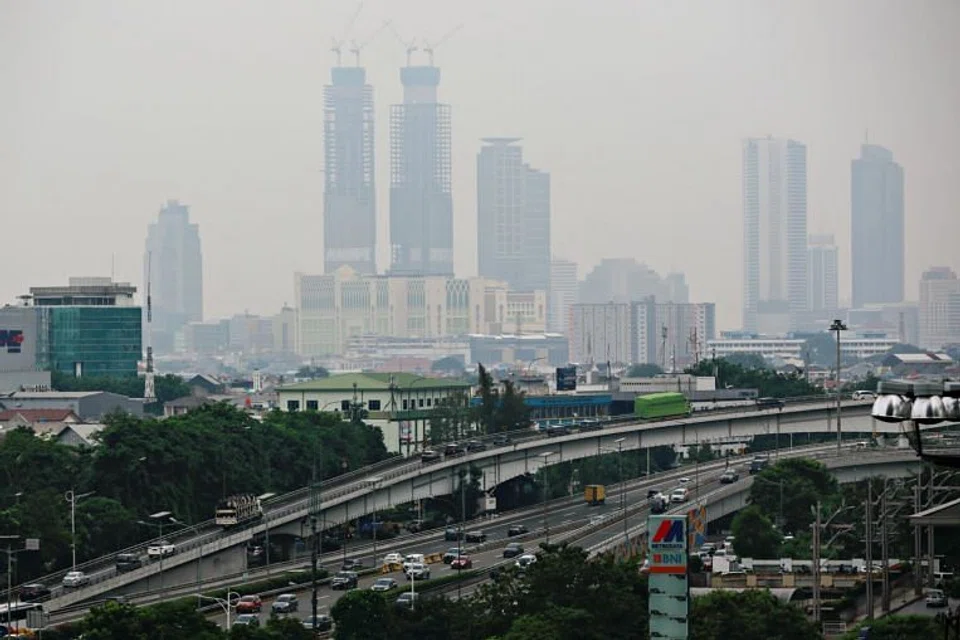
President Joko Widodo, who announced the capital relocation plan in August 2019, has said the move is essential to address Jakarta's notorious traffic jams, constant flooding problems and air pollution.
State institution headquarters will be transferred in phases that could take up to 4 years, with the exception of the central bank and the Financial Services Authority's main offices, which will both remain in Jakarta as the country's financial and commercial hub.
In September this year, National Development Planning head Suharso Monoarfa told a House of Representatives Commission meeting that "it is impossible to build a state capital in 2, 3 or 4 years". He said his agency's masterplan has a more realistic timeframe of 15 to 20 years.
Deden Rukmana, a professor and chair of the Department of Community and Regional Planning at Alabama Agricultural and Mechanical University in the United States, noted that the government should give itself more time - at least a decade, by his estimates - to ensure the new capital is fully functional.
Relocating an entire capital city is also more than just constructing new buildings and other infrastructure, as it will also require thousands of people to make the move too, he said.
"The new capital city will not run properly (in 2024) as it will only function partially. Ideally, a move to a different city will take 10 years without significant distractions such as the Covid-19 pandemic," said Rukmana, who edited a book, The Routledge Handbook of Planning Megacities in the Global South, released last year.
He also said the government should learn from the experiences of other large countries like Brazil and Nigeria, which took roughly a decade each to plan, build and inaugurate their new capital cities.
Bhima Yudhistira, director of the Centre of Economic and Law Studies, is another observer who feels the mid-2024 relocation target is unlikely to be met.
"The government is still working on completing land acquisitions, building infrastructure, and providing housing for state officers in East Kalimantan province," he noted.
Getting adequate financing is another challenge, added Yudhistira.
Under the current plan, a fifth of the total relocation costs will come from the state budget, with the rest coming from private funding.
Earlier this month, it was reported that Indonesia is eager to cooperate with the United Arab Emirates to invest in the new capital city.
Indonesia also has several big-ticket items still to take care of, said Yudhistira.
Among them is Indonesia's decision to share the cost of a China-backed high-speed railway project from Jakarta to Bandung, which is already US$2 billion over budget and 2 years behind schedule.
If Indonesia is successful in its relocation, it would be just the third country in South-east Asia to achieve this. Malaysia moved its administrative capital to Putrajaya back in 2003, while Myanmar changed its capital to Naypyitaw in 2006.