



Thailand's push to be an international headquarters hub gains steam
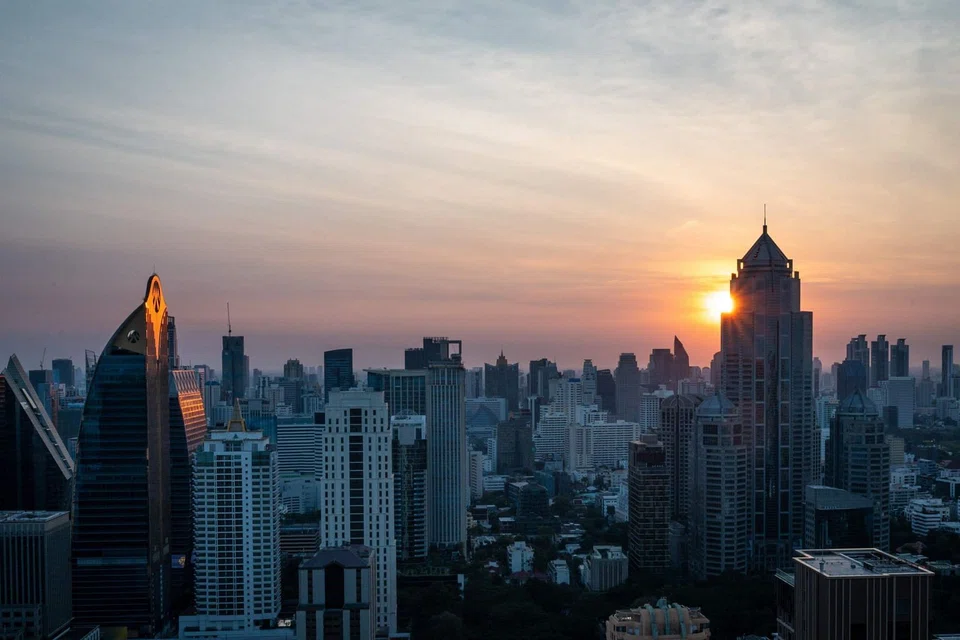
Bangkok
THAILAND has been tweaking its regulations to attract more international headquarters, trading and treasury centres to the kingdom since 2015, with reasonable results. The government is now under more pressure from the ballooning office property sector to make the policy a success.
Thailand has been pushing itself as an alternative hub for international headquarters (IHQs) to Singapore and Hong Kong (HK) since 2000, but the policy only gained traction in 2015 when new tax and non-tax incentives were added to the programme.
Singapore and HK have been the main locations for IHQs for decades, with each boasting more than 1,000 such entities - HK drawing multinationals keen to invest in mainland China while Singapore tends to attract companies covering South-east Asia.
Between 2000 and 2014, Thailand attracted less than 150 regional headquarters (RHQs) under its old incentive scheme, but things have improved under the new improved one.
"During the past five years, there were 780 (applications) for projects in International Business Centers (IBC), International Headquarters and International Trading Centers (ITC)," said Narit Therdsteerasukfi, deputy secretary-general of the Board of Investment (BOI). "And the investment value of the 780 projects was more than 24 billion baht (US$760 million, S$1.1 billion)," he said.
For example, recent IHQs were set up by Exxon-Mobile (USA), Bombadier (Canada), Agoda, Booking.com and Brands-Suntory.
Between 2015 and 2019, Thailand also attracted 31 new treasury centres, which are under the supervision of the Bank of Thailand.
Some of those 780 new applications would include former IHQs/ITCs that have converted to IBCs - a new category that was put in place in mid-2018 to replace the former IHQ and ITC schemes after they came under criticism from the Organisation of Economic Co-operation and Development (OECD) for offering excessively generous tax incentives.
The main complaint of the OECD was directed at the corporate income tax waiver on profits and revenues earned by IHQs/ITCs outside of Thailand. Under the new IBC scheme, companies will now need to pay 3-8 per cent income tax on overseas earnings, depending on expenses accrued.
"Some of the tax benefits (under the former scheme) were really attractive so there was a concern that Thailand might be considered as tax subsidising and giving excessively positive tax treatment to companies," said Joerg Ayrle, chief financial officer of Thai Union Group PLC (TU), the world's largest exporter of canned tuna fish.
TU was the first large Thai multinational (90 per cent of its revenue is earned overseas) to set up an IHQ, treasury centre and international trade centre in Bangkok in 2015. The tax tweak to the scheme has not significantly dampened TU's enthusiasm for it. "It does have a small impact but not material enough to be negative in any shape or form. It is still a fantastic programme," Mr Ayrle said.
With operations around the world, having management, trading and treasury centres pooled in Bangkok has allowed TU to cut costs and improve the efficiency of its international operations.
But perhaps most importantly, the programme has made it easier for TU to employ international talent from abroad. The scheme not only allows IBCs to employ up to 10 expatriates but also sets a 15 per cent maximum limit on their income tax, instead of the rising scale placed on others.
"I think the IHQ (initiative) is part of the policy to attract talent from outside Thailand," said Thiraphong Chansiri, TU president and CEO. "They are trying to create an environment that can compete with a country like Singapore. For TU, it was really helpful in attracting experts."
Besides the low income tax, another attraction that Thailand offers over Singapore is the lower cost of living; and improved mass transport with recent extensions to the Skytrain and subway lines in Bangkok.
"We bring in a lot of foreign experts and Thailand is just a much more attractive location for expats when you consider the cost of living," Mr Ayrle said. "The cost of living in Singapore is prohibitive."
Another programme aimed at drawing more foreign experts to Thailand is the Smart Visa, launched in 2018 and tweaked last year.
Over the past two years, the Smart Visa has been passed out to 208 expatriates, led by experts in digital technology, followed by automation and robotics, who are mainly US and Australian nationals.
Smart Visa recipients don't need to apply for re-entry visas and work permits, and only need to report their whereabouts to the Immigration Department once a year (compared with every 90 days for lesser mortals).
The programme aims to attract foreign experts in high-tech fields and start-up entrepreneurs.
"That is a big issue for innovation," said World Bank country economist Birgit Hansl. "How can one be an innovative country if you can't have experts coming in and out easily which you can do in Singapore? And that's where the government needs to get out of this control mode."
Last year the Thai government tried to enforce immigration rules on foreigners that would have forced them to report all their movements within the country (such as a weekend at the beach), causing a huge uproar from the expatriate business community. The regulation's enforcement has since lapsed.
The push to attract more international headquarters and expertise is not just important for Thailand's effort to become a modern business and innovation centre but is also crucial for the property sector.
"We estimate there will be another one million square metres of office space that will materialise in Bangkok by 2025," said Vichai Viratkapan, acting director-general of the Real Estate Information Center.
Within the next five years, several massive mixed-use projects including One Bangkok, IconSiam, Dusit-Central and Bang Sue Central Station will be putting ultra-modern office space on the market, ostensibly aiming in part at an expected surge in new international headquarters heading to Thailand.
"If the government has no serious plans to promote Thailand to be the headquarters for foreign multinationals, there will be a lot of surplus office supply available in the future," Mr Vichai warned.
TRENDING NOW
Singapore updates renewable energy certificate standard to tackle greenwashing; unveils new solar efforts
Director of PR firm sacked for secretly recording internal meeting loses wrongful dismissal claim
Indonesia says gas export cuts to Singapore remain within contract terms
Time for MAS, SGX to scrutinise issue managers

