


The infrastructure decade is only getting started in 2022, led by India and Southeast Asia ambition and demand
 Add BT as a preferred source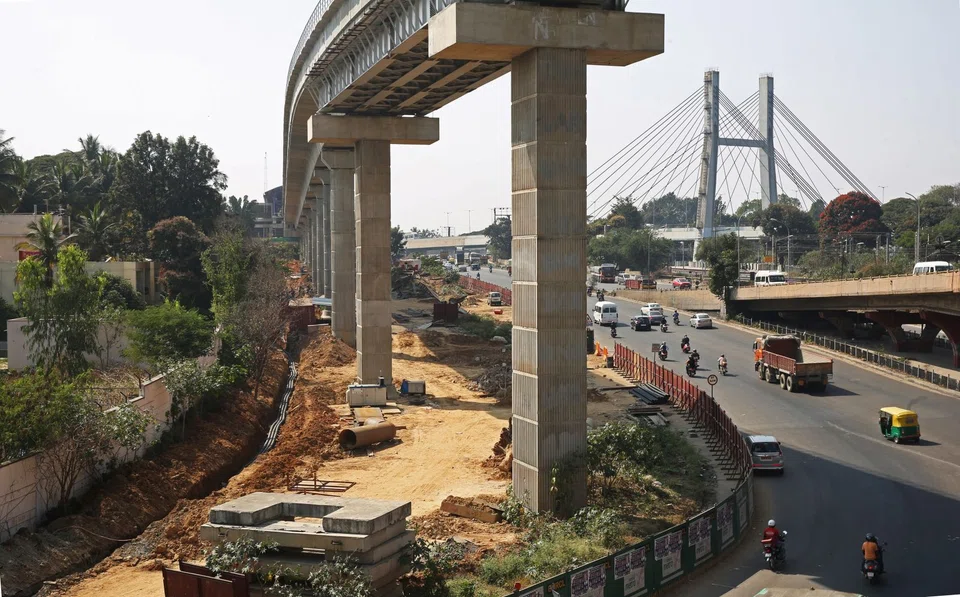
India started the year with a bang with Fiscal Year 2023 Budget calling for a 35.4 per cent increase of capex and putting building of infrastructure especially highways, railways, and logistics, at the forefront of its economic development agenda.
The spending plans include the building of 25,000km of new highways and 100 new cargo terminals in three years. This is all part of the longer-term plan called ‘PM Gati Shaki’ National Master Plan that aims to build US$1.3 trillion infrastructure from 2022 to 2047.
And it isn’t just India, from Indonesia to Vietnam, infrastructure building is at the top of the agenda to upgrade national expressways, highways, airports, and mass transit projects.
And there are more than a million reasons for this urgency - a third of the world population’s increase from 2020 to 2040 will be coming from youthful South and Southeast Asian economies, namely India, Pakistan, Bangladesh, Indonesia, Malaysia, the Philippines, and Vietnam. That increase is the largest in India, followed by Pakistan and Indonesia by 213, 81, and 45 million people, respectively.
Beyond just having more people, the United Nations urbanization projections estimate that more of them will be urbanized, with about 462 million moving to cities by 2040, or a 52 per cent increase of the urban population, adding to an already staggering 895 million urbanites currently.
Such increase of people will undoubtedly exert pressure on existing infrastructure, requiring more investment to keep up not just existing demand but also a sharp increase in the future. Beyond keeping up with domestic demand, if India wants to beef up its Made in India agenda, it will need to make its infrastructure, especially transport and logistics, more competitive to attract and facilitate global trade. Infrastructure, although not limited to, is a key impediment to its underperformance of manufacturing exports, which is below Vietnam’s global market share in 2020.
Navigate Asia in
a new global order
Get the insights delivered to your inbox.
The good news is that youthful Asian economies have been busy building infrastructure, especially road and air infrastructure, although still woefully inadequate to meet the rising demand of its rapid growth of population, especially India, the Philippines and to a lesser extent Indonesia.
In road building, Asia’s length of road building has increased substantially relative to population growth, except for the Philippines. That said, while the quantity of road build is impressive for India, the quality lags, especially expressways. The country with the biggest improvement and best is China. Vietnam has also invested a lot in expressway building, improving its infrastructure substantially – and more is in the way as the country prioritize it to improve connectivity to boost productivity and trade competitiveness.
Railway is where Southeast Asia and South Asia lag – with not much investment, except for Malaysia and Indonesia. China has invested the most while the Philippines the least. Air passenger is where the Philippines has done more investment, and that is much needed as it is an archipelagos and air infrastructure is key for domestic mobility, trade, and tourism. Across developing Asia, Pakistan has lagged the most in investment in air infrastructure.
When we assess all the transport infrastructure together, along with electricity distribution and broadband, developing Asia all need more investment, relative to developed benchmarks and its rising demand in the future from more population growth rates.
The biggest gap is India, followed by Pakistan, and Bangladesh. In Southeast Asia, the Philippines and Indonesia have large infrastructure holes to plug. For example, Indonesia and the Philippines need much more road investment. These are also economies with the lowest share of manufacturing exports as a share of GDP as well as global market share in Southeast Asia, likely due to weak infrastructure competitiveness.
The good news is many of the youthful Asian countries have awaken to the infrastructure gap and many of them have come up with policy supports and government investment to address this. For example, the Indian government has announced the US$1.3 trillion worth “PM Gati Shakti Master Plan” to boost domestic infrastructure in the next 25 years to attract foreign direct investment to boost its manufacturing and exports capacity.
To top that longer term plan, India is putting infrastructure at the forefront of its growth agenda with INDR1.4 trillion allocated to railways and INR1.9 trillion to roads, substantially higher than previous budgets.
The government also wants to build four multimodal logistics parks in FY23 and 100 cargo terminals to be developed in the next three years. Sectors like water and power are also getting support. Pakistan, with the second widest demand gap in our measurement, has sought for its strategic allies, i.e., China, to upgrade its infrastructure through the China–Pakistan Economic Corridor (CPEC). The Bangladesh government also introduced the Bangladesh's Delta Plan 2100 to build 65 infrastructure projects.
In Southeast Asia, from Indonesia to the Philippines and Vietnam, infrastructure building is at the forefront of the agenda. Indonesia, the largest and most populous Asean economy aims to invest US$400 billion within the period of 2020 and 2024 to improve airports, power, and mass transit.
The Philippines “Build, Build, Build” program is also trying to make up for the woeful investment in the past several decades and more will be needed. Vietnam is continuing with its feverish infrastructure development as exports exceed 100 per cent of GDP and the country wants to raise its competitiveness.
From 2021 to 2030, Vietnam wants to build over 5,000km of expressways by 2030, up from 3,841km in 2021; 172 routes of national highways with a total length of 29,795km, up from 5,474km in 2021; and three urban beltways in Hanoi with a total length of 425km and two others in Ho Chi Minh City with a total length of 295km.
The big question of course is financing, which will require support not just from the government but also the private sector as well as bilateral and multilateral funding. This issue is especially pertinent for current account deficit economies such as India, the Philippines and Indonesia.
India aims to issue green bonds to support climate-friendly infrastructure building – this serves both purpose as a funding vehicle for sustainable development as well as developing a still nascent source of funding that lacks both scale and scope.
In 2021, India issued US$6.8 billion green bonds versus China’s 66.1 billion. Southeast Asian nations too are eyeing green bond issuance to support building ambition – the Philippines for example is eyeing issuing sovereign green bonds to help private funds benchmark sustainable infrastructure investing needs in the archipelagos. So far, it is at the bottom of the issuance volume table for Asia and so plenty of room to grow.
Beyond green bonds, equity-based green financing is also needed. Either tapping into domestic and global markets, these youthful economies face complementary global market environment given flush liquidity and low demand elsewhere, and within its own continent from aging Asian economies such as Japan, China and South Korea that have not just expertise in building infrastructure but also deep and willing pockets to tap faster growth markets.
Thus, the largest infrastructure opportunities after accounting for the urban increase from 2020 to 2040 and existing supply is South Asia, is India as it leads the infrastructure gap - supply is not only inadequate to meet existing demand but that gap will widen further as its urban population rise rapidly in the future.
In Southeast Asia, Indonesia needs to invest much more for road, air, and fixed broadband. And the good news is that governments in these economies are prioritizing this need. More pertinently, the regional and global landscape is also favorable for them to tap financing of infrastructure, especially more climate-friendly investment.
The writer is senior economist, Asia Pacific – Emerging Asia – Natixis Corporate and Investment Banking.
Decoding Asia newsletter: your guide to navigating Asia in a new global order. Sign up here to get Decoding Asia newsletter. Delivered to your inbox. Free.
Share with us your feedback on BT's products and services

