Vietnam eating places reopening cautiously
It is estimated that up to a third of restaurants may have closed permanently since the start of Covid-19
Hanoi
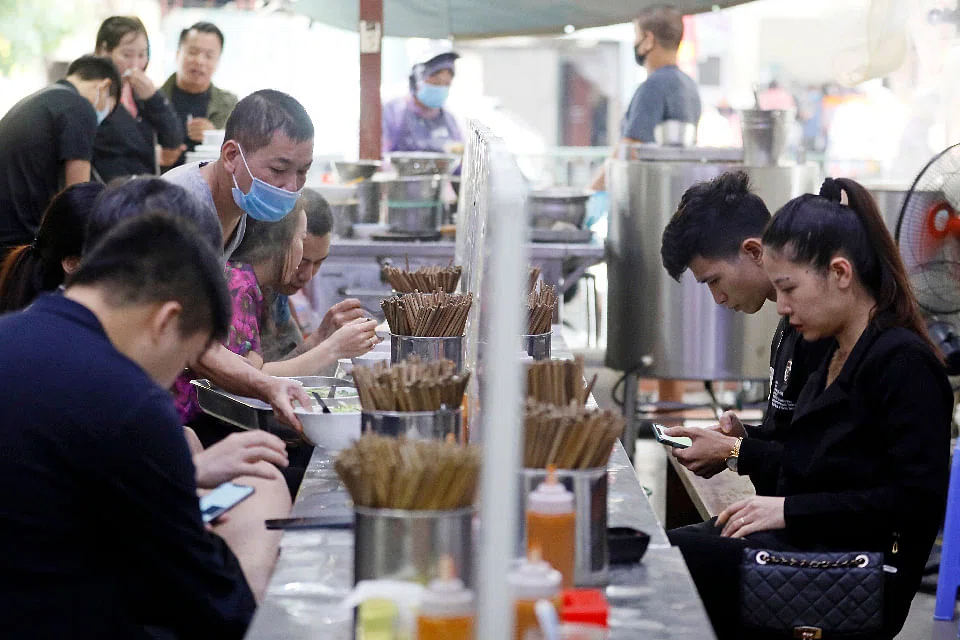
AFTER almost three months of lockdown, the authorities in Hanoi have finally allowed dine-in services at local eateries, restaurants and cafes to finally resume. But the reaction among customers and proprietors in the Vietnamese capital has been mixed so far.
It's a risky situation to reopen now given the threat of the coronavirus, said Minh Chu, the founder and president of the Restaurant Association of Vietnam (RAV).
"Some owners have said that they are afraid that when they fully reopen, if Covid-19 comes back they will not be able to afford to close and then reopen again," he said.
With relatively low rates of vaccination - just below 60 per cent of Hanoi people have received both doses, according to government figures - these concerns do make sense.
That said, the effects of several prolonged lockdowns are weighing heavily on companies' balance sheets, and many restaurants say they need to get back to business in order to stay afloat.
As a result, Chu said, restaurants are reopening cautiously and watching what is happening in the industry around the country.
"They want to make sure the situation is really back to normal and then reopen step by step, outlet by outlet," he said.
Vietnam's food and beverage industry has taken a huge hit due to Covid-19. Chu estimates that up to a third of restaurants may have closed down permanently since the start of the pandemic, and says that investments in the near future will be limited.
"For many restaurant owners with more than three outlets, they are not willing to open more. They are stepping back and it means that we will not see much investment next year."
Chu added that aside from the cost of repeatedly opening and closing, a lack of manpower is making life difficult for larger establishments.
"It's not difficult to adapt to city regulations for fine dining or big-chain restaurants. But the lack of people and skilled staff is a challenge they have to face," he said.
Ellie Sanders, the marketing and communications manager at KOTO Villa, a fine dining restaurant that doubles up as a hospitality training school in Hanoi's affluent Tay Ho district, said she can empathise.
Unable to offer real-world training, she said that when service resumed, staff were somewhat underprepared and this led to a number of difficulties on the first weekend of reopening.
The restaurant, however, managed to pull through, as many of her customers were understanding of the difficulties faced by the restaurant operators, she said.
Since the Delta variant of the coronavirus began to spread in April, Vietnam's cities have seen a huge exodus of workers.
The General Statistics Office estimates that up to 1.3 million people had left Vietnam's industrial centres and returned to their hometowns between July and September.
Sanders said that despite the challenges, the reopening for the employees at KOTO Villa was a welcome reprieve.
"Everyone was excited. On the eve of the reopening, there was a vibe in the air because we knew we were going to open the next day," she said.
The challenges facing restaurants reopening, however, have not necessarily deterred customers.
"In Tay Ho, most of our customers are double-vaccinated. If anyone feels uncomfortable about it, I imagine they are still not going out," said Sanders, noting that KOTO Villa was fully booked on the first day.
Chu, on the other hand, said customers are split down generational lines.
"For young people, mostly they are really eager to go out and they are willing to return to restaurants. However, for older people they are more careful. They stay at home and use delivery services," he said.
Delivery services will be a hallmark of the food services industry in Vietnam's 'new normal', said Chu.
"There will be more technology, more of a focus on online. When we return to normal, the online market will remain strong," he added.
Chu said this will be part of a much bigger push towards quality over quantity with food services becoming more innovative and creative and in the long term, the industry will be the better for it.