War puts Thailand's near-term carbon-neutral targets on the backburner
Bangkok
JUST a few months ago at the COP26 summit in Glasgow, Thai Prime Minister Prayut Chan-o-cha vowed to reduce Thailand's greenhouse gas emissions by 40 per cent by 2030, become carbon-neutral by 2050, and achieve net-zero greenhouse gas emissions by 2065.
He surprised many with his bold targets at the time, but those pledges now seem a world away with the Russia-Ukraine war hiking energy prices and leaving Thailand exposed to the global fossil fuel market in the immediate term.
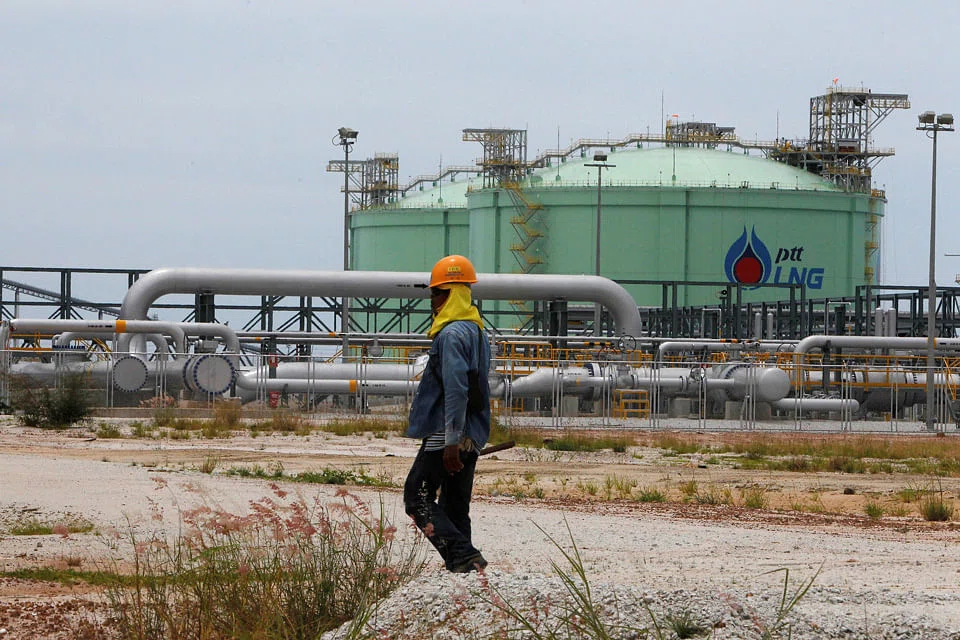
Thailand has for decades relied largely upon its natural gas reserves in the Gulf of Thailand as its main source of energy (accounting for 45 per cent of the country's total gas supply in 2020), but these reserves are expected to dry up over the next 5 years, forcing the country to move more into the purchase of liquified natural gas (LNG) from the world market.
Myanmar, another major supplier of natural gas to Thailand, is likewise threatened by supply disruption as old gas fields have started to run dry and others face coup-related challenges for their foreign concessionaires.
For 2022, it is forecast that Thailand's national oil company PTT will need to import about 9.8 million tonnes of LNG, an increase of 6.4 per cent over 2021 imports and accounting for about 8 per cent of Thailand's total gas supply.
With the price of LNG on the rise, thanks to the Russia-Ukraine war, this is likely to undermine Thailand's economic prospects in 2022, with the government expecting full-year growth in the 2 per cent region, compared with the pre-war forecast of above 4 per cent.
"Every 10 per cent increase in average crude oil prices would hit Thailand's annual GDP growth by 0.5 to 0.7 per cent," said Charl Kengchon, chairman of the Kasikorn Research Center think tank.
"So a 50 per cent increase in the average oil prices for the entire year will lower economic growth by 2.5-3.5 per cent when compared with the initial forecast," he noted.
While in the longer term, the oil price hike should inspire the government to hasten its path to a non-fossil fuel future, in the short term it is likely to increase Thailand's dependence on coal, as a slightly cheaper alternative to imported LNG, but a bigger greenhouse gas emitter.
Thailand's energy mix was roughly 73 per cent fossil fuels (including coal-powered plants), 2 per cent hydro, 14 per cent imports (chiefly gas but also hydro from Laos) and 10 per cent renewables, according to latest government figures for 2020.
If Thailand were to shut down its coal-powered plants by 2030, it would eliminate 18 per cent of its greenhouse gas emissions from electricity production, which accounts for 40 per cent of all carbon dioxide emissions.
But shelving its coal power plants by 2030 now seems unlikely unless there is a huge increase in renewable energy sources over the next 8 years.
"Our ministry has been talking about not continuing the coal mining licence for the Mae Moh Power project but this falls in the hands of the Energy Ministry, which has to work hard to find alternative energy sources, whether it is hydro-power, solar energy or wind farms," said Minister of Natural Resources and Environment Varavut Silpa-archa.
"If you cannot find a new pair of shoes, don't throw away your old ones," he quipped, in reference to the existing coal-powered plants.
The Energy Ministry has thus far made no public announcements about closing Mae Moh, which would be deemed a first step towards demonstrating Thailand's seriousness about becoming carbon-neutral, said environmentalists.
Mae Moh is the giant 2,200 megawatt coal-powered power plant in Lamphang province, owned by the Electricity Generating Authority of Thailand, which accounts for half of Thailand's total coal-powered electricity.
The remaining 50 per cent is supplied by private independent power producers such as Banpu Public Company, which owns the 1,500 megawatt coal-powered plant at MabTaPhut Industrial Estate, on Thailand's eastern seaboard.
"For Thailand it is logical to phase out coal without electricity disruption because we have a big (electricity generating) capacity reserve margin of more than 40 per cent," said Tara Buakamsri, who heads Greenpeace Thailand.
Greenpeace sees the current hike in fossil fuel prices as a good incentive to push for the phasing out of coal and promote renewables as an alternative, to reach the 2030 deadline.
"Because of the extremely high reserve margin of electricity production we can continue to march towards a coal phase-out as planned," Tara said.
"There has never been a more crucial time for the Thai government to significantly reduce its reliance on fossil fuels by upgrading related policies and supporting mechanisms for investment in renewable energy systems."