



Weary Malaysians flying white flags add pressure on PM Muhyiddin
Kuala Lumpur
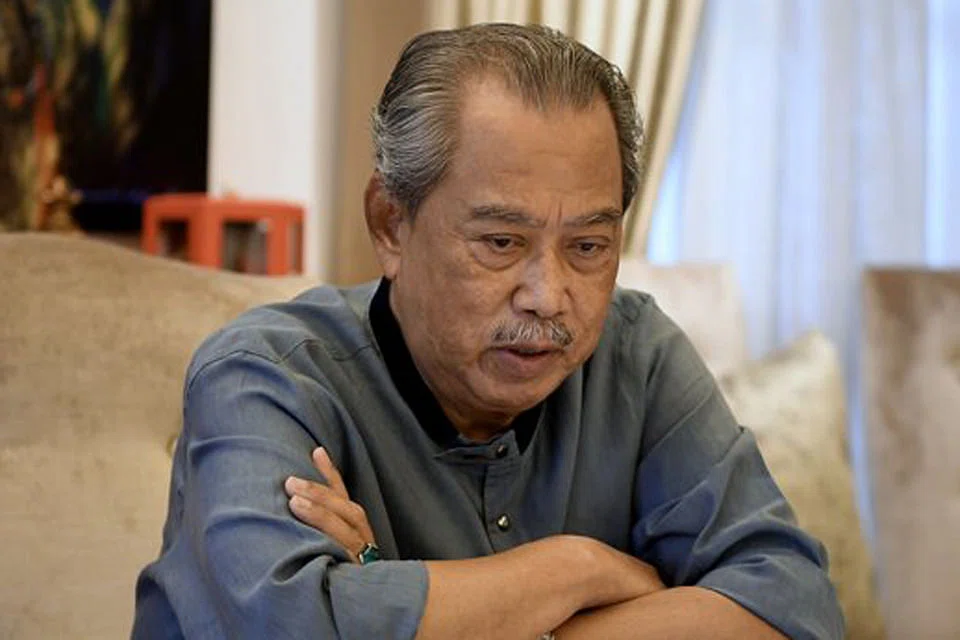
THE past week was seen as a pretty tough one for Malaysian Prime Minister Muhyiddin Yassin.
Last Wednesday, a statement from his office saying that the embattled leader was being treated in hospital for diarrhoea sparked a flurry of Internet memes. He is still receiving treatment for an infection to his digestive system.
On the same day, the Malaysian King repeated his decree for the country's Parliament to reconvene, this time putting down a firm date for a sitting before the state of emergency expires on Aug 1.
Abdullah Ahmad Shah and eight other state rulers have repeatedly called for Parliament to be allowed to meet and debate a better way to handle the Covid-19 pandemic.
There is a growing frustration and despair among Malaysians after the government failed to contain soaring cases, even after the country imposed a full lockdown for over a month.
"There is a real political pressure for Mr Muhyiddin to roll out the vaccination programme and make sure that it's done properly, especially when there is some kind of oversight from Parliament," said James Chin, director of the Asian Institute at the University of Tasmania.
Mr Muhyiddin's government is accelerating vaccination to pave the way for the eventual reopening of the economy.
But his four-phase national recovery plan, presented on June 15, was criticised for lacking clear strategy to keep Covid-19 infections down.
The Malaysian Medical Association said in a June 17 statement that while vaccination needs to be prioritised, community screening programmes and a plan to improve rules compliance are equally important.
The prolonged and uncertain lockdown measures have taken a toll on the economy and affected businesses beyond Malaysia, due to the close trade ties in South-east Asia.
"The on-and-off cycle of tightening measures in Malaysia would obviously present challenges to businesses operating in the country, and also their trading partners overseas including in Singapore," OCBC Bank economist Wellian Wiranto told The Business Times.
The latest measures to impose stricter curbs on selected areas in the capital Kuala Lumpur and the state of Selangor beginning last Saturday would compel most factories in the area to suspend operations until July 16, adding to the difficulties, Mr Wiranto said.
"Unfortunately, at least in the immediate next few weeks, such difficulties would still be felt quite acutely. We do not think the cross-border trade linkages will be hit too badly, however, given that ports and other distribution channels remain open," he said.
Last Monday, Malaysia announced an indefinite extension to the nationwide full lockdown imposed since June 1, saying that it will not be lifted until daily new cases fall below the 4,000 mark.
The country reported 6,658 new infections on July 3, the bulk of which came from the manufacturing powerhouse of Selangor. This brings the total infections to date to 772,607. The death toll currently stands at 5,434.
The government recently released another aid package worth a hefty RM150 billion (S$48.7 billion) to mitigate the impact of an indefinite lockdown, including unemployment assistance, cash aid and wage subsidies.
However, that was not enough to stop the poorest Malaysians from joining a citizen movement last week to raise a white flag in a urgent plea for more government help.
Another black flag movement started online over the weekend demanded Mr Muhyiddin's resignation, the Parliament to convene immediately, and the state of emergency to end. The police are reportedly investigating this development.
The government's lack of strategy will hurt Malaysia's future as the uncertainty may force some businesses to close for good and foreign investors to seek better opportunities elsewhere, which may benefit other Asean economies, said Carmelo Ferlito, the chief executive officer at the Centre for Market Education, a Kuala Lumpur-based think tank.
It also presented a challenge to Asean companies relying on Malaysia's goods supplies, he added.
"They will have to look for different sources of supply for products that they used to import from Malaysia. In Singapore's case, it would be poultry like meat and eggs."
On the whole, the survival of Mr Muhyiddin's political career hinges on how well his administration manages the pandemic, thus allowing the economy to reopen, said the University of Tasmania's Prof Chin.
While doing that, Mr Muhyiddin must simultaneously work on maintaining the required number of Members of Parliament on his side to keep his government intact.
"His game is played on two levels now," Prof Chin said. "On the ground, people are worried about the vaccine rollout and their jobs since everything is shutting down. On the other hand, the political class is thinking about how to pull down this government and form another new government."
READ MORE: Malaysian glove makers say virus curbs may hurt global supplies

