



With land border finally reopened, Johor businesses hope for pick-up in 'revenge spending'
Kuala Lumpur
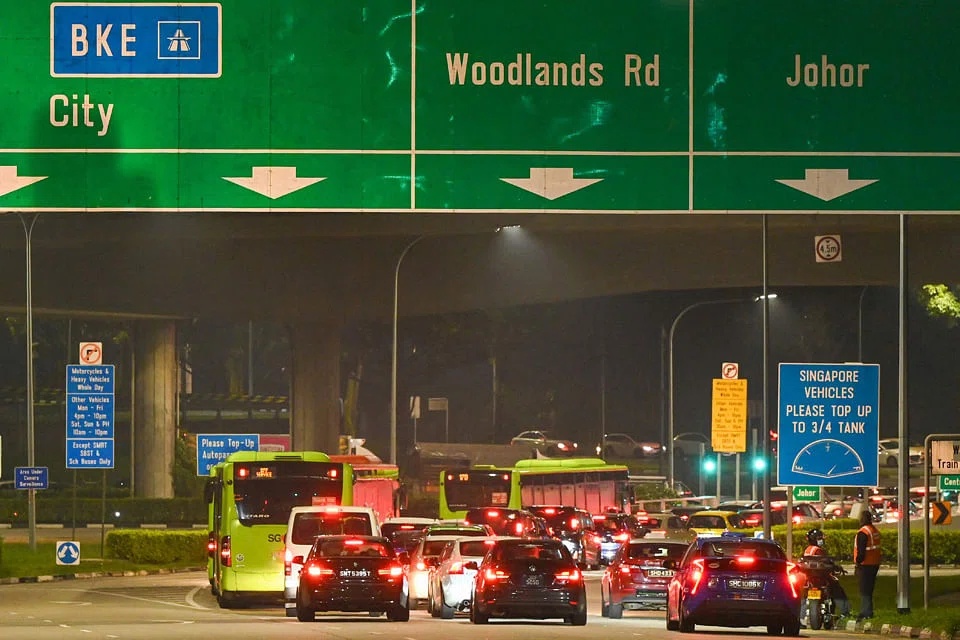
AFTER seeing their income take a big hit over the past two years, many businesses in Johor are anticipating a strong pick-up in sales after the land borders between Singapore and Malaysia finally reopened on April 1.
About 33,700 people crossed the 2 land borders - the Causeway and the Second Link - in the first 17 hours of the reopening. Under the new rules, there is no need for any quarantine or Covid-19 testing so long as one is fully vaccinated.
Johor Chief Minister Onn Hafiz Ghazi estimates that at least 400,000 people are expected to use the borders within the first full week alone.
Beverly Ang, the owner of a fashion boutique at Jalan Tan Hiok Nee, about 10 minutes away from the Johor Bahru Immigration and Quarantine Complex, has seen an increase in footfall at her shop, including many of her old customers whom she hasn't seen since 2020.
Johor Bahru Chinese Chamber of Commerce and Industry (JBCCCI) president Low Kueck Shin said the mood is upbeat, with many retailers and the chamber's members hopeful of a "multiplier effect" that could spur the city's economic growth.
JBCCCI has over 1,300 members with the majority of them business owners from various industries, including automobile, construction, F&B and tourism.
"Businesses in Johor Baru have been deteriorating for the past 2 years due to the pandemic. Taking a stroll downtown, you could see 40 per cent of shops were closed. We do not know if they have closed temporarily or for good, but we hope some will resume operations now that the borders are open," said Low.
South Johor Hawkers and Petty Traders Association chairman Yow Boon Choon shared the same view and is confident that the return of tourists will bring more vibrancy to Johor Baru city centre, which has long been a shopping and food haven for Singaporean consumers.
"Although hawkers were able to survive with the absence of tourists, mainly due to local consumers, their revenues have been nowhere near the levels in 2019," he said.
"We look forward to the 'revenge spending' of Singaporean tourists and Malaysians who worked in Singapore, as this can give a lift to the lacklustre local economy," said Yow.
James Chin, the assistant marketing manager of Sutera Mall, readily welcomed back the "lost population" to Johor.
"About a third of Johor Baru's population are working in Singapore and almost all of them had to stay in Singapore due to the border closure. This has affected the footfall and consumer spending at our mall," he said.
Ivan Teo, the chairman of the Malaysian Association of Hotels' Johor Chapter, said it will take some time for hotels - starved of skilled workers as many have left the industry - to get up to speed as they see an influx of tourists.
The news of the reopening, which was made just a few weeks ago, left many hotels scrambling to recruit sufficient workers. Many have changed lines and do not intend to return to the hotel industry, said Teo.
Around 10 hotels in Johor Baru city have closed down since the start of the pandemic, said Teo. Some hotels have even stopped providing breakfast and room service to contain costs.
"We need more time to rebuild our capacity and I believe the hotels will eventually return to their original service levels. We need 2 years for the industry to return to what it was like before the pandemic," he said.
On the economic impact of the first week of reopening, Teo said it is still too early to tell for now, although he expects to see the crowds return in larger numbers ahead of the upcoming Hari Raya holiday in the first week of May.
JBCCCI's Low said: "Although we hope for all Singaporean tourists to come to Johor, the truth is the majority of them are taking a wait-and-see approach, or are still planning their future holidays. We expect there will be more tourists during the long weekend holidays."
He noted that it will be about 6 months before Johor can see a significant impact and it will take "at least 2 years to return to the glory days of 2019".
TRENDING NOW

He built the Vingroup empire. Now South-east Asia’s richest man is handing some key roles to his sons

Proton e.Mas 5 review: The little EV that beat Tesla
Cash-strapped AirAsia takes unusual step of unloading new planes
Despite the de-dollarisation debate, demand for dollar liquidity in Asia is growing

