ABS, MAS study finds ways to make financial institutions' workplaces pandemic-resilient

Singapore
THE future workplace for employees of financial institutions (FIs) will likely be an ecosystem of multiple options. This means FIs' real estate portfolios will have to account for changing preferences for where and how people work, technology and functionality, as well as the well-being of employees and other stakeholders.
This "ecosystem" approach to the future workplace was presented as part of a study commissioned jointly by the Association of Banks in Singapore and the Monetary Authority of Singapore that looked into the Covid-19 pandemic's impact on workplace environments for the financial sector.
The study conducted by a consortium of consultants led by commercial real estate firm Cushman & Wakefield, developed a playbook for financial institutions in designing pandemic-resilient workplaces for the future.
Among other things, this playbook recommends creating a dynamic ecosystem that supports staff working either in their homes or in the office.
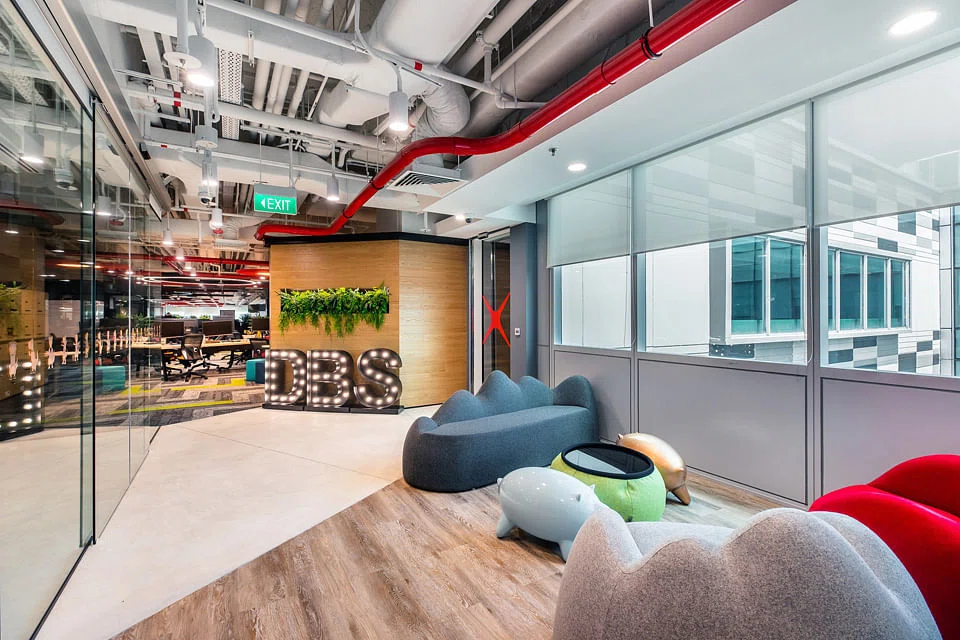
Some banks here have already been making flexi work a permanent post-Covid feature. DBS, for example, announced in November that employees will be given flexibility to work remotely up to 40 per cent of the time. Prior to that, UOB had also announced that the majority of its workforce will have the option to work remotely two days a week once Covid-19 restrictions are lifted.
The study's authors said FIs in Singapore are likely to increasingly embrace remote working as part of their culture and tap different areas outside the central business district (CBD) for workplace options closer to employees' homes.
Equipping employees with the right technology and protocols is also key to unlocking the potential of agile working, they said. This could involve enhancing cybersecurity and firewall protection, touchless access, as well as digital identifiers and facial recognition systems.
"The real estate strategy of an FI (financial institution) will explore more of the shared options available outside the CBD while maintaining their headquarters' presence for both branding and community engagement purposes," wrote the authors.
They also recommend integrating safe management practices into the office workplace.
For example, institutions can provide care kits with appropriate tools to promote good hygiene practices and minimise the use of shared equipment like keyboards and headsets to reduce cross-contamination.
Based on best practices observed in the current pandemic, safe management measures most effectively mitigate transmission when they are promptly activated and are calibrated in response to risk levels.
The study suggested an optimal density of 80-120 square feet (7.4-11.1 square metres) per person and a two-metre distance between desks for a higher degree of safe distancing.
Clear protocols, the right infrastructure and agility should also be in place to support a more seamless shift between "pandemic on" and "pandemic off" mode. For example, there should be clear communication and demarcation of responsibilities between landlords and tenants, as well as clear processes for emergency and evacuation.
Designing for resilience is key, the study's authors wrote, stressing that this requires a "complete evolution" of traditional business continuity planning approaches.
In future, workplaces should be designed with a "flexible floorplate" to support changes in work environment in times of crisis. This could involve workspaces that are easily subdivided into distinct zones, use of modular office furniture, and ensuring security touchpoints such as arrival access and temperature control.
Workplaces of the "new normal" may also have reduced average utilisation due to the flexible nature of work. This means that densities in workplace planning can be adjusted and more collaborative spaces may be required. Some may also consider integrating staggered working hours to reduce peak hour crowding in public areas, like lift lobbies.
The study also highlighted the importance of designing workplaces for wellness, such as by working towards a base building with Green Mark certification and providing "essential support" like hydration, refreshment, personal hygiene and room for employees to "break out from work" within the workplace environment.
The importance of physical and mental well-being is one of the "critical revelations" uncovered during the Covid-19 pandemic, the study's authors said. "Nurturing and building awareness on wellness both at the individual and community level needs to be addressed by each organisation," they wrote.
Responding to the release of findings from this industry-wide study, the three local banks reiterated how they are each planning for new ways of working beyond the pandemic.
For example, a DBS spokesperson shared that the bank will incorporate virtual collaborative tools in its workspace design to bridge geographical gaps between employees. The bank will also adopt a data-driven approach towards workspace design, such as by using video analytics to better understand space usage.
UOB's head of human resources Dean Tong said the bank will move away from assigned seating and is investing more in on-site conferencing abilities to accommodate the increased frequency of online meetings.
At OCBC, head of operational risk management Patrick Chew said the bank has introduced new measures and practices since the start of the pandemic to adapt to new working arrangements, and will continue to do so as the situation progresses.