

Aggressive marketing of buy-now-pay-later schemes needs review
Singapore
NOT too long ago, it might have seemed strange to pay for a pair of high-street jeans over a few monthly instalments.
But millions have turned to this fast-growing checkout option, known as BNPL (buy now, pay later), that allows shoppers to make interest-free instalment payments for retail goods.
In normalising split payments for smaller, everyday items, risks mount over unseen debt and potential financial distress. This has prompted several authorities, including Singapore's, to consider regulating the industry.
Another way to look at BNPL would be "borrow now, pay later" because it is effectively borrowing, said Kwok Wui San, risk, regulations and compliance leader at PwC Singapore.
In Singapore, where BNPL adoption is still nascent compared to other markets, it is a "good time" to set a basic framework, he added.
About 38 per cent of the population, or 1.1 million people, have used a BNPL service as at 2020, according to financial comparison site Finder.
Most BNPL players here claim that default rates remain low for now. But other data signals looming risks.
About 27 per cent of Singaporeans, or 783,000 people, surveyed by Finder have "taken a financial hit" when using a BNPL service, with impulse buying being the most common mistake. In the United Kingdom, more than one in 10 customers of a major bank using BNPL were already in arrears. About one in five consumers in Australia has missed BNPL payments.
In February, the Monetary Authority of Singapore said it is, with other government agencies, "reviewing the appropriate regulatory approach" for BNPL schemes here.
One way to protect consumers from taking on excess credit would be to establish standardised affordability checks for BNPL schemes.
For now, BNPL players conduct their own internal assessments and generally take a lighter-touch approach in evaluating credit worthiness.
This means no debt discussions, no income assessment or payslip requirements, among others. (BNPL customers make repayments via a debit card tied to a bank account, or a credit card.)
PwC's Mr Kwok told The Business Times (BT) that Singapore can consider extending existing regulations, such as minimum salary requirements for credit cards, to BNPL. This has worked well here, especially amid economic downturns.
"We can continue to apply this principle and evolve regulations to cover BNPL providers to keep up with this new form of borrowing," he said.
Firms should also be required to report key details such as borrower details and the amount and tenure of credit extended.
National systems such as MyInfo and SGFinDex could be used to report a consumer's near-term borrowing status to help firms make informed decisions before extending credit, said Mr Kwok.
More can also be done to control lending limits. Using the Moneylenders Act as an example, the Ministry of Law in 2018 introduced an industry-wide lending limit to restrict the aggregate amount of loans that individuals can borrow from moneylenders.
If there is evidence that BNPL schemes are leading to unsustainable debt levels, the government may consider doing the same for BNPL players, said Ho Kok Yong, financial services industry leader at Deloitte South-east Asia.
As BNPL's prime target is young shoppers with lower levels of financial literacy, it is crucial to set industry guidelines for BNPL marketing practices in Singapore.
From contest giveaways to cashbacks and discount codes, firms have been aggressive on the marketing front, particularly on social media to tap the online-shopping crowd.
BNPL is almost never marketed as credit with risk, but rather a fuss-free way to pay that, at times, even comes with enticing benefits.
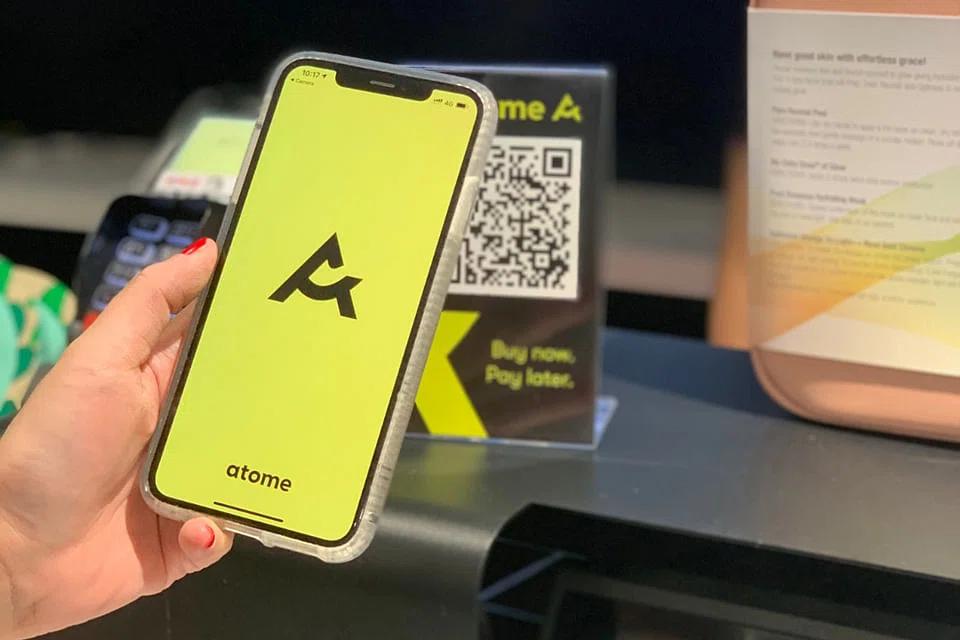
Last November, fintech Atome offered first-time users S$10 off a minimum spend of S$40 at Sephora if they chose to check out via Atome.
Its rival, hoolah, recently offered 8 per cent cashback and a chance to win S$88 when users upload a picture of their purchases on Instagram.
Such tactics could encourage consumers to take up credit they may not need and promote an inflated sense of affordability, which puts them at higher risk of busting their budgets.
To some extent, some ads can be emotionally manipulative, implying that BNPL can help consumers afford a certain lifestyle.
"PayLater is here to bring you what you want when you want it, making payments for life's pleasures easier and stress-free," reads a line on Grab's website.
BNPL is only stress-free if consumers dutifully make payments to avoid chalking up late fees and spend within their means.
The ease of e-commerce and "revenge buying" trends amid lockdowns suggest that the temptation of overspending lurks.
It doesn't help that late fees are hardly declared upfront in bite-sized ads. UK's regulator recently said many consumers did not realise BNPL plans were credit agreements that could result in late fees.
About 9 per cent of Singaporeans surveyed by Finder have had to pay a late fee for missing payments.
In 2020, UK's Advertising Standards Authority banned certain Instagram posts promoting BNPL giant Klarna.
These posts were reportedly made by paid influencers who linked BNPL with "lifting or boosting mood".
For a start, Singapore could extend marketing regulations under the Moneylenders Act to BNPL players.
Under the Act, moneylenders are not allowed to advertise on social media sites or video-hosting sites such as YouTube.
Sponsored Internet links that appear on search engine results are also not permitted.
Marketing material must be "clear and easily understood" by the audience being addressed and must not contain information that may mislead or deceive, according to the Act.
While more can be done to protect consumers from debt traps, industry watchers cautioned that too much intervention could stifle innovation and affect consumers who truly benefit from BNPL plans.
Large regulatory responses may not provide protection for borrowers. They may cause the reduction or withdrawal of BNPL offerings and borrowers slipping into informal unregulated credit, said PwC's Mr Kwok.
A weak framework will result in unfortunate credit outcomes for borrowers in terms of adverse impact to their cash flows and potential impact to their credit rating, he added.
As ever with fintech, regulators have to balance encouraging innovation with maintaining financial stability, Deloitte's Mr Ho told BT.
The onus is also on consumers to be clear on what they're getting into. They must read the fine print and be on the lookout for any potentially unfair terms, including exorbitant fees, and closely scrutinise the definition of the circumstances under which they will be regarded as having defaulted on their arrangement, said Mr Ho.
READ MORE:
TRENDING NOW

Stocks to watch: CapitaLand Ascott Trust, Keppel Infrastructure Trust, iFast, ESR Reit, First Sponsor
Indonesia says gas export cuts to Singapore remain within contract terms

If Europe goes to war, the fallout will be felt in East Asia

Government to bring forward raising of retirement age, give employers more financial support to create flexi-load jobs

