

ANZ ready to 'pivot to growth' in Asia with support of Asia-Pacific network
Singapore a critical part of bank's strategy as it focuses on institutional business after exit of retail and wealth businesses in 2016.
IF it seems quieter than usual for the Australia and New Zealand Banking Group (ANZ) in Singapore lately, it is not because the region is becoming less of a priority.
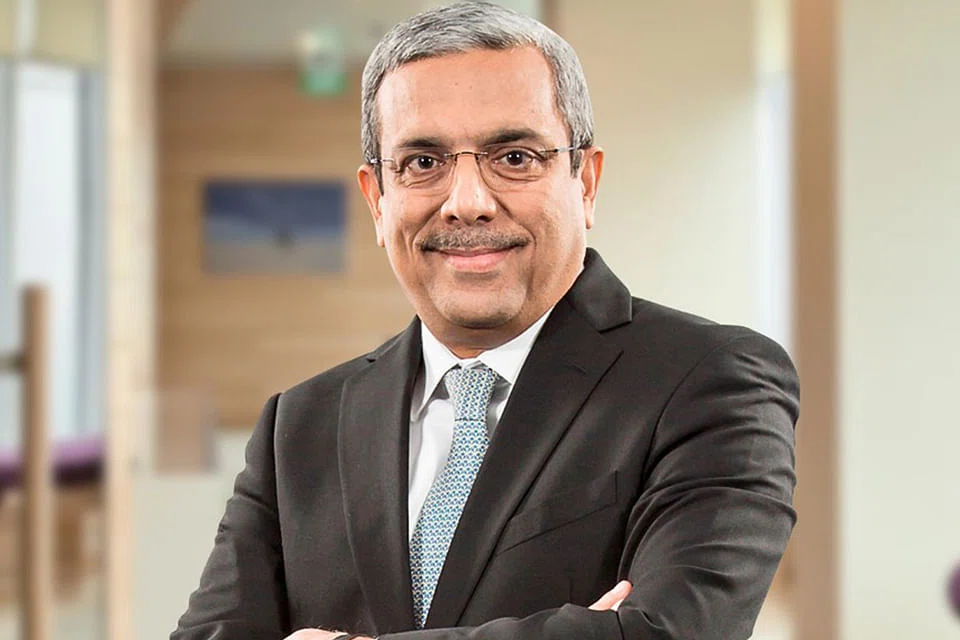
"When you move away from the mass market, there could be such a perception," says ANZ veteran Vishnu Shahaney, in his newly expanded role as country head of Singapore and head of South East Asia, India & Middle East. He recently moved back to Singapore from Indonesia where he was the country head.
The Melbourne-headquartered bank exited its retail and wealth businesses in the Asia-Pacific back in 2016, choosing to focus only on its institutional business - or the top end of the corporate banking segment here.
For ANZ, the last three years were spent reshaping its business in Asia, exiting the small, medium and local middle market businesses, and reducing risk-weighted assets targeted at low-yielding, higher-risk and non-strategic sectors.
With the close of that chapter, the bank is now ready to "pivot to growth" in Asia, declares Mr Shahaney.
One of the first orders of business for him is to address the notion that the Republic is becoming less important to the bank.
"Singapore is a critical part of ANZ's strategy," he emphasises. "We have a significant investment here - the shape of our institutional business has not changed and we continue to invest in capabilities and people."
He cites independent surveys by firms such as Greenwich Associates, where the bank consistently ranks among the top five corporate banks in Asia for the past seven years.
ANZ currently has 800 people in Singapore, which serves as a regional institutional banking hub for the bank. It is present in eight out of 10 markets in South-east Asia, with the exception of Brunei and Cambodia. (see amendment note)
The bank specialises in several key priority sectors, which include food, beverage and agribusiness (FB&A), resources, energy and infrastructure, financial institutions, and technology.
"What we do is to focus on the segments that we operate, not be all things to all people," explains Mr Shahaney. "We don't compete with local banks in areas like local property and finance, things like that where we cannot differentiate or create value."
According to him, ANZ's network across the Asia-Pacific is its greatest advantage. With Singapore a regional treasury centre and economic hub for the region, the bank leverages its network to help clients bank across geographies seamlessly, he says.
More treasurers and chief financial officers (CFOs) are talking to the bank about how to make it easier for their trade and capital flows, especially in areas such as cashflow management, he adds.
This year, he expects to see "single-digit" revenue growth numbers for Singapore and the markets he looks after due to the uncertain economic environment.
But looking ahead, he expects to grow the business in a "measured fashion". This will be done by forging deeper and more meaningful relationships with its target client base, he says.
"We have to grow our clients as our success is linked to their success - our strategy is to focus on that and to be clear as to what we want to do," he says.
One of the growth opportunities for the bank is in sustainable finance, he says. It is a market that is growing substantially and an area that ANZ is investing in. The bank sees increasing interest from CFOs and treasurers keen to signal their sustainability credentials through products in the green loan sector.
As such, the bank is expanding its team here in Singapore to support customers in the region, with Stella Saris as its recently appointed head of Sustainable Finance, International to be based here.
Even as the trade war continues to cast a pall over the global economy, the bank sees Asean as a net beneficiary as companies shift their manufacturing supply chains from China.
The bank views this as an opportunity for growth in the long-term: "It's not going to happen in the next six months," he notes.
"When we talk to our corporate clients in the UK and the US, there's a huge interest in this region," he says. At the same time, these corporates also face anxiety in navigating these new investments and markets.
Connecting the bank's clients to the growing Asean opportunity will be a key focus area for Mr Shahaney. The bank intends to ride on its experience and networks in the region to help these companies as they enter these markets, as many of them are seeking insights on this front.
But he acknowledges that there is fierce competition here among the regional and global banks. "There's no doubt there's competition - it boils down to having a clear focus and which segments (you target)," he said. "Being an institutional bank in Asia and being very focused is a huge benefit: Fewer customers, deeper relationships and more engaged employees."
With Asean expected to be the world's up-and-coming growth engine, the pie is also likely to become even bigger.
"This is the place to be where the action is, where the upside is," he said. "Where else in the world would you rather be, with all the trade wars going on?"
TRENDING NOW

Fed hike throws Singapore banks a margin lifeline; UOB most likely to feel impact

He built the Vingroup empire. Now South-east Asia’s richest man is handing some key roles to his sons

Real-estate veteran Desmond Sim quits from CEO roles at Realion, ETC

Chagee, Mixue and Luckin won the market. Sustaining their edge is the harder part

