

APAC banks could see M&As, not so much for Singapore: report

Tay Peck Gek
Singapore
ASIA-PACIFIC banks have to be cost-efficient or prepare to be acquired, warned McKinsey & Company. But there is considerably less room for consolidation in Singapore.
The American management consulting firm McKinsey, in its Asia-Pacific Banking Review released on July 2, said that financial institutions in the region are headed into a "perfect storm".
Banks in Asia-Pacific have witnessed slowing growth, rising capital costs, declining asset quality, thinning margins and digital disruption from non-bank rivals. Therefore, there is a need for scale efficiencies, which may give rise to mergers and acquisitions, McKinsey commented.
"We believe that the forces sapping strength from Asia-Pacific banks point to possible consolidation, as they exert pressure on banks to achieve scale benefits in distribution, productivity and capabilities."
Price-to-book (P/B) multiples for Asia-Pacific banking have declined from 1.1 in 2011 to 0.7 in 2018, trailing the global average for the fourth consecutive year. Nearly two-thirds of Asia-Pacific banks have a P/B ratio of less than 1, and could become acquisition targets for stronger banks seeking to build scale.
McKinsey also said wide variation in market shares of players suggests potential for consolidation.
However, banks in Singapore face a smaller consolidation potential. This is because the four largest banks already collectively garner 55 per cent share of the market.
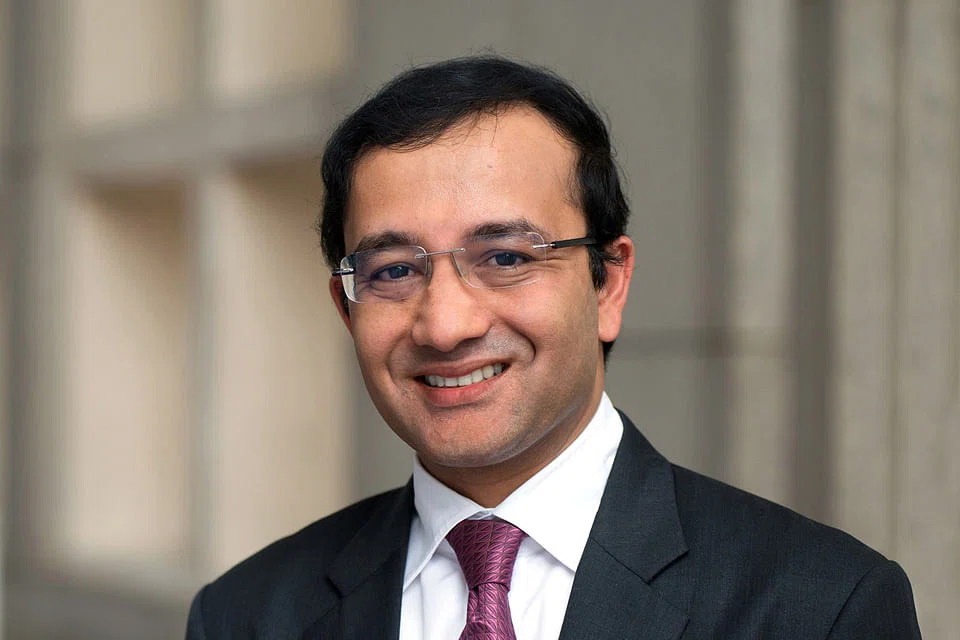
Joydeep Sengupta, senior partner at McKinsey, told The Business Times he was not ruling out consolidation for banks here but the "opportunities are smaller". He declined to comment on which banks in the Republic are likely candidates for consolidation.
Singapore is one of the three countries in Asia-Pacific that have managed to eke out a higher return of average equity (ROAE) in the past four years. The ROAE for banks in Singapore improved from 11.8 per cent in 2014 to 12.1 per cent in 2018, whereas that for Asia-Pacific declined from 12.8 per cent to 10.1 per cent in this four-year period.
South Korea and Vietnam are the other two countries that saw better ROAE.
Banks with greater scale tend to have better ROEs, the McKinsey study showed.
Apart from being efficient, banks that develop top digital and analytics capabilities will also be in a position to capture significant new revenue in four fast-growing businesses - wealth management, retail lending, small and medium enterprise lending, and transaction banking.
"We estimate that if regulators maintain a cautious posture towards non-bank innovators during a period of weak growth, banking returns on equity (ROEs) in Asia-Pacific could decline to 9.8 per cent by 2023. However, if low-cost digital-first banks can build scale rapidly and take significant market share from incumbents, ROE could drop to 6.4 per cent in 2023."
But if there is a rigorous industry-wide effort to optimise operations, risk and capital costs, the decline in returns could be reversed, potentially pushing the industry ROE for Asia-Pacific up to 12.1 per cent by 2023.
For the study, McKinsey analysed over 700 financial institutions across Australia, China, Hong Kong, India, Indonesia, Japan, Malaysia, Myanmar, New Zealand, Philippines, Singapore, South Korea, Taiwan, Thailand, and Vietnam.






