

As virus relief unwinds, banks face uncertain trek with 'zombie firms'
Borrowings under debt holiday still accounted for by banks as performing loans; some firms to be structurally impaired
Singapore
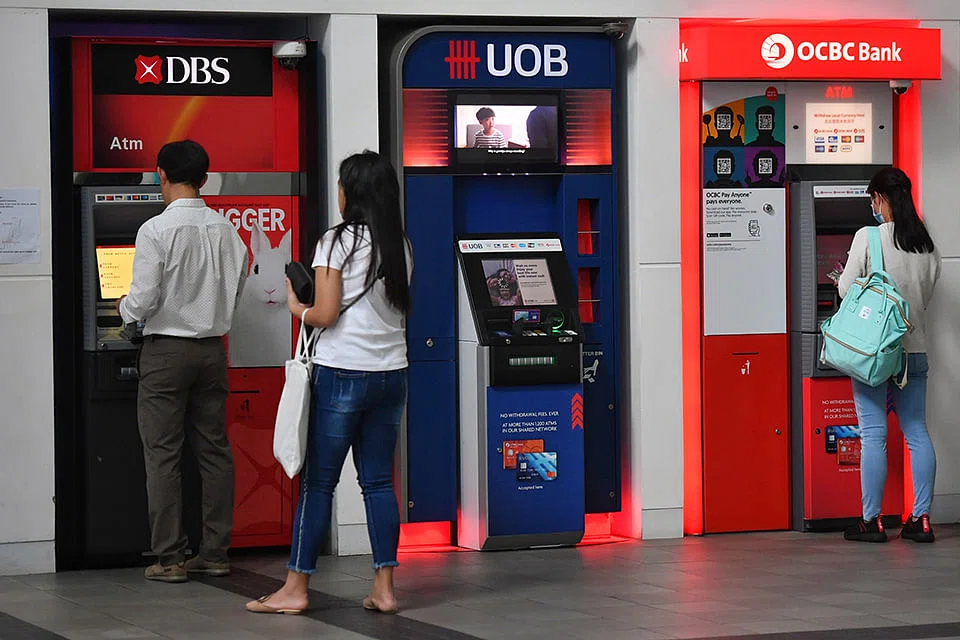
WITH authorities sending a fresh signal that relief in the form of debt moratoria will have to start being unwound, analysts say it would be a stab in the dark to assess the full impact of such unprecedented Covid-19 relief on Singapore banks' earnings.
This comes as some "zombie companies" are likely hanging on merely by the government's relief support.
One uncertainty for the local banking trio comes as a part of their quarterly income reflects accrued income from borrowers taking a debt holiday.
Maybank-Kim Eng estimated that about 12 to 16 per cent of total loans are under moratorium and other relief schemes from the local banks.
Even though no repayments are made, loans to borrowers who are on a debt holiday are treated by banks as performing loans, so they remain reported as part of income through the quarters, checks by The Business Times showed.
One thing to note is when such loans sour into bad debt when the moratoria expire. No industry-wide statistics are available to pinpoint the extent of this, though UOB told analysts in May that it would be "realistic" to expect 10-15 per cent of those applying for loan moratorium to be eventually downgraded into non-performing loans (NPLs).
In response to queries by BT, DBS said it has granted a "sizeable" number of SME and housing loan moratoria that are a mix of principal-only moratoria as well as principal and interest moratoria.
Customers who loans are on a principal-only moratoria continue to make interest payments. With the latter - despite the pause in interest payments - they are accounted for as performing loans. "We continue to be vigilant on our book. However, interest payments on pause are not material, relative to our total earnings base," said a DBS spokesperson.
Koh Ching Ching, OCBC head of group brand and communications, told BT: "Interest (on loans granted moratoria) will be accrued and income will be recognised for performing loans until such time when the loan is downgraded to become non-performing."
Due to enormous relief measures available - and as streamlined by the financial regulator - banks have provided a whole slew of loan moratoria in recent months.
Latest data from the Monetary Authority of Singapore (MAS) showed that over 34,000 mortgages had deferment of principal or interest payments, or both. More than 5,300 SMEs' secured loans have also received repayment deferments till end-December 2020.
The dollar values for both such relief were not provided. BT's checks on mortgages against private-economist estimates suggested that such deferments today would account for around 6 per cent of total mortgage loan values here. It would also represent an estimated 4 per cent of households that still have outstanding home loans.
MAS said in March that more than S$40 billion of existing secured-loan facilities to SMEs can likely qualify for deferment on principal payments. For a sense of scale, if all of such qualifying secured loans hit pause on payments, that tally would roughly be the size of DBS's SME loan book as at Q1 this year.
In a fresh report this month, Citi analyst Robert Kong said it may be prudent for investors to consider upcoming interim dividends on the basis that the banks' reported accounting earnings are higher than actual cash earnings received, even as the disparity is not material at this stage. The banks have suggested that the bad-debt impact should be more pronounced in 2021.
While similar standards of accounting for loan moratoria have been followed even before the crisis, Phillip Securities Research analyst Tay Wee Kuang told BT that "we are only beginning to understand the full scale of the impact on asset quality as the economy continue to remain sluggish". SME loans, specifically, will come under pressure of default, he noted.
Amid the growing uptake of support measures, it would be a "wild guess" on the eventual default rate arising from these at-risk loans. Banks have set aside allowances to cater for these future losses even before the risks fully materialise, said Mr Tay.
"We will likely continue to observe banks making extraordinary levels of allowances in anticipation of prolonged weakness in the economy."
While the sector's Q1 credit charges jumped about four times quarter-on-quarter, gross NPLs rose about 7 basis points over the same period, pointing to provisions being mostly cautionary, said Maybank-Kim Eng. Its head of research Thilan Wickramasinghe told BT he expects overall NPLs to increase "significantly" on a yearly basis over weak economic conditions and loan moratoria expiring.
But it is difficult to quantify between the two factors. Expectations of higher NPLs also ignore potential relief and stimulus measures in the future to spur recovery, said Mr Wickramasinghe. "If we try to quantify the impact of relief measures wearing off, it might be better to check NPL expectations for 2021 as this is where the earnings impact will be."
Jefferies analyst Krishna Guha has factored in a peak NPL ratio of about 3.5 per cent for the Singapore banks, compared with the current 1.6 per cent. He told BT that the impact on bank earnings will depend on overall economic recovery, which will give banks an additional revenue boost.
It will depend too on the number of companies that continue to stay afloat without government support, and how well they adapt to the changing business climate.
OCBC's Ms Koh told BT the bank will continue to support customers whose operations are hit by the virus outbreak with targeted relief measures, allowing them principal moratorium, extending new bridging loans and additional working capital lines.
Government support here has also included offering cheap loans that have the government absorbing 90 cents for every dollar of loan loss.
Globally, there are concerns over the rise of "zombie firms" that are artificially propped up by relief measures, with the pandemic tearing down some sectors structurally.
In Singapore, 12 per cent of the economy is at the "epicentre" of the Covid-19 crisis, MAS said last week.
Companies in sectors hit hardest - specifically in construction, travel-related, and consumer-facing services - are expected to take some time to recover.
Certain industries or activities may be "permanently impaired" by the crisis due to a range of factors, including a shift in supply chains and consumer demand patterns, said MAS managing director Ravi Menon.
"If the structure of the economy has changed in some ways, firms in those affected parts of the economy are not likely to survive, or do very well, especially if they have high leverage to start with or are not too profitable to start with," he noted.
He said it would be unsustainable to have relief measures continue indefinitely, given worries on debt accumulation.
Phillip Securities' Mr Tay said a "large portion" of NPL risk may be mitigated with the government risk-sharing 90 per cent of loans granted under several support schemes.
"I believe the banks have not yet considered (this) when setting aside losses, as the local banks tend take on a more prudent approach when accounting for possible loan losses."
The eventual impact on bank earnings when loan moratoria taper off will largely depend on the amount of government aid that banks can receive - should conditions worsen beyond expectations, Mr Tay added.
MAS data showed about S$22 billion has been set aside by the government as capital for loan guarantees. More than 10,600 enterprises have taken up about S$9.4 billion of loans between March and June via Enterprise Singapore schemes. All in, fiscal outlay in response to the pandemic has stood at S$93 billion - the largest in Singapore's history.
TRENDING NOW
Easy to rent out, hard to sell: Are buyers losing interest in Singapore’s one-bedroom condos?

GovTech retrenches another 38 staff in second round of layoffs

Stocks to watch: Seatrium, CapitaLand Investment, Keppel DC Reit, Suntec Reit, CLCT, TSH Resources

World’s largest offshore wind platform by Seatrium consortium on track to be completed by 2028

