Aviva-Singlife merger a sign of PE interest in Asia insurance assets

Kelly Ng
Singapore
INSURANCE bigwig Aviva's headline S$2.7 billion sale of its Singapore operations to homegrown digital insurer Singlife mirrors a global trend of private equity (PE) firms digging into the strong growth of insurance businesses.
With Singlife, that private equity angle comes in the form of global alternative asset firm TPG, which stepped in as Singlife's new investor.
One of the largest deals in Southeast Asia's insurance sector, the partnership between SingLife and Aviva will make TPG the largest shareholder in the new group, holding 35 per cent of group equity. The deal is expected to complete in January 2021 after parties secure regulatory approval.
It comes as PE sponsors in the US and Europe are broadening and deepening their focus on insurance asset management.
Kohlberg Kravis Roberts & Co in July announced that it would buy Global Atlantic, the former life insurance unit of Goldman Sachs, in a deal poised to boost the firm's assets under management by over US$70 billion (S$96 billion).
New York-headquartered Apollo Global Management's assets under management jumped nearly US$100 billion between the first and second quarters largely because of transactions executed by European insurer Athora and life insurance provider Athene, for which Apollo manages assets, according to financial data provider PitchBook.
In the European market, too, insurance has proven attractive to PE firms in recent years. Notable deals include Bain Capital's £1.2 billion (S$2.9 billion) acquisition of multi-insurance provider esure in 2018, marking one of the biggest deals in the industry in a decade.
Insurers confronted with advances in technology, low interest rates and challenging operating ratios, need to find new ways to remain competitive, which will require additional capital. PE sponsors can help design investments to get a better yield, which is a key driver of profitability.
Insurance companies are also attractive to PE investors, particularly amid recessionary conditions, as the sector tends to be insulated from economic downturns. Furthermore, the Covid-19 pandemic has cast a spotlight on insurance and medical firms.
Hagen Rooke, a lawyer at Reed Smith who specialises in fintech and financial regulation, said insurers hold significant assets to fund future liabilities, and their investment of these assets can generate additional returns for private equity investors.
An analysis by PitchBook on the big five publicly traded PE firms' Q2 earnings reflect a bullish outlook on the insurance sector, with many buying books of business or entire companies outright.
"Insurance company floats offer potential permanent capital sources - which allow PE firms to focus on investing rather than fundraising - and can make great investments if the float earns above market returns," PitchBook senior analyst Wylie Fernyhough wrote in his note published on Aug 10.
UK-headquartered Aviva has been eager to sharpen the company's focus on Britain, Ireland and Canada, and so, had been looking to dispose of its operations in Asia since last year. Former chief executive Maurice Tulloch had conducted a strategic review of its Asian businesses in early 2019.
Sources told The Business Times that while the review drew interest from both Singapore-based and multinational insurers, none presented a proposal that was financially compelling enough for the insurance giant.
Later in November, the insurance giant announced what appeared to be a change of heart - that it would hold on to its businesses in Singapore and China.
Aviva's appointment of a new chief executive Amanda Blanc in July this year may have renewed the resolve to streamline the organisation's operations, but TPG's involvement in the Singlife-led consortium may also have partly sealed the deal.
With Singlife as its chosen suitor, the combined business is now valued at S$3.2 billion and will initially be branded Aviva Singlife. Aviva will retain a 25 per cent equity stake, with another 20 per cent going to Japan's Sumitomo Life Insurance Company, an existing Singlife shareholder.
With TPG holding a 35 per cent stake, Singlife's other shareholders - Aflac Ventures, Aberdeen Asset Management, IPGL Limited and minorities - will collectively hold the remaining 20 per cent of the group's equity.
Headquartered in San Francisco and Fort Worth, TPG has some US$83 billion (S$114 billion) in assets under management across industries ranging from financial services, healthcare, retail, media and technology. Companies it has equity in include Burger King, Lenovo, McAfee, PropertyGuru.com and Spotify.
BT reached out to TPG to enquire about its role in the partnership, but the firm declined comment.
Riding on the digital wave spurred by the pandemic, Aviva and Singlife's partnership is also expected to shake up the industry in South-east Asia.
Aviva, which itself was one of the early adopters of paperless insurance administration processes, stands to gain from Singlife's innovation and technological expertise. Since it was established in 2017, the fintech upstart has rolled out innovative products, including plans offering retrenchment benefits - an entitlement uncommon among Singapore insurers.
On the other hand, Singlife will now have access to Aviva Singapore's 1.5 million-wide customer base. It will also benefit from the latter's strong brand name, which could be especially valuable when it launches new products in foreign markets.
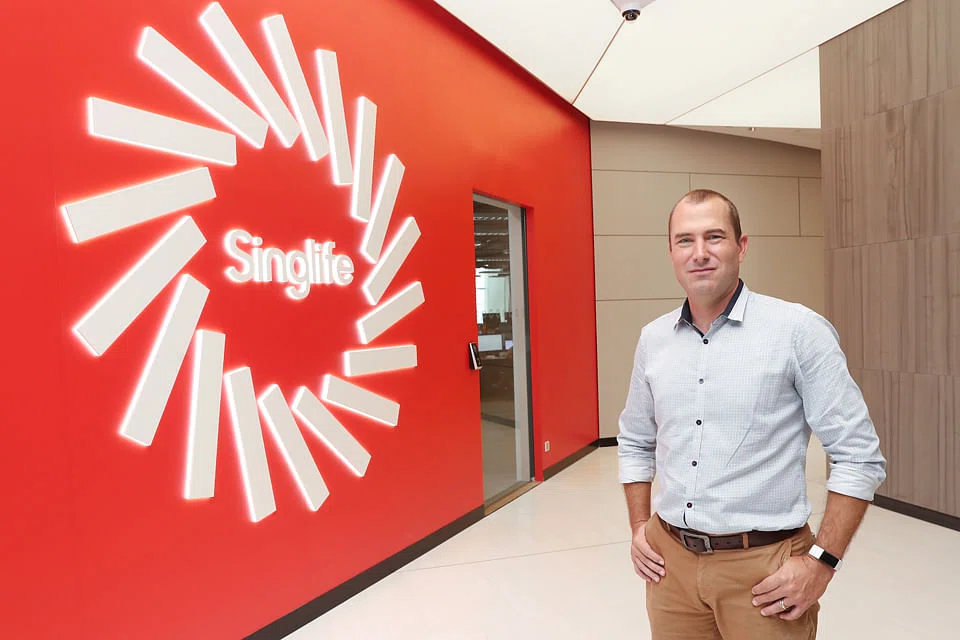
"Combining Singlife's digital engagement capabilities with Aviva's deep product set and quality advice makes for exactly what we know Singaporeans are looking for," Singlife executive director and chief executive officer Walter de Oude told BT. Aviva Singapore's chief executive Nishit Majmudar said the combination of the two will lead to improved efficiency and an enhanced experience for customers.
Singlife has also set its sights on markets outside Singapore, including partnering mobile payments company GCash in the Philippines to roll out micro-insurance products.
Mr de Oude said it plans to expand to Malaysia, Thailand, Vietnam and Indonesia after the deal with Aviva is complete. The combined entity will also have Mr de Oude as deputy chairman and Mr Majmudar as chief executive.