Bankers need to take on roles as green consultants to support transition finance, says DBS’s Muenkel

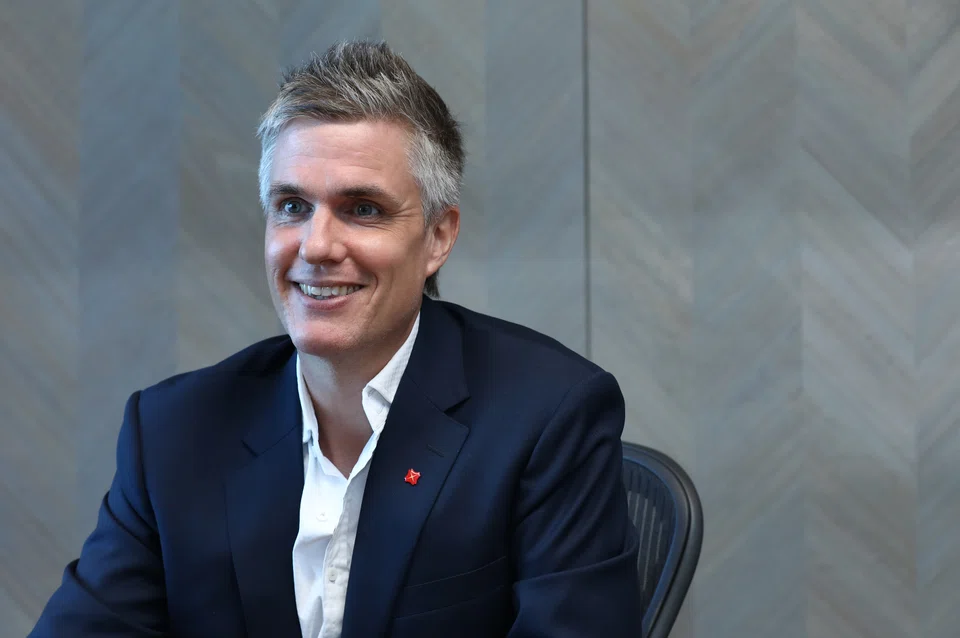
HELGE Muenkel describes himself as “insanely passionate about sustainability”. He admits this is “amazingly cliche”, but he believes passion is necessary in a role such as his.
Muenkel was appointed chief sustainability officer at DBS in January. Because sustainability requirements are changing fast, Muenkel says technical skills for the role can become outdated quickly. Passion for the topic is therefore of the “utmost importance”.
He also says the role of the banker, particularly as transition finance takes centre stage, has evolved – to be less financier and more consultant.
Here are some excerpts from Muenkel’s conversation with The Business Times:
How did you end up here?
There was a very famous book called The Limits to Growth. I remember as a teenager at school in the 90s, we were, late at night, discussing this book again and again. This is really where my thinking started. Then I did development economics at university, and worked in Israel, on peace projects, and in Jakarta, Indonesia, while still at university. I was really sparked by this.
I entered banking about 22 years ago. Before I joined DBS, I worked at a bank that also has a very strong focus on sustainability: ING. European banks, for 2 key reasons, have had a strong focus on this. One is regulatory pressure. The other is pressure from the community. Europe is, simplistically speaking, a fairly rich, uniform zone. The community has almost the luxury to think about these things
What intrigued me to join DBS is an amazing purpose in the organisation, which was palpable to me. And, from the senior management point of view, strong support for this.
Could you elaborate on a key trend you see within your area?
In the early stage of sustainable finance, there was a huge focus on what I would call the dark green stuff. Energy generation by renewable energy, for example – it’s a no-brainer.
Then there is the dark brown stuff: stuff that’s not green and is not going to become green. For example, energy generation by coal. We have to stop it.
But the biggest chunk of the economy sits in the middle. That’s what we call transition finance. It’s things that are brown today, but with the right efforts could become less brown – and ultimately green.
Think about how we produce steel, which is very important. Many buildings need steel. But the way we produce steel today is insanely energy-intense. We need to help get these processes less brown. And if we don’t do this, if we only finance the dark green stuff, we will not save the planet.
How does this affect your role?
We need to make sure we help our clients. If we go to a client and say, “You run a brown business, have a good day,” not only is that not very good from a relationship point of view, but you don’t save the planet.
One buzzword I’m going to throw into the ring is ecosystem building. We have a lot of knowledge, as a bank, and we can give advice. But we can’t cover everything. There are other people that are good at certain elements; for example, technical engineers.
DBS is focused on creating ecosystems because ultimately what we care about is service delivery. Do we make a difference? Do we help our clients become better? If that requires us to get a third party into the room, we’re going to do it.
The Banker is a new, monthly column on changing roles in banking and finance.