

Banking through the crisis: A test of speed, personalisation and purpose
Local banks must seize the opportunity presented by emerging Asian countries: McKinsey

Singapore
PRODUCTIVITY and capital management will get most banks through the Covid-19 crisis. But if they are to thrive in a long winter of anaemic interest rates and economic challenges, they will need agility, new business models and an emphasis on environmental, social and governance (ESG) considerations.
That was the verdict of McKinsey analysts in an annual review of the global banking industry.
The consulting firm also said Singapore banks must seize the opportunity presented by activity in emerging Asian countries.
In its base case scenario, global return on equity (ROE) is not expected to return to pre-crisis levels for at least five years. But emerging Asia is expected to buck the trend due to demographic shifts and rapid economic growth. And this represents a "big opportunity" for Singapore, said Joydeep Sengupta, who leads McKinsey's Asia-Pacific banking practice.
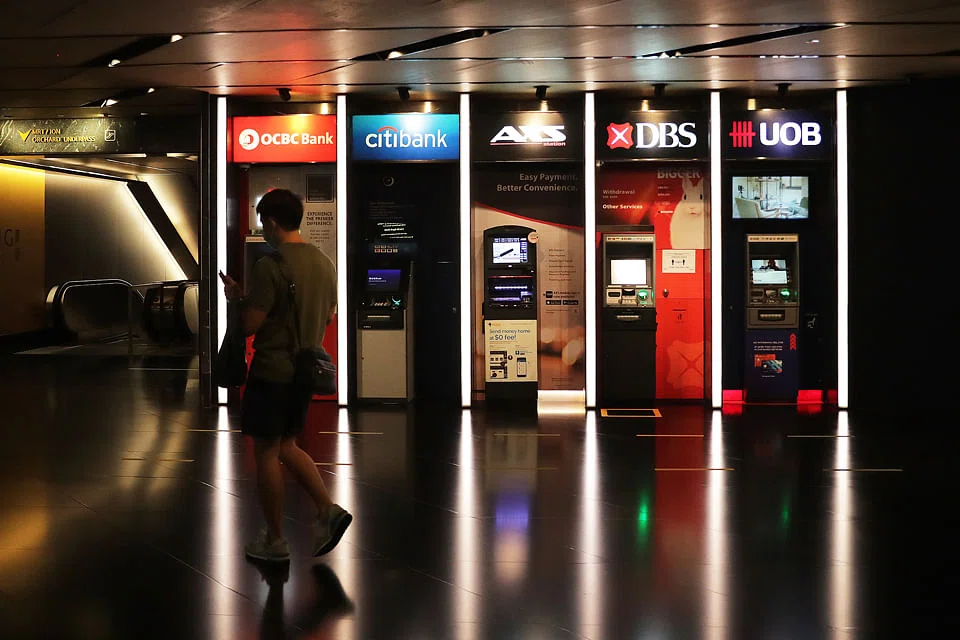
Investors have already turned more positive on the three local banks, which started the year with a good showing on the bourse.
DBS's shares hit a two-year high on Friday, closing at S$27.42, up 5.3 per cent or S$1.37. UOB shares closed up S$1 or 4.3 per cent at S$24.20, while OCBC shares closed up S$0.41 or 4 per cent at S$10.73.
As a strong Asian financial centre, Singapore can facilitate cross-border trade flows, capital flows, as well as wealth and asset management businesses in the region. "Given the increasing importance of digital strategies and analytics, Singapore is well positioned to both incubate and help new business model scale-ups across the region in areas like digital banking, payments and sustainable financing," said Mr Sengupta.
McKinsey's annual review, based on a monthly survey of more than 2,000 global executives since April 2020, also sketched out key trends for the banking sector in 2021.
While the pandemic has upended the traditional ways of working, it has also driven banks to shift decision-making from stable, long-running processes to quick resolution via videoconferences.
The challenge post-pandemic is to institutionalise these streamlined, efficient decision-making patterns, while keeping customer-centricity at the core, said Mr Sengupta.
Experts from other firms also stressed that banks, while tapping technological efficiencies, must look at how to retain the human touch.
"Covid-19 has made the need for a trust-based relationship more urgent. There has never been a better time for banks to relook their traditional approaches and embrace empathy, attentiveness, and responsiveness, moving on from obsessing about itself to obsessing about people," said Paul Ng, Accenture's financial services lead for South-east Asia.
The McKinsey report highlighted Singapore as among the countries that saw a larger uptake in customer interest in digital banking during the pandemic, as compared to the likes of the United States and the United Kingdom. In the US and UK, only 10 to 15 per cent of consumers became more interested in digital banking than they were before the crisis (and 5 to 10 per cent are less interested). In Greece, Indonesia, Mexico, and Singapore, the "more interested" share ranges from 30 to 40 per cent.
Next, with the expectation of low or negative interest rates in years to come, as well as the emergence of digital challenger banks, banks - particularly those in Asia - must move away from their high dependence on interest income.
This could mean exploring an originate-to-distribute approach to lending, as is common in some European countries, where banks do not hold the loans they originate but repackage and securitise them for third parties.
EY's Asean regional managing partner Liew Nam Soon urged financial institutions to leverage data to offer value and adjust to customers' changing needs. "Banks should be making better use of data to build up their ecosystem and create superior offerings for customers. (This will) empower banks to fundamentally rethink and reframe their futures based on an entirely new customer relationship," he said.
Agreeing, Accenture's Mr Ng said: "Investing in hyper-personalisation tools is a smart strategy, as companies can gain the trust of their customer base, increase the rate of conversion, and see higher rates of repeat customer business."
Finally, with issues of social and environmental sustainability playing a larger role in conversations among nations and companies, ESG issues are likely to come up higher on banks' strategic agenda.
While the world had already started to grapple with economic inequality and climate change before the pandemic, the Covid-19 crisis threatens to wrench income and wealth gaps even wider.
"The world now demands responsible capitalism, not least from the banking industry, which cannot afford to stay on the sidelines," the McKinsey report said.
National University of Singapore finance professor Johan Sulaeman said local banks should develop internal resources that can help in sustainability assessments. Such assessments could include customers' responses to climate change and the risks these changes pose - both to customers and to the banks' bottom lines.
"I think the world needs, first and foremost, a viable and sustainable banking system that contributes to the welfare improvements of the world's population," he said.
In addition to customers' shifting values, new generations of employees, too, are increasingly asking questions about their workplaces' raison d'etre, McKinsey's Mr Sengupta said.
"It is natural to be sceptical about whether sustainability is merely a buzzword, but we have been encouraged by a few accelerating trends," he said, noting that investors, governments and employees are prioritising it.
McKinsey's research suggests that going forward, up to a quarter of banking profits could be influenced by ESG issues. "I believe that the rising ESG movement is no longer just a flash in the pan. It is important for retaining customers and talent within the company," he said.
It is critical that banks develop coherent, long-term ESG strategies. Said EY's Mr Liew: "The pandemic will pass, ESG concerns will not."
READ MORE: Bank stocks back in vogue on stimulus, interest rate outlook
TRENDING NOW

What role can Japan play in Asean’s future?

IOI Properties and CapitaLand Investment closer to acquiring One Raffles Place in joint bid
AI bubble may burst soon amid financing concentration, rising rates: Ray Dalio

OCBC sheds S$8 billion in value as shares close nearly 6% down; analysts cautious on banks

