

Banks still see silver lining in trade financing
Companies are focusing on intra-Asean trade as a way to grow in view of the protracted US-China trade war
Singapore
ON THE surface, it might seem like a logical conclusion to make that trade financing volumes are shrinking in line with the global slowdown on the back of the US-China trade conflict.
But some banks are still seeing an uptick in their trade financing business, as companies focus on intra-Asean trade as a way to grow in spite of the protracted US-China trade war. Businesses are turning to banks for more trade financing solutions to either build alternative production lines or to expand their supply and distribution networks in the region.
In a nutshell, trade finance involves introducing a third party - usually a bank - to transactions to mitigate payment and supply risks, as well as to improve cashflow management.
In spite of the subdued trade environment in 2018, income from UOB's trade finance business grew 10 per cent from a year ago.
Ng Poh Yee, head of Corporate Trade Sales/Financial Supply Chain Management (FSCM), Group Transaction Banking, UOB said: "While the US-China trade tensions have led to a slowdown in trade and business flows, especially in and out of Greater China, we are seeing a gradual shift in such flows into Asean."
For many businesses, the diversification of the supply chain into Asean is becoming one of their top priorities, she noted.
They would require backing in various areas, such as working capital, sourcing, production, sales and risk mitigation. This is where a bank can come in to support these businesses through customised trade finance and FSCM solutions to help clients manage their liquidity, funding and counterparty risks, she added.
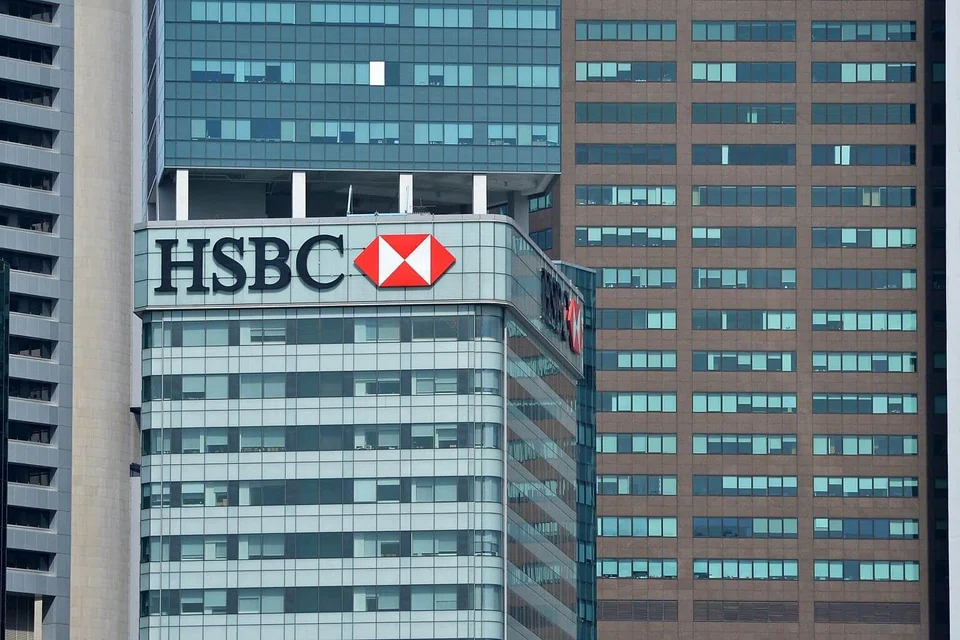
It is not alone - HSBC is another bank that saw an improvement in its trade finance business in 2018. Its Global Trade and Receivables Finance division saw a 2 per cent increase in revenue in 2018 from a year ago.
But, according to Iain Morrison, head of Global Trade and Receivables Finance, HSBC Singapore, the pivot to Asean is hardly new.
"While supply chain shifts are much talked about in relation to trade tensions, growing labour costs and the need for supply chain diversification were already causing companies to explore other alternative production locations in Asia."
What he considers more notable is the growth in intra-regional trade. He flagged HSBC's recent Navigator Survey, which found that despite economic uncertainty, Singapore companies are now looking to intra-Asean business activity to "cushion themselves from the effects", with the majority expecting to grow in the next one to two years.
This reflects the growing belief that intra-regional business activity will shield some of the slack created by slowing and more turbulent markets elsewhere, said Mr Morrison.
Yap Kwee Hong, head of Global Trade Finance, Global Transaction Banking, OCBC Bank, noted that some companies are considering shifting their manufacturing bases, recalibrating production lines and redirecting trade flows from China to other parts of developing Asia if the trade war escalates.
While there appears to be no changes in preferred trade instruments by companies amid the escalating trade tensions, she observed that there are changes in payment terms.
"Major importers and buyers in the US are more likely to have the upper hand when it comes to payment terms," she said. "Suppliers are the ones bearing tax and tariffs at the time of importation as a way to mitigate such trade risks."
Standard Chartered Bank's global head of transaction banking Lisa Robins suggested that there may be a renewed demand for well-established risk mitigation solutions such as Letters of Credit (LCs) in the short term. This comes on the back of uncertainties caused by the trade war and the switching to new suppliers in new countries.
Among the various instruments used in trade finance, the volume of LCs has been trending downwards globally, while other instruments such as open account and supply chain finance have grown, she observed.
LCs reduce risks as the buyer's bank guarantees payment to the seller for the goods shipped. An open account transaction is a sale where the goods are shipped and delivered before payment is due while supply chain finance provides short-term credit that optimises working capital for both the buyer and the seller. These are just some of the mind-boggling array of trade financing solutions available.
However, Ms Robins said, Standard Chartered is "not seeing a huge impact" to its trade business yet, even as the bank has observed a gradual movement in supply chains as some of their clients and their counterparties see a slowdown in the order book from the US.
Markets such as Taiwan, Vietnam, Malaysia and Thailand may be beneficiaries of these changes, she said.
Looking ahead, banks are still not letting up on their trade financing business even with the uncertain external climate. Many are investing in technology such as blockchain to transform trade as well as to stand out from the competition.
HSBC's Mr Morrison believes that digitisation would help revolutionise trade - turning trails of paper into digital data, and reducing paper-based documentation exchange times. Blockchain, he said, is the current "hot topic" that the bank is zooming in on.
Globally, HSBC plans to invest US$15-17 billion in new technology by 2020 across the entire group. "Innovation in technology is going to define the winners in trade finance," he added.
TRENDING NOW

He built the Vingroup empire. Now South-east Asia’s richest man is handing some key roles to his sons

Can CDL become a powerhouse in fund management?

Canada is upping oil flows to Asia, but South-east Asia’s refineries aren’t ready to handle them yet

Data centre energy demand from Asean telcos not a ‘big risk’, says industry group

