

Banks tighten credit to bunker industry amid fraud and other risks
In the wake of Coastal Oil's US$354m debt, foreign and local banks step up vigilance; analysts warn credit costs could rise by 1 to 6 basis points

Angela Tan
Singapore
THE credit-starved bunker sector is feeling the screws tightening further as banks cut their exposure to what they fear is a high risk industry, including instances of fraud.
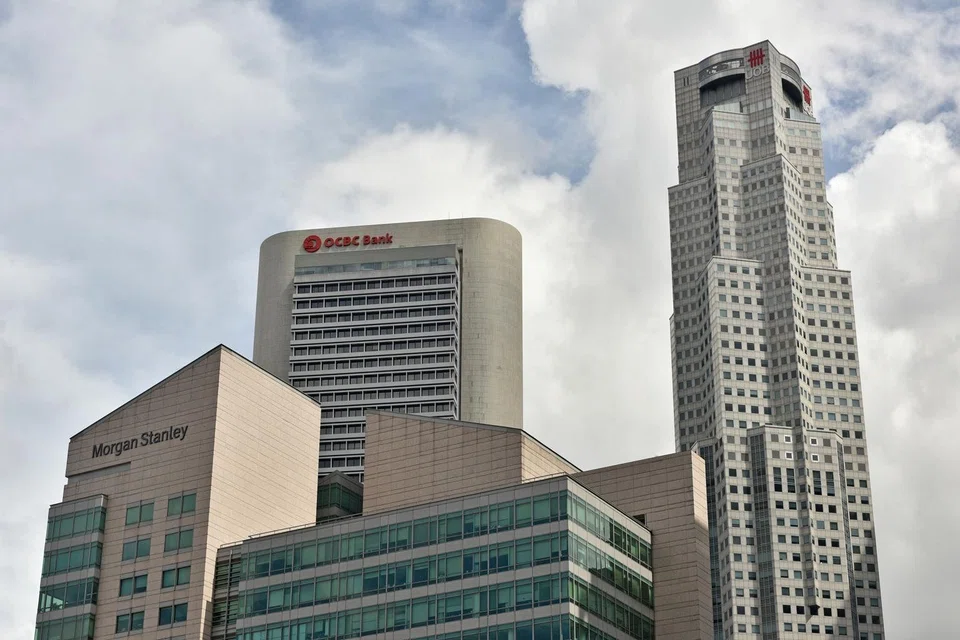
The Business Times understands that foreign and local banks such as DBS, OCBC and UOB are still offering credit to bunker firms, but have taken an even more vigilant stance in view of what happened at Coastal Oil Singapore.
Troubled Coastal Oil, a crude oil products supplier, filed for liquidation as part of a creditors' voluntary winding up scheme on Dec 13, 2018. Its demise has hit at least 10 banks, including all three Singapore banks which are owed about half of the total debt of US$354 million. The company owes DBS HK US$29.9 million; OCBC HK US$122.7 million and UOB HK US$19.5 million. Cosco Shipping International (Hong Kong) has also been hit by demands for the repayment of alleged debts related to a unit, which the China shipping group said were fake.
Globally, the bunker industry is in a fragile state due to the sharp drop in fuel oil prices.
"Some hedged the wrong way; some are unhedged. Failure by some players have chain effect on others as they are all part of the ecosystem. Then, there are some fraud too. Hence, credit has tightened significantly,'' explained one banker.
Banks continue to be selective. Many prefer to deal with reputable players, leaving smaller players, who rely on open credit, out in the cold.
Jack Jordan at S&P Global Platts said credit availability could become a big headache for the sector which runs on credit. Shipowners typically pay for their fuel several weeks after delivery, and the amount of credit available will need to be increased dramatically from the end of 2019 onwards to cover the new requirement for more expensive fuels.
From 2020, the International Maritime Organisation's lower 0.5 per cent sulphur limit for bunkers comes into effect to curb pollution. This is rattling players in the sector from refiners to bunker fuel sellers and shipping companies. The new requirement means the global shipping fleet, which uses about 4 million barrels a day of high sulphur fuel oil, will be forced to shift to cleaner, more expensive marine diesel, or gasoil.
"The banking industry has regarded bunker traders with suspicion since the surprise collapse of OW Bunker in 2014, and may struggle to accommodate a large increase in their demands,"' noted Mr Jordan.
OW Bunker was one of the world's largest traders of bunker fuel. It collapsed in Nov 2014, chalking up more than US$150 million in losses, brought down by fraudulent activity at its Singapore subsidiary, Dynamic Oil Trading.
Mr Jordan said the industry's performance in 2018 would do little to encourage bankers. Competition has been tough at the world's largest bunkering hubs, keeping margins under sustained pressure and forcing some to leave.
Hamburg-based global supplier Bomin Group has been one of the more prominent victims of this process. The company has undergone a wave of restructuring over the past couple of years culminating in its announcement late in 2018 that it would exit the Singapore market and sell off its Belgian operation, and operate only from Houston and Hamburg.
Singapore is the world's largest bunker port, with annual bunker sales volume in 2018 close to the 50 million-tonne mark for the second year consecutively, based on latest figures from the Maritime Port Authority.
The city-state's pole position appears intact for now.
"We still believe that it will retain its position as the world's largest bunker hub due to its position in the Malacca Straits through which around 25 per cent of global trade transits, but some demand will likely migrate northwards to China,'' according to the Alphatanker Marine Fuel Outlook report.
CGS-CIMB analysts Andrea Choong and Lim Siew Khee believe that further widespread deterioration of the oil and gas sector is unlikely. In the worst-case scenario of incurring full provisions, credit costs could rise by 1-6 basis points (bp) which should not impact non-performing loan (NPL) ratios for the three banks.
"Recall that in 2H17, the Singapore banks cleaned up their books with the accelerated recognition of vulnerable oil and gas exposures," they said, adding that provisions would have been progressively set aside given the likely weakening of Coastal Oil's cashflows leading up to the liquidation.
CGS-CIMB understands that DBS has significantly written-down the collateral values of most of its O&G book and further weakness from this book may not be significant. It has a "hold" call on DBS, and a target price at S$27 a share.
OCBC's proportion of O&G exposure to its loan book is the largest among its peers.
"We think that our 6bp credit costestimate for its exposure to Coastal Oil is likely to materialise given the minimal asset value of its vessels," said the analysts who have an "add" call on OCBC and a target price of S$14 a share.
As for UOB, O&G loans account for around 5 per cent of the bank's loan book, they said.
"Most of the exposures are in the downstream segment. UOB is minimally impacted by Coastal Oil's liquidation,'' the analysts said. They have an "add" call on UOB and a target price of S$31 a share.






