BT explains: What is regulatory capital and why has MAS asked DBS to set aside more of it?
Claudia Tan HS
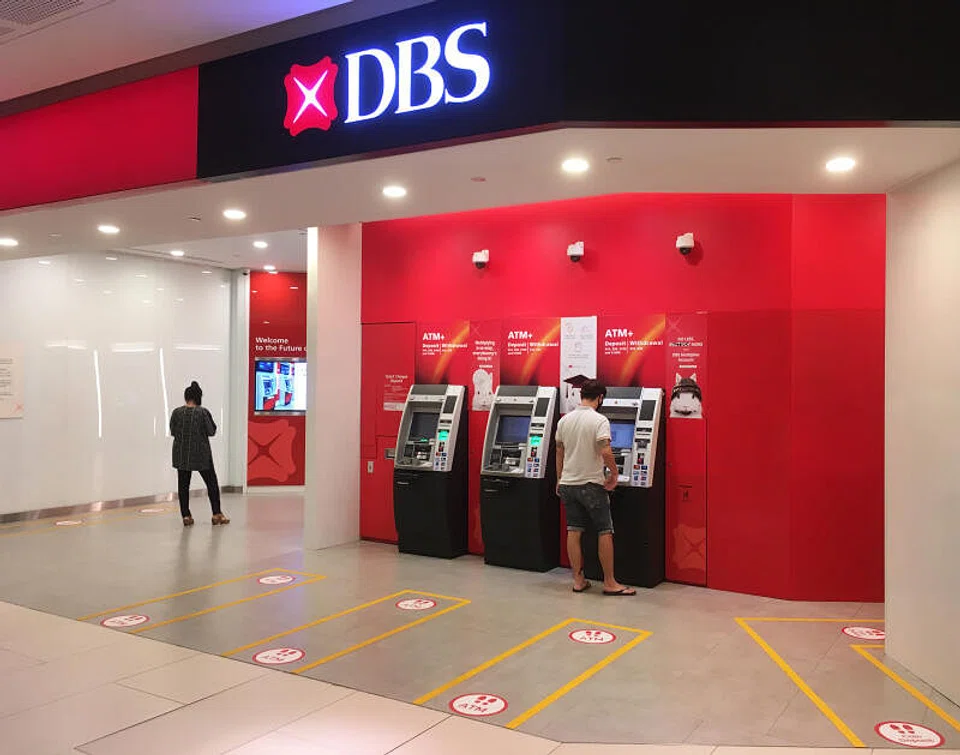
AS a penalty for the widespread disruption of its digital banking services in November last year, DBS has been told by the Monetary Authority of Singapore (MAS) to set aside about S$930 million in additional regulatory capital as a buffer against operational risks.
What is regulatory capital?
MAS requires all banks to hold a minimum amount of capital relative to the size of risk exposures. This capital is predominantly in the form of equity and retained earnings. The principle behind this requirement is to ensure that a fixed percentage of a bank's assets are relatively safe, and readily available as a backstop in a crisis. (see Amendment note)
The regulatory capital is usually expressed as a percentage using the capital adequacy ratio (CAR), which is the ratio of capital to a bank's risk-weighted assets (RWA). The latter are assets that are classified based on their inherent risks, and include credit exposures, market risks and operational risks.
A bank with a higher CAR means the bank sets aside more regulatory capital relative to its total RWA. The higher the CAR, in general, the safer the bank. But there is a tradeoff: setting aside too much capital would limit the amount of money a bank can use to generate income.
MAS requires Singapore-incorporated banks to meet a minimum total CAR of 10 per cent, but banks typically exceed that minimum.
How much do the local banks set aside?
As at September 2021, the total CARs of the local lenders were well above the regulatory minimum requirements.
Why has MAS imposed additional capital requirements on DBS?
DBS's digital banking services were down from Nov 23 to Nov 25 last year. MAS said in a statement that there were deficiencies in DBS's incident management and recovery procedures. This additional capital requirement therefore serves as a buffer against operational risks.
When was the last time MAS made a similar move?
In 2010, DBS had to set aside an additional S$230 million in capital for a glitch that crippled the bank's key banking services - including ATMs and mobile banking services - for about 7 hours.
What will this mean for DBS?
DBS had said that the new requirement will have a 0.4-percentage-point impact on the group's capital ratio, but that there will be no impact on the company's dividend policy.
Inclusive of the capital impact arising from its acquisition of Citi's consumer banking business in Taiwan, DBS' pro-forma common equity tier 1 (CET-1) ratio as at Sep 30, 2021, would be 13.4 per cent. The CET-1 ratio is a subset of the total CAR. It measures a bank's core equity capital, compared with its total risk-weighted assets.
READ MORE:
- Cyberattack not the cause of DBS digital-banking outage; services available again, says bank
- MAS says DBS digital services outage is 'serious'; analysts expect bank to be fined for 'broad and material' impact
- OCBC completes arrangements for full payouts to all 790 SMS phishing victims; S$13.7m in losses
Amendment note: An earlier version of this story incorrectly stated that MAS requires all banks to hold some deposits in the form of liquid assets. In fact, banks have to hold a minimum amount of capital relative to the size of risk exposures. The article has been amended to reflect this.