

China credit default swaps sharply up on week, money rates down
 Add BT as a preferred source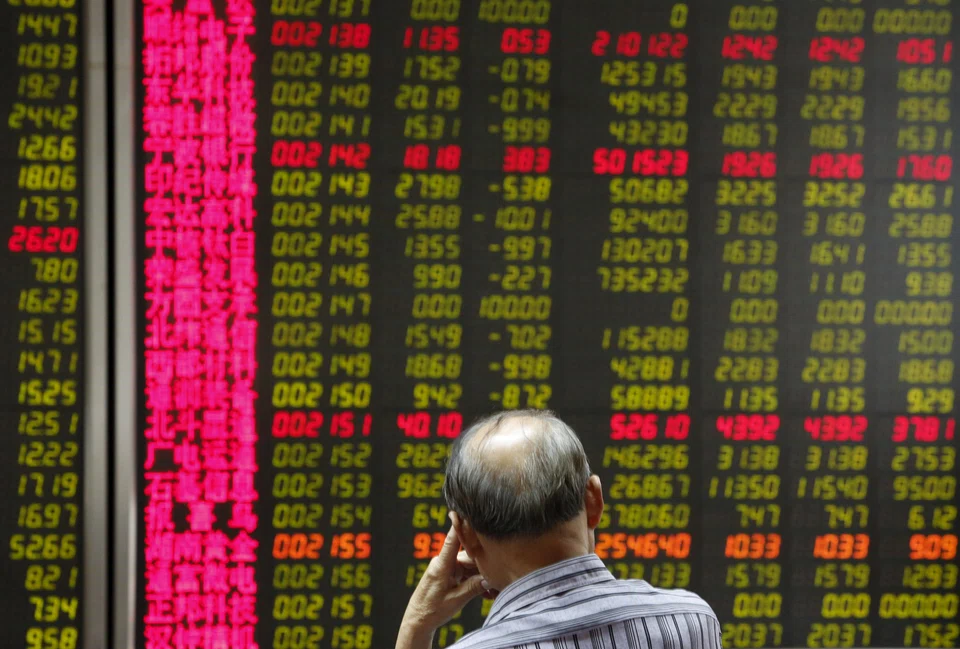
DeeperDive is a beta AI feature. Refer to full articles for the facts.
[SHANGHAI] Chinese sovereign credit default swaps were up sharply on the week on Friday, reflecting mounting concerns over the risk of financial instability in China after the massive gyrations in China's stock markets over the past ten days.
Five-year sovereign credit default swaps were up close to ten basis points for the week, the most since the third quarter of 2014.
Short term money rates fell abruptly, however, as the central bank resumed open market operations for the third week in a row and regulators announced that new IPOs would be curbed in an attempt boost the flagging stock mareket.
IPOs in China typically boost money rates as investors borrow in the money markets to purchase newly issued shares.
The benchmark seven-day repo rate was at 2.51 per cent by mid-afternoon on Friday, down 32 basis points (bps) for the week, the most since mid-May.
The 14-day repo was down 44 bps to 2.81 per cent for the week.
Navigate Asia in
a new global order
Get the insights delivered to your inbox.
Despite the rise in credit default swaps - which in theory measure investors' perceptions of default risk on the asset in question - Chinese government bond yields have actually declined significantly over the past week as mainland investors have sought the perceived safety of government backed assets.
Yields on five year Chinese treasuries and equal tenor policy bank bonds are down around 10 and 20 basis points respectively since the end of June.
"I have seen money from institutional investors flowing into the long-term treasury bonds and financial debts, and other high-yield products recently," said Li Qilin, a fixed income analyst at Minsheng Securities in Beijing.
"The slump in the stock market raises safe-haven demand. And as the government halts the IPOs, those IPO funds also flow into the bond market." The last three weeks have witnessed excessive volatility in China's stock markets, as margin debt positions have unwound and the governmment has struggled to stop the decline.
After falling around 30 per cent from June 10 to July 8, Chinese stocks have recovered around ten percent in the last two days as Beijing has sent strong signals of support for market including central bank suport for the state margin finance company, among other measures.
REUTERS
Share with us your feedback on BT's products and services
TRENDING NOW

Shelving S$5 billion office redevelopment plan proved ‘wise’ as geopolitical risks mount: OCBC chairman

China pips the US if Asean is forced to choose, but analysts warn against reading it like a sports result

Beijing’s calculated silence on the Iran war

Middle East-linked energy supply shocks put Asean Power Grid back in focus

