

Citi lasers in on Singapore as it exits 13 retail markets
Republic is a key booking centre for offshore flows that speak to the wealth creation in Asia
Singapore
SINGAPORE is set to rise in importance for Citi in the region as the banking giant exits its consumer business in several markets across Asia.
With the city-state now one of four wealth hubs for the bank, Citi will hire up to 1,500 staff for its consumer wealth businesses here to support plans to triple assets under management (AUM) by 2025, said a top executive.
Citi further said on Monday that it is expected to add in excess of US$150 billion in AUM across its Asia Pacific franchise, including US$120 billion in the high-net-worth segment.
As it is, last December the bank opened in Singapore its largest wealth advisory hub globally. That hub now serves some 150 clients each day.
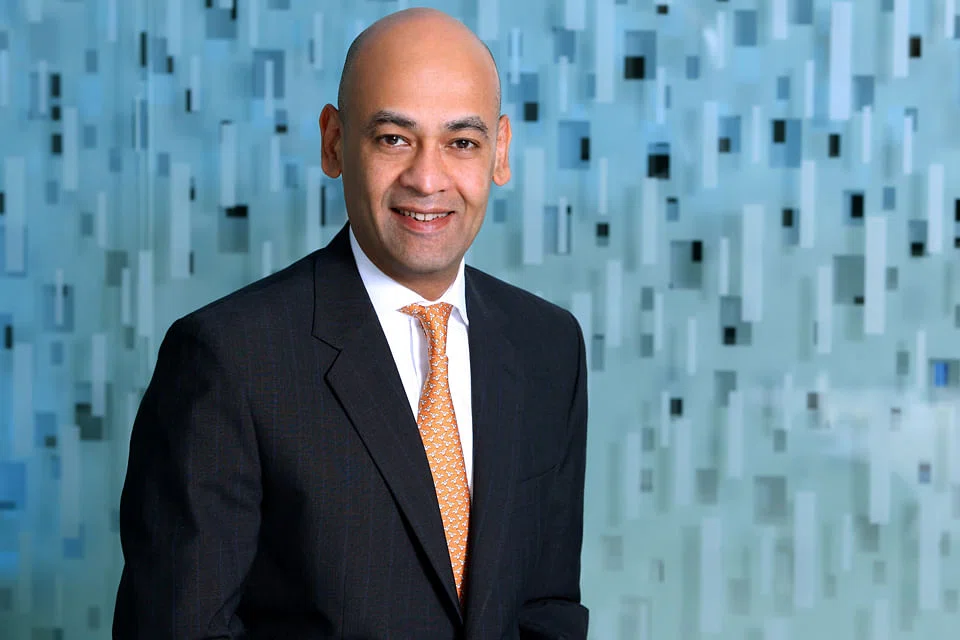
With more resources channelled into Singapore, Citi will also invest in more tech infrastructure, and further integrate its wealth platforms to capture rising flows within Asia, Amol Gupte, Citi Asean head and country officer for Singapore, told The Business Times in an exclusive interview.
The Wall Street giant made a call last week to exit 13 consumer markets, including China and India, citing the lack of scale needed to compete in those markets. The move also came with broader plans to double down on wealth management.
Its global consumer banking unit will be focused on four markets: Singapore, Hong Kong, London and the United Arab Emirates.
Citi is one of the largest foreign banks in Singapore, with a total headcount of about 8,500. It is also among the largest credit card issuers here with a market share of 25 per cent on rollover balances.
Critically, the Republic is a key booking centre for offshore flows that speak to the wealth creation in Asia. "Even if wealth gets created outside of Singapore, a lot of that wealth finds its way into Singapore because of the level of sophistication of financial products here. We want to be here, to be able to catch that wealth," Mr Gupte told BT.
A 2020 global wealth report by Boston Consulting Group found that Singapore is the third-largest hub for cross-border wealth, with total bookings in 2019 exceeding US$1 trillion.
To capture flows into Singapore, Citi has a local wealth arm, the International Personal Bank (IPB), to serve affluent and high net worth clients from around the world. Mr Gupte said IPB Singapore could leverage the new Citi Global Wealth structure to offer improved products.
"This wealth journey is not a reaction to the exit in other markets. We've already been on it for awhile now," he noted.
Singapore also remains a key consumer market for several reasons, one of which is its high gross domestic product per capita relative to other Asian markets.
Singapore onshore investable wealth assets are projected to grow by 46 per cent over the next five years in the emerging affluent and affluent segment.
Citi's core consumer strategy is to serve the mass affluent market. The wealth in Singapore "gives us significant critical mass" to do that, said Mr Gupte.
"We are not a traditional mass market bank in Philippines or Indonesia, for example. But in Singapore, we want to be. There is wealth here... even the middle-end and bottom-end of the pyramid still has a lot of value for us."
He further said investors here generally have a larger appetite for international investment products. This is unlike some of the other emerging markets where consumers are "far more focused" on local products.
With its global network, Citi is in a good position to meet this demand, said Mr Gupte.
"We can offer our overall international (solutions) to our clients, versus just Singapore products. We're not just selling Singapore equities, Singapore bonds, Singapore mutual funds... we can offer really exciting products on our platform. The Singapore investor is globally minded."
The bank's broader strategy is to, over time, grow and bump up its mass affluent clients into the private banking tiers.
Against this backdrop, it looks to create stronger linkages between the private bank and the global consumer banking unit to serve clients across the wealth continuum, from the affluent to the ultra-high net worth.
"We will build an integrated wealth platform with the ability to move clients, relationship managers up and down that platform easily," said Mr Gupte. A single wealth unit, Citi Global Wealth, was created in January to spur this integration.
Citi's new CEO Jane Fraser has said that the divestment aims to simplify its consumer business and improve shareholder returns.
In the first quarter, Citi posted a 7 per cent year-on-year fall in revenue to US$19.3 billion on low interest rates and a 10 per cent decline in loans, largely on lower credit card loan balances.
The 13 retail markets it will exit are: Australia, Bahrain, Indonesia, South Korea, Malaysia, the Philippines, Poland, Russia, Taiwan, Thailand, Vietnam, India and China.
Mr Gupte told BT while "some tough calls" had to be made, the strategy refresh has further cemented Singapore's significance to the global business.
"When you don't have scale, you have to choose where to put your bets. When you make those tough choices, you can then put more bets on what you're convinced on, and that's the Singapore market."
TRENDING NOW

Government to bring forward raising of retirement age, give employers more financial support to create flexi-load jobs

If Europe goes to war, the fallout will be felt in East Asia
Former minister Maliki Osman, Revolut chairman join Asia Gulf Holdings advisory board

Small nuclear reactors could boost the Asean Power Grid: GE Vernova executive

