

Citi puts bigger bet on Singapore with family offices as ace in hand
Singapore
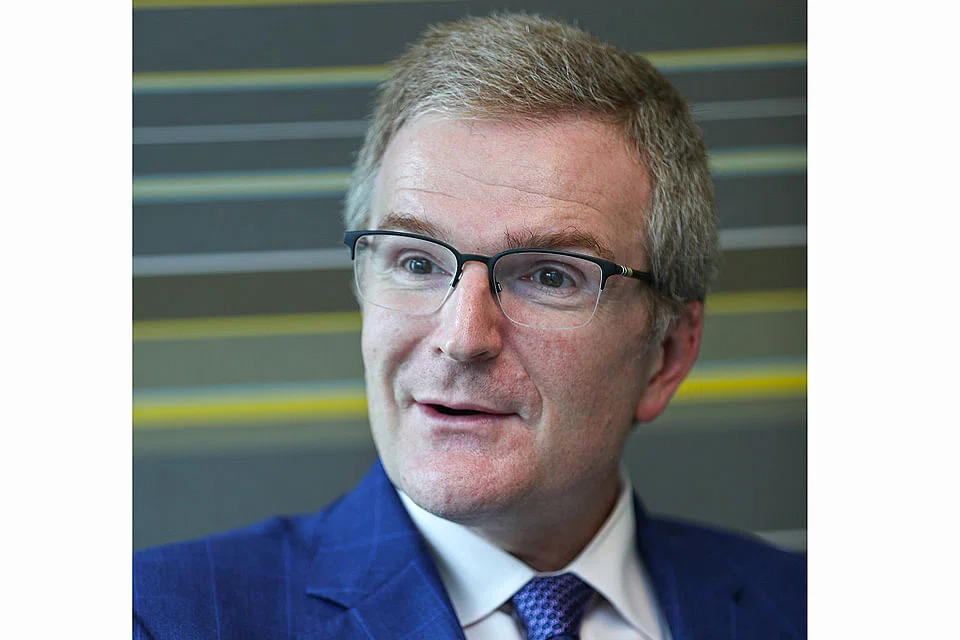
CITI'S private banking business is looking to leverage Singapore's strategy in wooing more global family offices, with the city-state seen to have a "real lead" over the rest of the region, said Peter Charrington, global head of Citi Private Bank.
At a time of global uncertainty, with trade tensions and Brexit dominating the headlines, Singapore has emerged as a winning financial centre with "clear rules", he told The Business Times.
This brings clarity in doing business where ultra-high net worth individuals can feel secure to set up a family office, he added. Tax exemption schemes here that can be tapped on by qualifying funds are also a draw, as is the access to talent.
"Singapore has been very clever in the way it has attracted - and is attracting - family offices," he told BT as part of a visit to Singapore. "I don't see that going on in other parts of Asia."
As it is, the number of family offices in Singapore quadrupled between 2016 and 2018, latest figures from the Monetary Authority of Singapore showed, with private banks such as Citi keen to capture opportunities in this fast-growing segment.
Family offices are private wealth management advisory firms set up by ultra-high net worth investors to manage the wealth of the family, providing exclusive services in areas such as trust and wealth planning, real estate, investments and even institutional access to markets.
They are a relatively recent trend in Asia compared to the more mature markets of the United States and Europe. Some came about with the "new money" that shot up in the region as entrepreneurs made their fortunes here; to be clear, there are other family offices set up to manage wealth of non-Asian wealthy individuals who want to diversify their wealth beyond domestic markets in the West.
Customisation is key for these sophisticated clients. "I think there's nothing worse - you meet the bank and the first thing they say is: here's all the things I can sell you. If I were a family office, I would say goodbye," said Mr Charrington.
"We are not here to walk the dog. We are not here to provide the fuel for your jet. There are very good people out there who do that, but we are here to provide a set of services that fits what the bank does."
He observed that family offices that set up here typically seek a number of objectives.
In Asia, where there are many people who are setting up family offices for the first time, access to content and information is key, he noted.
To meet this need, Citi runs a number of exclusive events for family offices that are private and confidential where they get to meet and learn from fellow practitioners, he said. Its exclusive "club" status is also one of its advantages, as the bank provides opportunities for these ultra-high net worth individuals to rub shoulders and strike deals.
With the private banking unit sitting under Citi's institutional banking business, family offices that work with Citi can get direct access to the markets desks for their trading activities. They also tap on more complex portfolio analytics offered by Citi to calibrate the wealth concentration in the industry from which a family business generates its business income.
"Clients have needs that are quite institutional in nature," he said.
Citi sees itself in prime position as it has had a headstart in institutionalising the private banking business, where clients are exposed to the bank's platforms and product specialists. This goes some way to reduce the damage of relationship managers (RMs) jumping ship, as clients are less likely to defect.
The move can also help to contain the surging costs of RMs in this region, with private banking still nascent in Asia. A common occurrence within the private banking industry relates to the rapid turnover among RMs, leaving for rivals for a jump in salary every few years and bringing their clients along with them - whom Mr Charrington calls "serial flippers". The concern comes as the premium paid to RMs here is higher than other parts of the world, Mr Charrington flagged.
"In Asia, there is absolutely no doubt that some banks are operating a cost-income ratio that is totally not sustainable," he added.
Citi Private Bank operates at a cost-income ratio in the 50 per cent range - Mr Charrington pointed out most of its competitors do so at a "much higher" ratio, with some even in the 90 per cent range.
Given this, he expects to see another "inevitable" wave of consolidation among private banks in Asia, with clients also looking to consolidate accounts with their private banks.
To ensure the sustainability of the business, Citi has built an apprenticeship model, where junior bankers are partnered with senior bankers. In Asia, Citi Private Bank has more than 350 private bankers and product specialists, with each private banker serving between 20 and 25 clients. Globally, it has about 3,200 people working with their 12,000 clients.
The bank hopes to entrench itself to stay here "for the long term", as the wealth in Singapore and the region continues to grow, particularly as wealth transitions from one generation to another.
Citi Private Bank has seen its revenue in Asia grow 17 per cent in 2018 from a year ago. Global private banking assets under management hit US$460 billion, with Asia contributing most to the positive performance.
Even as wealth surges in the region, Citi sees its greatest value in tapping on clients who are global investors. If Citi can only do things that Singaporean or regional banks can do, it is adding "absolutely no value", Mr Charrington pointed out.
"I always say to the client - have a very good regional bank. And then you need to have a global bank."
TRENDING NOW

Britain’s mansion tax shows the difficulty of targeting wealth

Once staunchly pro-China, Malaysian Chinese businesses are now distancing themselves from Beijing

The only common thing in S-E Asia is that we all eat rice: Cisco’s Asean president

Singapore data centre operator DayOne opts for US IPO at likely US$20 billion valuation

