Citibank Singapore to launch new wealth centre with big targets
Singapore
CITIBANK Singapore plans to double its wealth management business in terms of number of customers and market share from its current 5 per cent by 2025, said its top executive.
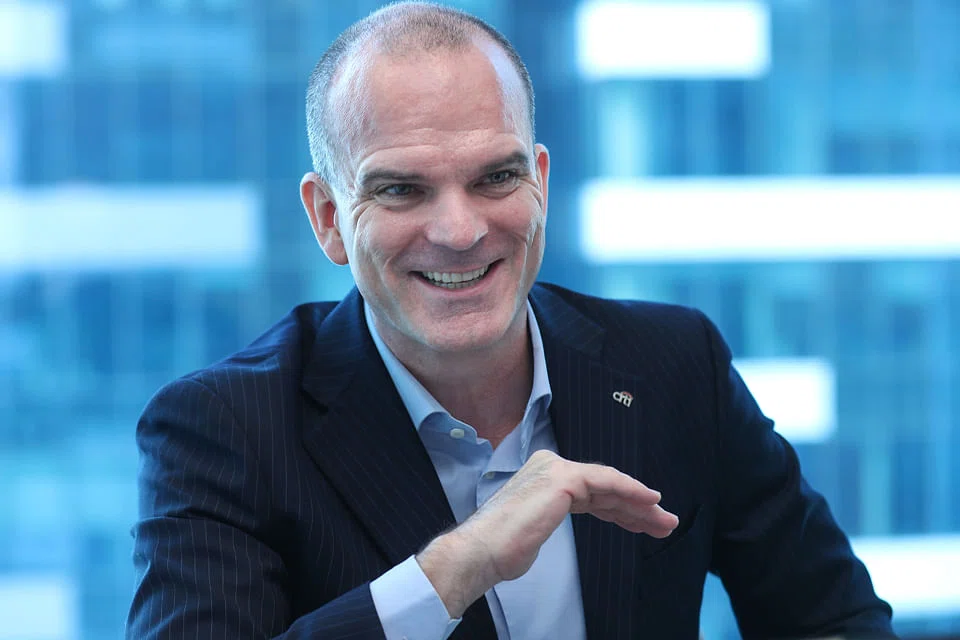
Riding in part on this is the US bank's move to pump investments in "double-digit millions" to open its 30,000-square-foot new flagship wealth management centre at 268 Orchard Road in the fourth quarter of this year, Citibank Singapore chief executive Brendan Carney told The Business Times.
In its new wealth management centre, Citibank will occupy four storeys altogether, with two floors to house over 400 staff including relationship managers (RMs) and specialists, and two floors open for customer meetings and events. Coincidentally, Citibank previously had a branch there in the former Yen San Building.
This comes as fresh numbers from Citibank Singapore showed that its overall assets grew by 11 per cent in 2019 from a year earlier, while the wealth management segment saw a 19 per cent jump in assets under management (AUM). Retail banking deposits rose almost 20 per cent since 2015.
"Our retail banking and wealth management business has been doing really well... now we think that we can do even better," said Mr Carney.
"We think there's another gear that we can shift into and go from double digit growth to really strong double digit growth."
The bank's new retail strategy in Singapore will also have it cut down its number of branches.
Following the closure of the iconic MacDonald House branch at the end of February this year, the bank will also move out of its outlets in Paragon and Changi Business Park when their leases run out.
The refreshing of its retail model comes amid customer behaviour changes over the years.
"We are looking less at having branches and more at having premium wealth management centres," said Mr Carney, who moved to Singapore in May last year, and was previously the consumer business manager for Citi's South Korea office.
"The closure of MacDonald House was part of an overall master plan to renovate our physical distribution in a way I don't think we have done, maybe in a decade in Singapore."
The bank also sees the creation of one or two wealth management centres in its future, Mr Carney added.
"As we grow the business, the ambition is to have at least one more flagship in one other location - but this is the start," he said.
In the past, banks would compete by having more physical branches as they needed to be where the customers are. But he noted that in the new model, more customers are transacting online instead of visiting branches.
By the end of 2020, the bank will have 11 physical outlets comprising one wealth management centre, seven branches and three instant banking centres (for basic transactional services) - down from the 14 it had at the start.
"The reason we closed MacDonald House is because the customer traffic there was quite far down, and the things that we were doing there, you know they can do on the mobile phone anyway," he noted.
"At the same time, we're not a digital-only bank, and we don't have aspirations to be."
Even as more customers go digital for basic transactional services, the bank recognised that higher net worth clients still want face-to-face conversations with the bank on their portfolios, insurance and other more complex transactions.
With its new wealth management offering in Orchard, there is now a "home base" for its RMs and specialists to better serve customers, he said. While RMs can - and do - travel to meet clients, having all their specialists in one place can make it more convenient to deploy if customers do visit the centre.
Mr Carney also said that it "sends a message" to both customers and even employees that the bank is serious about its wealth management business.
Even with fewer branches in totality, he said the bank will be looking to recruit and train more RMs. Citibank intends to up its customer-facing staff by 20-25 per cent over the next three to five years to serve its expanded client base.
The bank aims to sharpen its edge through investments in its RMs. For instance, its Citi Wharton Global Wealth Institute programme provides online and overseas on-campus curriculum for skills training, with over 60 participants from Singapore between 2015 and 2019.
To be sure, the novel coronavirus outbreak has dampened overall retail spending.
While the retail business has been "largely unimpacted" in the past few months, the bank has seen impact on its credit card business as travel spend dives. This comes even as the bank has seen that among the new card customers acquired in February, eight in 10 applications were done online, up from five in 10 in 2019. Digitally acquired customers were also more engaged, chalking up close to three times more spending than others within three months of onboarding.
The recent Fed funds rate cut of 50 basis points will have a bigger impact on its retail business as spreads go down, he noted. Further rate cuts are also expected in the coming months.
"There will be some stress in terms of client volumes and drivers, but we don't anticipate an issue, it will just be some stress on NIM (net interest margin)," he said.
He maintained that on the wealth management side, there is still opportunity amid the uncertainty.
"Our approach is that we should be able to serve our customers in all kinds of markets," he said. "Even in this environment we can help them do that - it's about getting the right portfolio for the right macro situation."