Clifford Capital launches platform for Asian infrastructure debt
The Temasek-backed structured finance solutions provider aims to mobilise a new pool of institutional capital
Singapore
FOLLOWING the success of its pilot issuance of Asia's first infrastructure project finance securitisation last year, Temasek-backed Clifford Capital now has plans to set up a platform to mobilise a new pool of institutional capital for infrastructure debt in Asia.
Also the first of its kind in this region, the platform is expected to be capitalised at US$1.98 billion, comprising US$180 million in equity and US$1.8 billion in debt issuance capacity.
The Asian Infrastructure Investment Bank (AIIB) is a partner and will invest US$54 million, representing 30 per cent of BIM's equity capital in the platform, while Clifford Capital holds the remaining.
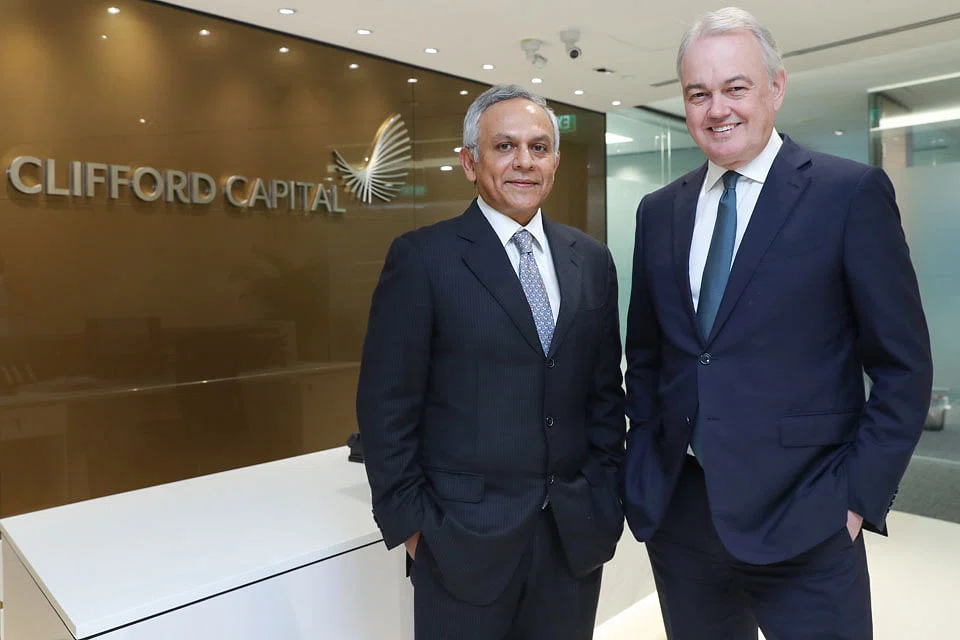
In an interview with The Business Times, Clifford Capital chief executive Clive Kerner explained how this would work. Clifford Capital has already engaged with 20 leading global project finance banks to set out a framework for the types of project and infrastructure loans - predominantly brownfield - that the platform, Bayfront Infrastructure Management (BIM), will acquire.
This is to enable banks to recycle their balance sheets by offloading them onto the BIM platform in light of tightening Basel III capital requirements, so that they can continue to engage in their project finance business in a profitable manner.
Mr Kerner said: "The banks have a fantastic ability to originate projects, structure them and take on the constructions risks up until the operational phase, but because of increasing regulation, the banks are now finding it much harder to keep these longer-term exposures on their balance sheets."
At the same time, once infrastructure projects start operating, they tend to generate very stable cash flows which fit the investment appetite of institutional investors.
Thus, on acquiring these loans from banks, BIM will "store" them in a warehousing facility, holding them on its balance sheet until its portfolio of loans for distribution has reached a critical mass. When market conditions are optimal, it will then issue these securities to institutional investors, similar to the US$458 million issuance which Clifford Capital did in July last year.
Of the latest development, Mr Kerner said: "This won't be a one-off deal, but a platform that will be up and running for about 10 years, so each year there will be a certain volume of loans that will come onto the balance sheet. At the end of 10 years, we hope to have created an asset class for infrastructure debt. That will be our first phase, and we will review to see how we are doing after that."
In fact, BIM targets to take out US$7 billion in assets from banks over the course of a decade, and "drop down" about US$5 billion in note issuances. It is targeting similar investors to its year-ago transaction - such as insurance companies, pension funds, sovereign wealth funds, family offices, private wealth, and asset management firms.
Lending towards project financing in Asia has been largely dominated by banks, export credit agencies and multilateral agencies, and there has been very little institutional debt involved historically.
Premod Thomas, Clifford Capital's head of corporate strategy as well as CEO-designate of BIM, noted that over the last three to five years, about US$130 billion of infrastructure loans - comprising local currency and USD-denominated loans - were issued by banks annually. Of this, the USD-denominated portion makes up about US$30 billion. This will be the "catchment" that BIM will be looking to tap.
There are also other medium- and long-term goals for this initiative. Essentially, this will create a new asset class that will help to scale up institutional investment in Asian infrastructure debt. Mr Kerner said: "Once we get to US$4 billion to US$5 billion in issuance, where there's enough issuance in the market to facilitate more trading, more liquidity, you can think about benchmarking from a pricing perspective and research. That's really what we want to get to."
Benchmarking will enable pricing of the collateralised loan obligations (CLOs) to be determined with more accuracy and relevance to the actual asset class. In fact, in Clifford Capital's proof-of-concept last year, it found that many investors were at a loss when trying to find an accurate benchmark on which they could price the offering. They tried looking at various kinds of private debt and even the US CLO market, but there was nothing close enough for comparison.
Clifford Capital is also trying to get financial institutions to cover these products through research, the same way equity and fixed income instruments get covered, so that investors can be better informed. Besides sponsoring, structuring and managing the distribution issuances, BIM will also invest in the equity tranches or vertical slices of its securitisation issuances, meaning that it will invest in part, or all, of the first-loss pieces of the individual securitisations, in order to align their interests with investors. "I think that's what investors expect to see - that we have skin in the game," Mr Kerner said.
Debt instruments issued by BIM to acquire and warehouse loans from banks are expected to benefit from a guarantee provided by the Singapore government, which will not cover the securitised products that BIM will structure and distribute to investors.
In a statement, D J Pandian, vice-president and chief investment officer at AIIB, said the bank's investment in BIM is closely aligned with its own objectives of developing Asian infrastructure as an asset class and supporting private capital mobilisation.
Gillian Tan, executive director and head of financial markets development at the Monetary Authority of Singapore, added that the platform dovetails with Singapore's ambition to become a full-service Asia infrastructure financing hub. BIM expects to begin the acquisition of assets from banks from the first quarter of 2020; the issuance will likely happen later in 2020 or early 2021.