Climate change and pandemic tweaking sovereign wealth funds' focus
New report says these funds now also have an eye on strategic, environmental, social and economic development goals alongside financial ones

Singapore
COVID-19 is rewriting the rules for sovereign wealth funds (SWFs) and state investors.
The pandemic and the threat of climate change are leading to the wider adoption of "double bottom lines", where strategic, environmental, social and economic development goals sit alongside financial ones.
With national economies suffering unprecedented slumps brought on by the pandemic, many SWFs and state investors have taken on the role of reconstruction over the past year, said a recent report by financial data provider Preqin, in partnership with multinational law firm Baker McKenzie.
An increasing number of them are topping up their asset bases in the capital markets, the report noted.
It cited for instance, Singapore's Temasek Holdings, Mubadala Investment Company from the United Arab Emirates and China's CIC-Huijin, among others, that have completed billion-dollar-plus investment-grade bond issues.
Asset sales are also expected to increase, as SWFs and state investors look to raise capital to re-invest in domestic recovery, it said.
As at end 2020, SWFs around the world recorded US$7.8 trillion in assets under management (AUM), with AUM having grown at a compound rate of 8 per cent per annum since the end of 2011, and thus nearly doubling over the past decade.
In 2020, Asia accounted for 41 per cent of SWF AUM.
Europe was home to a shade over 20 per cent, the US accounted for less than 3 per cent, while the rest of the world, including the Middle East, accounted for 36 per cent.
Traditionally, SWFs have kept their relationships with the states that own them at arm's length, and have thus been able to pursue investments free from interference. The pandemic, however, spells signs that this "golden age" is over, said the report.
SWFs have had to assume a central role in national and regional regeneration. In some cases, this has been immediate and visible, such as by rescuing companies or injecting cash into depleted government coffers.
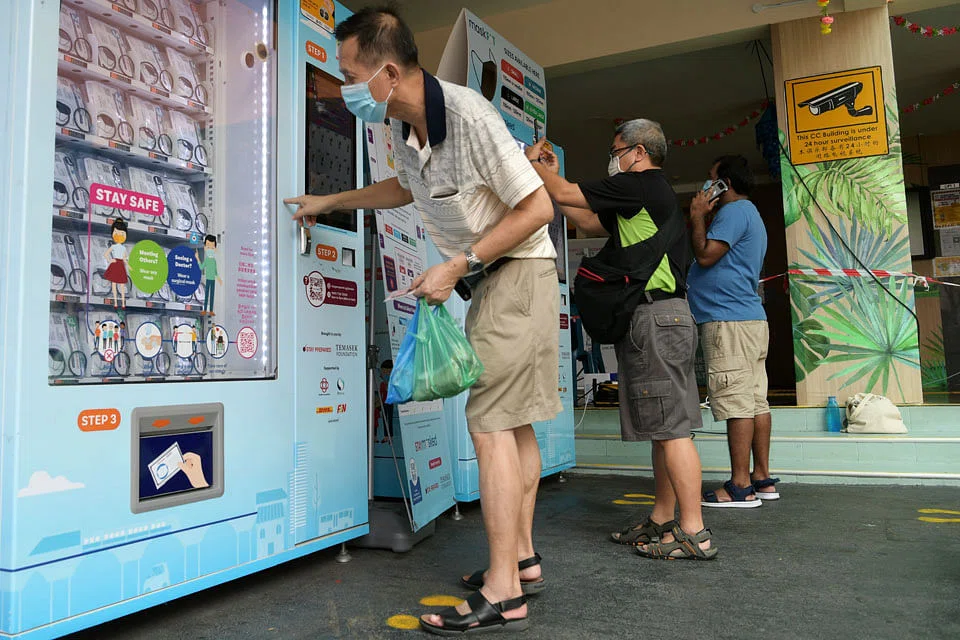
In Singapore, for instance, Temasek has been "making a virtue" of its role in responding to the pandemic, the report said. Among other moves, it has stepped in with a US$13 billion rescue package for Singapore Airlines and a US$1.5 billion rights issue for rig builder Sembcorp Marine. Its foundation arm has also provided reusable masks to Singapore residents.
Among funds with a longer-term focus, in preparation for a slow recovery, is Saudi Arabia's Public Investment Fund (PIF), which is increasing investment in domestic projects, from US$16 billion in 2019 to US$40 billion annually from 2020 through 2025. PIF plans to contribute US$320 billion to non-oil gross domestic product over the next five years, and to create 1.8 million direct and indirect jobs by end 2025.
Michael Doran, a partner at Baker McKenzie, said: "This game is one of necessity. It's not politicians or academics sitting around discussing economic theory. It is a desperate situation, and most countries cannot afford to have SWF assets sitting under-utilised."
In the past year, there has been growing momentum among SWFs towards more sustainable investments, fuelled by increasing stakeholder pressure and regulatory developments on the national and international fronts.
At present, just 19 per cent of the 98 SWFs tracked by Preqin have a formal ESG policy. That said, these tend to be the larger funds, controlling 54 per cent of total SWF AUM.
Climate change is expected to drive more SWFs to embed environmental, social and governance (ESG) criteria into their operations and investment decisions over the next few years, the report said.
Europe is a "clear leader" when it comes to ESG across alternatives as a whole, with Preqin data showing 80 per cent of private capital AUM in Europe being managed under ESG commitment, compared with 47 per cent in North America, 39 per cent in the Middle East and just 24 per cent in Asia.
Of the three aspects under ESG, investment in governance is the "most straightforward and economical" to implement, and often the one first tackled by those new to ESG, the report said. Environmental investment has also gained traction in recent years.
Just last week, the Monetary Authority of Singapore, which manages the country's official foreign reserves (OFR), said it will deploy US$1.8 billion of the OFR to five asset managers for climate-related investments, under a US$2 billion Green Investment Programme set up in 2019. The selected fund managers, whose names will not be disclosed, will set up their regional sustainability hubs in Singapore.
Earlier this month, Singapore's GIC announced joining global investors as part of the Asia Investor Group on Climate Change to push big Asian utilities firms to cut emissions.
In April, Temasek and BlackRock announced that they will jointly commit US$600 million to decarbonisation investments.
Investing for social impact, however, has lagged, said the report. "This is probably the hardest to implement independently, as many social measures are combined with environmental efforts," it said. But in the past year, a number of SWFs have embraced a social role in their countries' pandemic response.
Still, challenges remain for SWFs in ESG. These lie primarily in the implementation of quality frameworks for each aspect, tracking and measurement, as well as resource capacity. "Integration of ESG into the investment process will be a long and sometimes challenging journey, but SWFs are at least taking the first steps," it said.
READ MORE: