

Consumers to be able to aggregate and share financial data next year
Single platform enables better financial planning, comparing of competing products
Singapore
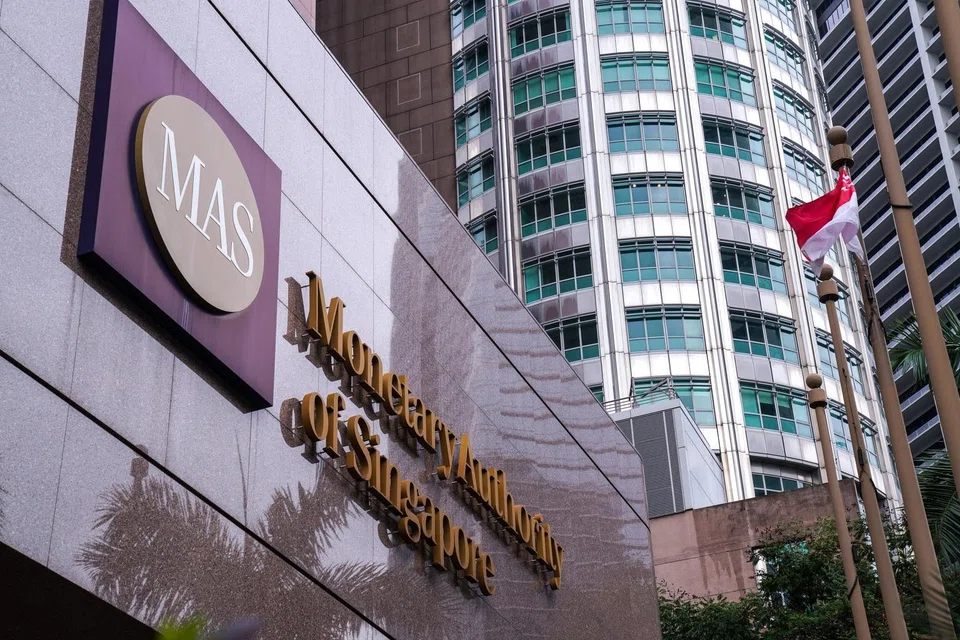
SINGAPORE expects to announce next year the details of a single platform for consumers to aggregate their financial information from various accounts across banks, insurance companies and brokerages, said Ravi Menon, managing director of the Monetary Authority of Singapore (MAS).
Such a platform, as reported by The Business Times in February, will allow consumers to consent to sharing their consolidated financial data with traditional financial institutions, as well as with non-banking entities.
In time, it could also make it simpler for consumers to compare products and services for better financial planning, and - if they wish to - to easily switch between competing offers.
This liberalisation, a concept called "Open Banking" in Europe, comes amid a recognition that Singapore consumers need a seamless, consolidated view of their assets and liabilities so they can plan for their sunset years. (Singaporeans now have the world's longest life expectancy at 84.8 years.)
The banking industry and regulators are looking at using application programming interfaces (APIs) - codes that enable computer applications to speak to one another - to slice and dice the data that can be shared with consumers because this data belongs to them, but to keep separate the data that cannot be shared on the platform because some of that is proprietary to the banks, said Mr Menon.
This move will be the third pillar of Singapore's recent move to liberalise its financial sector on the digital front. The two other pillars are the issuing of digital bank licences and giving fintechs access to the real-time payment system, which is the backbone of Singapore's payments infrastructure.
"If you take all these three together, the challenge to the banks is not trivial," Mr Menon said, adding that there are "deep-seated convictions" that customers will benefit from better service, and that the banks will emerge stronger from the competition.
By the end of this year, the MAS will round up all the applications for digital banking licences; by the middle of next year, it will award up to two licences for a digital full bank (which will have access to cheap retail deposits) and up to three licences for a digital wholesale bank.
The digital banks are expected to start their operations by mid-2021.
Such banks could push interest rates higher amid heightened competition, suggested Mr Menon. He added that this does not swing into predatory behaviour so long as the digital banks do so with profitability in mind over the medium term.
Most digital-only challenger banks in the UK remain loss-making, which indicates that they had in fact undertaken a mere market-share grab amid a flush of very cheap venture-capital funding. "They're just eroding the share of the incumbents. It serves no social purpose," said Mr Menon.
However, he noted that as much as consumers are seeking a rebundling of financial services from a one-stop digital shop, most of them would still want a bank with a physical presence - an inclination that gives incumbent banks an existing edge over their digital-only challengers. "There is a fair chance that there will be some upward pressure on interest rates, but the digital-only banks will not be able to serve the full customer base, because a good number of customers still prefer banks which are omni-channel."
The upcoming digital banks will also have to adhere to the same capital requirements as the incumbents, and meet the same standards in areas such as cyber security.
It will never be a "perfect" level-playing field, Mr Menon said, but it is because it is unlikely that any of the new players will be systemically important institutions deemed "too big to fail", compared with the banks.
The MAS has also said that the Singapore banks, which have collectively cornered more than half the market share here, must remain strong local anchors amid the competition. With their heft and experience, incumbent banks are already gearing up to respond in kind, Mr Menon said. "Our banks will not sit still. We'll be seeing some very interesting competition."
READ MORE:
TRENDING NOW

Britain’s mansion tax shows the difficulty of targeting wealth

Once staunchly pro-China, Malaysian Chinese businesses are now distancing themselves from Beijing

The only common thing in S-E Asia is that we all eat rice: Cisco’s Asean president

Singapore data centre operator DayOne opts for US IPO at likely US$20 billion valuation

