Crypto carnage, and a cautionary tale

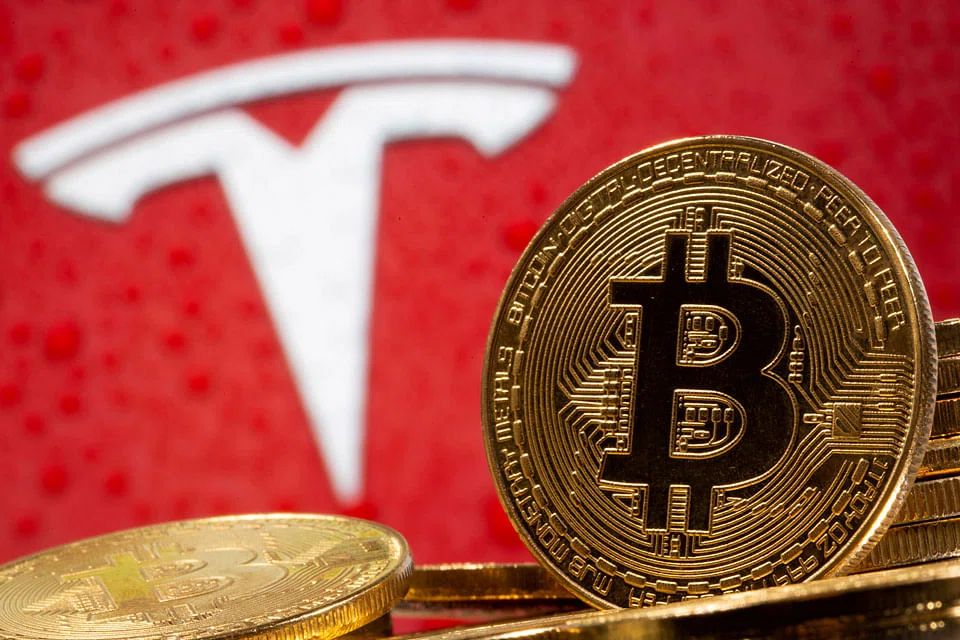
AS CRYPTOCURRENCIES and their underlying blockchain technology edge into mainstream finance, several red flags still stand. These are likely to impede widespread adoption.
Because of the unique features of these digital assets, these risks are not as prevalent in traditional financial markets, such as those for stocks and bonds.
The past weekend's crypto carnage - which saw bitcoin spiralling down over 50 per cent from its April peak - is a case in point.
Crypto is not a stable store of value
Unlike your home, which serves as a shelter and refuge, and your stock holdings, which are expected to eventually pay dividends, cryptocurrency does not have intrinsic value. This here refers to the perceived tangible value of an asset, not the value assigned to it by the market.
Fiat money, such as the Singapore dollar or the euro, get their intrinsic value from central authorities, which guarantee that you can pay taxes and buy goods and services with them. Fiat money thus replaced barter trade as a more efficient medium of exchange.
The value of crypto, on the other hand, is not stabilised by a central bank, and is driven largely by demand and supply.
In a February column for Project Syndicate, Citigroup's former chief economist Willem Buiter likened bitcoin to Schrodinger's cat, referring to a quantum theory thought experiment positing that a cat in a box could be both dead or alive, until the observer opens the box.
"Notwithstanding the recent spectacular surge in its price, Bitcoin will remain an asset without intrinsic value whose market value can be anything or nothing," Mr Buiter wrote then.
In just over three months since his column, bitcoin has risen to an all-time high of close to $65,000 on April 14, and then saw its value more than halved to a 24-hour low of $31,179 last weekend. Other cryptocurrencies have also seen wild swings.
Manipulation?
To add, the anonymity and the lack of a central authority - prized features for crypto advocates - also makes it vulnerable to manipulation.
Many cryptocurrency exchanges lack safeguards against market manipulators. Academic research has suggested that the price of bitcoin is influenced by tether, a stablecoin which has its value supposedly pegged to the US dollar.
A widely-cited 2019 report by finance professors John Griffin and Amin Shams, from University of Texas at Austin and Ohio State University, respectively, attributes bitcoin's entire rise in 2007 to "one larger player". The forensic study revealed a pattern of tethers being traded for bitcoins. Last December, US congressional representatives proposed a bill requiring stablecoin-issuing companies, like Tether, to obtain full banking licences.
Users' anonymity on these exchanges makes wash trading and the use of trading bots tough to detect. Even though the transactions are public knowledge, they are identified only with 26-35 character long alphanumeric codes.
Doggone it
Even without the cloak of anonymity, though, single players have been moving markets - with Tesla and SpaceX chief executive Elon Musk a notable case in point. Musk's tweets and announcements have had outsized influences on the prices of bitcoin and dogecoin.
Dogecoin, which started as a satirical homage to bitcoin, saw its price rise 12,000 per cent since January and then down a third in early May after Musk called it a "hustle" on the "Saturday Night Live" comedy showcase.
Prominent critics and Redditors alike have called for more regulatory oversight on actions like Musk's, but that would in turn undermine the core appeal of crypto assets.
Leverage risk
Leverage trading is risky business in most investments, but the scale of implosion is magnified in the crypto market. In traditional markets where assets move by fractions of a percent each day, leverage trading - referring to borrowing substantial funds to increase one's trading position - can be an effective way to amplify profits.
However, the same practice in volatile markets like crypto, where leverage of as much as 100 times isn't uncommon, spells amplified risks. Some analysts believe overleveraged positions catapulted last week's crypto rout, with data from Bybt.com suggesting $9.4 billion of liquidations in the 24 hours through Thursday morning, Singapore time.
Still, many leading crypto exchanges are offering leverage trading, including Binance and BitMEX, both of which are being investigated by the US authorities for letting Americans trade crypto derivatives illegally.
Online trading platform Saxo markets has also recently launched a crypto offering that allows investors to trade bitcoin, ether and litecoin against the euro, yen and US dollar from a single margin account.
Crypto's carbon footprint
Cryptocurrencies are also known to have an extensive carbon footprint. The amount of electricity needed to mine bitcoin - the process of creating new bitcoin by having computers solve a complex series of algorithms - has infamously been compared to what's needed to run entire countries annually.
Latest calculations from Cambridge university's Bitcoin Electricity Consumption Index suggests that bitcoin mining consumes 113.27 terawatt hours (TWh) a year of electricity, placing it just above the Netherlands, which uses 110.68 TWh a year, and just below the United Arab Emirates, which uses 119.45 TWh a year.
This figure is expected to go up as bitcoin's value increases. Non-fungible tokens, a unique cryptocurrency token that runs on the Ethereum blockchain, are also known to be power guzzlers.
Banks' climate conondrum
Despite their publicly proclaimed commitments towards sustainability, global financial institutions are not deterred.
UBS Group said in May that it is exploring plans to offer wealthy customers digital currency investments, whereas Morgan Stanley plans to offer rich clients access to bitcoin funds. In Singapore, DBS's digital exchange saw trading volumes up 10-fold to $30 million to $40 million since it launched in December.
To be sure, not all cryptocurrencies are created equal in this regard.
Ethereum's inventor Vitalik Buterin on Monday said the network is closing in on its transition toward the proof-of-stake system, which is a different and far less energy-intensive model of securing the network than proof-of-work, the energy guzzling approach that both Bitcoin and Ethereum currently use.
Still, in February this year, Tesla's Musk loaded up his corporate coffers with US$1.5 billion in cryptocurrency, only to make an abrupt U-turn three months later, citing its "great cost to the environment" - widely cited as a key driver behind the recent crash.
READ MORE: