

Cut coal loose, climate advocates tell banks

Singapore
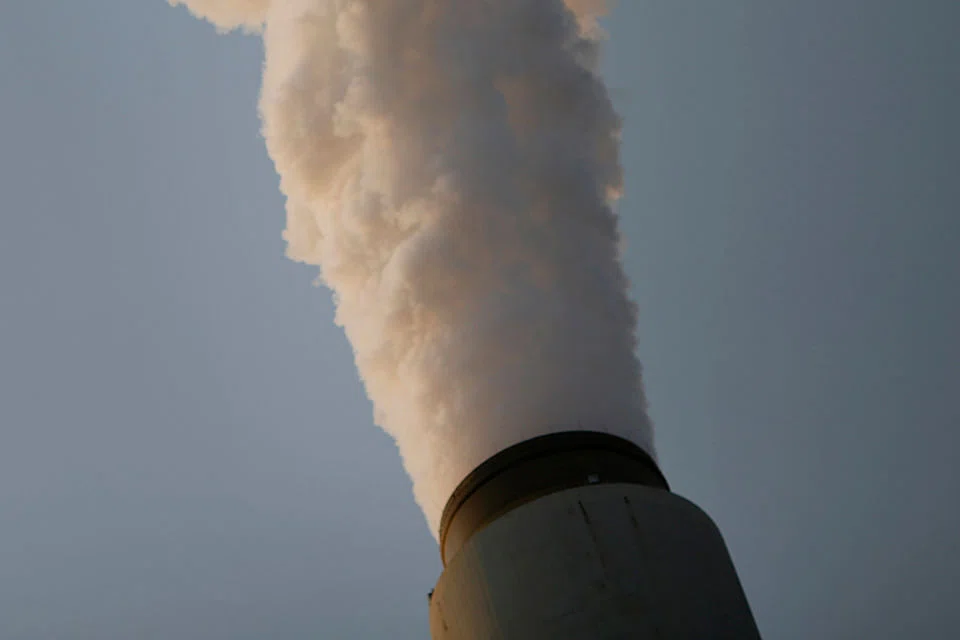
BANKS in South-east Asia must demonstrate stronger resolve to cut financing to high-carbon sectors as they play a critical role in supporting the region's emerging markets through the climate crisis.
And while there is a common argument among financial institutions (FIs) and corporations that fossil fuels, such as coal, are still needed for the transition in developing economies, climate advocates and finance industry observers say not cutting the dirty grids loose can send the wrong message.
A recent report by Singapore-based ESG (environmental, social and governance) risk and strategy consulting firm Area Research & Engagement (ARE) shows that most banks in Asia still have not quit coal.
Even for those with restrictions on coal power, such policies often have loopholes.
For instance, they may not finance new coal power projects, but do not prohibit corporate clients from adding new coal; or their restrictions may exclude certain subsidiaries or geographies.
Continuing with coal will not help emerging markets, and will instead lock them into structurally higher power costs with dirty grids, ARE researchers argued.
"It is better to leapfrog to cleaner technologies while also gaining energy independence from fossil imports," they wrote in the report published last month.
They analysed the climate-readiness of 32 banks in Asia, including 5 Asean countries: Singapore, Indonesia, Malaysia, the Philippines and Thailand.
These "loopholes" demonstrate a lack of leadership at the banks, Laurel Sutherlin, a senior communications strategist for environmental organisation Rainforest Action Network (RAN), told The Business Times (BT).
"It sends entirely the wrong message to a client who may be deliberating whether or when to diversify away from coal. Adding more coal will also increase financed emissions for this pathway, making it increasingly unlikely that banks will be aligning with 1.5 degrees," Sutherlin said.
He was referring to the goal of the Paris Agreement - a legally binding international treaty on climate change adopted in December 2015 - which is to limit global warming to well below 2 degrees Celsius, preferably to 1.5 degrees Celsius, compared to pre-industrial levels.
Jerry Goh, an investment manager for Asian equities at abrdn, said Asia is "hugely dependent" on fossil fuels compared to other regions.
"Banks have a big role to play here. They should start thinking about tightening their sustainable finance policies to disallow a complete financing of new coal, be it with existing (or new) clients, to align with the broader narrative of climate transition," Goh said.
Developing markets should be looking to build climate resilience by investing in renewables, added Sutherlin.
Both Sutherlin and Goh were not involved in ARE's report.
ARE also noted that while several Asean banks have publicly committed to net-zero financed emissions by 2050, there is scant evidence to suggest they have a credible plan on how to actually decarbonise in line with a 1.5 degree target.
Net-zero describes a state in which the amount of carbon emitted into the atmosphere is offset by that removed from it. Financed emissions refers to greenhouse gases added by entities receiving financing from the respective banks.
Observers BT spoke to say banks should set clear short- and medium-term goals, and disclose financed emissions for sectors they are highly exposed to.
Singapore's DBS, which is the top-ranked bank in ARE's report albeit with a CC grade (on a scale of A to D), was asked at its annual general meeting last week when it would set such targets.
DBS, which is also South-east Asia's largest lender, said it will report baseline emission intensities for 9 "critical" sectors covering some 34 per cent of its credit portfolio, by the first half of 2022. It plans to publish interim and long-term targets for these sectors by the second half of the year.
In response to BT's queries on why it can be challenging to align decarbonisation policies to the Paris Agreement, DBS' head of sustainability for institutional banking Yulanda Chang pointed to the need for public and private FIs, as well as governments, to work together "to streamline measurement methodologies and to accelerate the development of appropriate policy and technologies".
Timothy Colyer, Asia Pacific climate and sustainability lead at consulting firm Oliver Wyman, said many banks are working on living up to their climate pledges.
"I think some banks are not getting the credit for some of the things that they're doing, and they are being treated with an undue level of cynicism," he said.
"(Many) are looking for policies that allow them to support their clients in the transition that will encourage them to be financing new activity and that will, over time, phase out the dirty activity."
Still, Colyer acknowledged that ARE's report is an accurate reflection of where the industry is today. "My guess is that if they do that report again in a year, it's still going to show significant (improvement), but we're going to see a number of the leading institutions looking a lot better."
The Russia-Ukraine energy crisis could also spur a shift to renewables, he said, as countries seek to reduce dependence on Russian gas.
Apart from coal, ARE's report also highlighted other carbon-intensive sectors, including gas power, forest-risk commodities like palm oil, agriculture, oil and gas, among others. In these areas, the researchers reiterated their call for banks to set standards to prohibit activities that are not aligned with the Paris Agreement and to require clients to develop Paris-aligned strategies.
While there are grounds for optimism as more of Asia's FIs build capacity to address climate change, the pace of change must accelerate to meet the scale of the challenge, ARE said.
Banks outside Asean are also being called out for not doing enough to cut exposure to carbon-intensive sectors.
A separate report, also published last month, by a coalition of campaign groups under the Rainforest Action Network showed that the world's biggest banks poured US$742 billion into financing coal, oil and gas companies last year. This was dominated by Wall Street banks JPMorgan Chase, Wells Fargo, Citi and Bank of America.
TRENDING NOW

Once staunchly pro-China, Malaysian Chinese businesses are now distancing themselves from Beijing

Cliff Tan has 7 million followers and a 4-month waitlist. Why won’t he expand his business?

Grab CEO’s wife Chloe Tong on life with Anthony Tan and finding her purpose
Singapore F1 to proceed despite haze; no changes planned to outdoor entertainment

