

DBS sees India bank takeover turning a profit in 12-24 months
LVB amalgamated with DBS Bank India to accelerate group's digital banking push in South India: DBS chief
Singapore
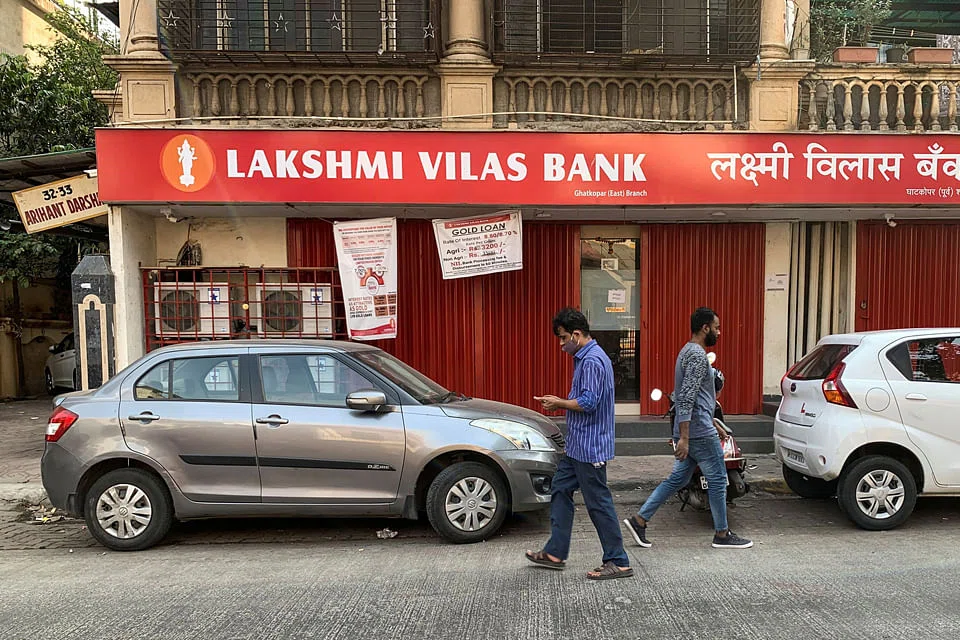
DBS' recent takeover of India's Lakshmi Vilas Bank (LVB) is expected to turn a profit in the next 12 to 24 months, now that asset quality concerns have been accounted for in the fourth quarter of 2020.
The cash-starved LVB was amalgamated with DBS Bank India last November to accelerate the group's digital banking push in South India, said DBS chief Piyush Gupta at a media briefing on Wednesday.
The bank took an "aggressive view" on LVB's asset quality, with 76 per cent coverage of gross non-performing loan assets (NPAs), said Citi analyst Robert Kong in a note.
This means net NPA transferred to DBS after the merger stood at just S$212 million, fully secured, with general provisions conservatively built up to 9.5 per cent of performing loans or S$183 million.
The LVB deal added two million retail and 125,000 corporate customers to scale up DBS India's deposit base. Notably, about 23 per cent of its customer base pre-merger were retail customers. This has been bumped up to nearly 50 per cent.
Overall, total deposits grew 59 per cent to S$9 billion as the franchise also expanded to 600 branches and 1,000 ATMs in India.
"That's a very good customer base to be able to take and build on. It allows us to overlay what we've build digitally with LVB's customer base," said Mr Gupta.
"I'm confident that the expansion of our digital strategy to LVB will allow us to take our digital capability and grow it faster than we've been able to so far. We're fairly confident that this will be profitable within 12 to 24 months and ROE-accretive well within our normal time frame of two to three years," he further said.
Notably, LVB is a dominant South Indian bank. About 88 per cent of its branches and ATM networks are located in the South.
"That's good news because South Indian states have higher GDP per capita (relative to the national average). By and large, they are better managed and have large amounts of corporate activities... large corporate businesses in this space," said Mr Gupta.
Against this backdrop, DBS is looking to grow retail presence through CASA (current account and savings account) scale-up in selected urban clusters and cross-sell personal loans to LVB's customer base.
It will also extend its DBS Treasures programme to LVB's affluent segment, and leverage LVB's pan-Indian presence in top 20 urban centres to scale up asset-backed lending to small and medium-sized enterprises.
The bank aims to capture the niche non-resident Indian segment by leveraging its Singapore and global South Indian diaspora network.
Before the LVB deal, DBS India saw total income up 40 per cent to a record S$376 million and pre-tax profit quadrupling to S$89 million in 2020.
The International Monetary Fund has projected for India's growth rate to come in at 11.5 per cent in 2021, which would make it the fastest-growing economy in the world. This reflects a strong rebound in its economy, which is estimated to have contracted by 8 per cent in 2020.
"We're seeing a high degree of vibrancy. In conversations with some of our large corporate clients, people are beginning to invest back in productive capacity," said Mr Gupta.
Over Q4 2020, DBS recorded amalgamation expenses of S$33 million and general allowances of S$87 million for LVB, with provisional goodwill of S$153 million. There was minimal impact of 0.3 percentage points to group CET1 ratio.
In the larger scheme of things, the deal with LVB is still a small-scale takeover at this point. LVB assets make up less than one per cent of DBS' group assets, while India makes up one per cent of group loan and profit.
Shares of DBS closed up seven Singapore cents to finish at S$26 on Wednesday.
READ MORE: DBS more optimistic about asset quality; Q4 earnings fall 33%
TRENDING NOW

Malaysian king buys stake in Singapore-listed mining firm expanding into rare earths

Grab CEO’s wife Chloe Tong on life with Anthony Tan and finding her purpose

Once staunchly pro-China, Malaysian Chinese businesses are now distancing themselves from Beijing

Longer wait times expected as S’pore healthcare institutions report system disruptions

