DBS to double down on China and India, grow focus on digital assets
Bank has three key areas of focus in China and expects growth from takeover of Lakshmi Vilas Bank in India; it also sees opportunities in tokenisation
Singapore
SOUTH-EAST Asia's largest lender DBS is looking to double down its presence in China and India as part of efforts to expand into the wider region.
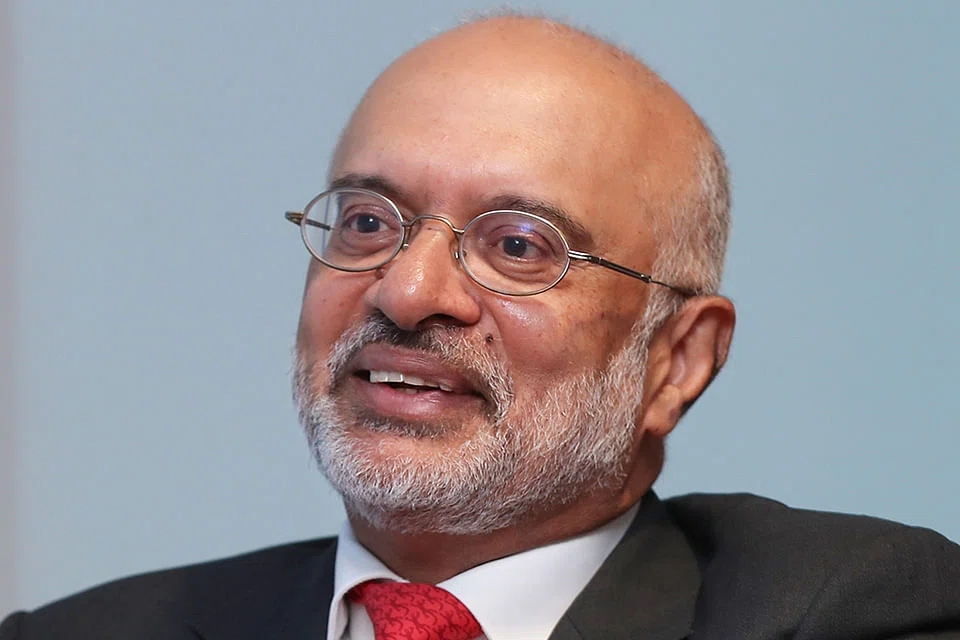
At the bank's virtual annual general meeting (AGM) on Tuesday, DBS chief Piyush Gupta outlined three key areas of focus in China, namely its upcoming securities joint venture (JV), the consumer finance market and the Greater Bay Area.
He told shareholders that the bank's new JV in China, announced last September, should be ready to go to market in the new few weeks. "We are convinced that China's opening-up in the capital account is going to present tremendous opportunities. We're already seeing some benefits of that, as institutional investors from China come out and international investors go into China. So that's hopefully a big area of growth for us," he said.
DBS continues to be bullish on the Greater Bay Area, with its presence in Hong Kong expected to help with deeper integration into the area.
"We saw good momentum on that last year, especially with our supply-chain solutions. We're going to double down on that in the Greater Bay Area," said Mr Gupta.
On the consumer finance front, the bank is set to launch a wholly-owned business in China to capture more opportunities in this space. It currently has 15 per cent ownership of a consumer finance JV with the Postal Savings Bank of China.
Turning to the India market, Mr Gupta assured shareholders that the bank's takeover of Lakshmi Vilas Bank (LVB) last November was "the last thing from a forced marriage".
The cash-starved LVB was amalgamated with DBS Bank India to accelerate the group's digital-banking push in south India.
"People have asked whether this was a forced marriage or if we were forced to do this deal. This is the last thing from a forced marriage. As early as 2016, we decided to float a subsidiary in India. The reason we put our hands up is because we knew it will give us the opportunity to expand both organically and inorganically," he said.
The deal added two million retail and 125,000 corporate customers to scale up DBS India's deposit base. Notably, about 23 per cent of its customer base pre-merger were retail customers. This has been bumped up to nearly 50 per cent.
DBS India has mainly focused on serving large corporates. While this segment has done well in the last decade, the "real big opportunity" over the next decade lies in the SME and retail segments, said Mr Gupta.
Before the merger, about 23 per cent per cent of DBS India's deposits came from retail customers. This has since grown to 48 per cent.
Mr Gupta said: "This is very important because to grow in a country like India, we need a good source of retail sticky deposits and LVB is able to achieve that. When we overlay our digital capabilities on top of this base that we amalgamated, we think the prospects for us are very good."
A shareholder at the AGM raised concerns over financial losses and the merger's impact on DBS' profit and loss (P&L) statement.
Over Q4 2020, the lender recorded amalgamation expenses of S$33 million and general allowances of S$87 million for LVB, with provisional goodwill of S$153 million.
Mr Gupta noted that the goodwill was a "very reasonable cost" to acquire a 94-year-old franchise of 600 branches and 1,000 ATMs across five cities in south India.
DBS took on an aggressive view on LVB's asset quality, with 76 per cent coverage of gross non-performing loan assets (NPAs). This means net NPA transferred to DBS after the merger stood at just S$212 million, fully secured, with general provisions conservatively built up to 9.5 per cent of performing loans or S$183 million.
"At this point in time, we do not believe we have to take on anymore incremental cost of credit on the LVB portfolio. We think we provided for anything that we might have expected to see in the course of this year," said Mr Gupta. The merged entity is expected achieve a positive P&L number in the next 12 to 24 months.
Amid the digital rush, tokenisation was also identified as a fresh engine of growth for the group. Last December, DBS became the first bank in Asia to launch a digital currency exchange for the issuance and trading of digital tokens.
Over the next few years, tokenisation will extend beyond financial assets like stocks and bonds as well as currencies and coins, into other assets like property, for example, Mr Gupta told shareholders.
"A digital exchange allows us to play in the middle of this game, to tokenise assets, to list and bring companies to the capital markets in tokenised form, to allow people to buy and sell crypto coins, to trade the coins, and to use us as a custom custodian to be able to put all these things together. We think there's an opportunity in this whole new universe," he further said.
A shareholder flagged the conflict of interest between launching a digital exchange and the bank's sustainability agenda, given that bitcoin mining is energy-intensive.
Mr Gupta pointed out that even electric vehicles and solar panels emit carbon somewhere along the supply chain. "The only way to (achieve) a true sustainable world with no carbon emission is to go back to 10,000 B.C."
While the challenge to find the right balance remains, crypto currencies are expected to start seeing incremental efficiency. Newer forms of digital ledger and crypto technology will enable people to achieve the same outcomes with far lighter encryption methodology and far less energy consumption, said Mr Gupta.
"Overtime, hopefully the negative energy impact of some of these things will reduce, which will allow (one) to build a decent business without compromising a sustainability agenda."
A question on succession planning was also raised at the AGM, to which DBS chairman Peter Seah said Mr Gupta has no plans to retire at the moment. "I'm pretty sure at the next AGM, he will still be around."
That being said, Mr Seah noted that succession planning "started the day Piyush joined the bank as CEO". "It's an ongoing process. It's always good to prepare people within the bank to succeed, not just in Piyush's position, but in all the key positions."
Shares of DBS closed trading at S$29 on Tuesday, up S$0.18 or 0.6 per cent.