

High Court dismisses Singapore firm's bid to release funds to pare Wirecard 'loans'

Kelly Ng
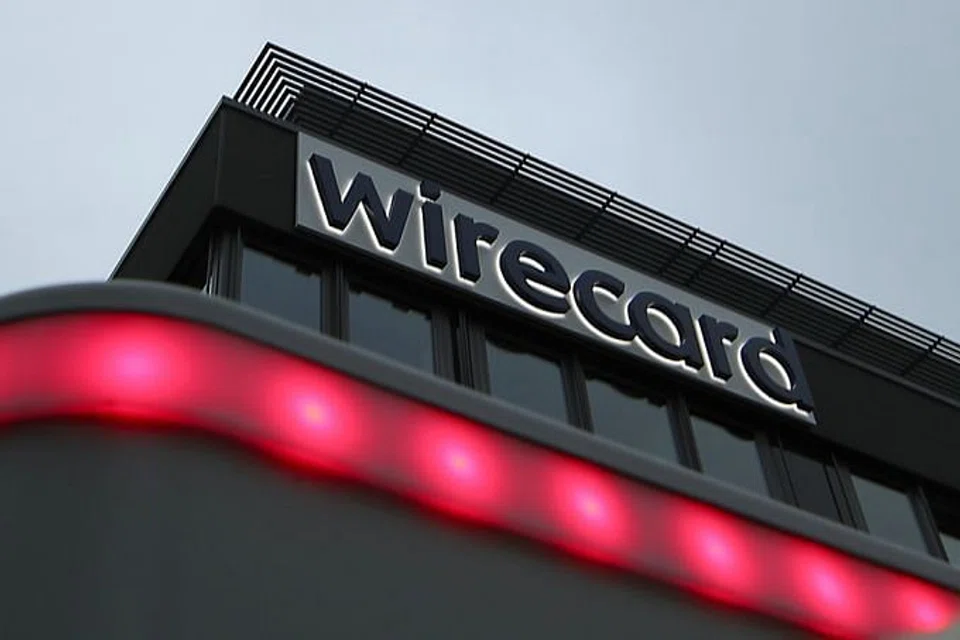
A SINGAPORE firm linked to Wirecard tried compelling Singapore authorities to release millions of seized funds every month, claiming that these were to repay "loans" from the scandal-tainted fintech, and expenses such as "accounting services".
oCap Management's motion - which asked for a one-off lump sum of US$1.85 million as well as US$1 million monthly - was rejected by the Singapore High Court on Monday, with court documents revealing that US$8.63 million from oCap Management had been seized by the Commercial Affairs Department late August. (see amendment note)
This, along with another S$290,000 from its Singapore unit oCap Asia Pacific Holdings, was seized on August 20 "as suspected proceeds of serious offences", the court heard on Monday.
The Business Times understands that oCap is not faced with criminal charges at this point. oCap Management is formerly known as Senjo Trading, an ACRA filing checked by BT showed.
Singapore authorities said in July that the Senjo group and its related units are being investigated for suspected falsification of accounts.
The focus over oCap comes as The Financial Times earlier reported that some US$1 billion had been "funnelled to opaque partner companies". These, the paper claimed, took the form of unsecured loans under the alleged disguise of advance payments, the paper said in early August.
The FT report further said most of the new loans extended in early 2020 went to oCap, with the firm reportedly having a total debt to Wirecard of 230 million euros (S$367 million).
oCap brands itself as a working capital provider.
Arguing for the release of seized funds, oCap said they were necessary to pay staff salaries, taxes, corporate and accounting service providers, its lawyers, and office expenses. It also specified payments in relation to loans by and agreements with various Wirecard entities, including Wirecard Bank AG, Wirecard Acquiring and Issuing, and Wirecard Technologies.
Objecting the motion on Monday, the prosecution said oCap appears to have continued access to "sizeable revenue streams from its clients and subsidiaries which it has not accounted for".
It added that the expenses oCap is claiming it has to pay for do not fall within the categories permitted for release.
High Court judge Vincent Hoong dismissed oCap's motion, noting that the company had failed to show that it was necessary, under the law, to release the seized funds for its expenses. During the hearing, in view of the prosecution's submissions, oCap's lawyers dropped its claim for release of funds to pay the Wirecard entities.
He also agreed with prosecutors that its stated expenses were not entirely within the categories permitted to be paid under the law.
FT was first to spotlight oCap, identifying it as the company that received a 100 million euro (S$160 million) loan from Wirecard in March 2020.
Based on an order by the local court of Munich dated August 28 which involved the freezing of oCap's assets, oCap managing director Carlos Haeuser had allegedly agreed to arrange for the funds to be forwarded from Wirecard to his company.
Mr Haeuser is reported to be a former longtime executive at Wirecard, who is married to the director of Wirecard Asia, Brigitte Häuser-Axtner.
Wirecard filed for insolvency in June amid a massive accounting scandal that erased US$2 billion from its balance sheet.
The alleged fraud also led to the arrest of Wirecard's ex-chief executive officer Markus Braun and two other former company officials.
The Commercial Affairs Department (CAD) has been conducting a criminal probe into Wirecard's Singapore operations since February 2019. Investigations are ongoing.
In relation to Wirecard's accounting scandal, the CAD is also investigating a Singapore company Citadelle Corporate Services. Citadelle's director R Shanmugaratnam has been charged in court with eleven counts of falsifying letters to various Wirecard-related entities that Citadelle held millions of euros in escrow accounts for them when the accounts either did not hold such sums or were not held by Citadelle.
READ MORE:
Amendment note: The article has been amended to make clear that oCap had sought a one-off sum of US$1.85 million, in addition to a monthly amount of US$1 million.
TRENDING NOW

LTA proposes combining car COE categories, adding rebate-surcharge system

StarHub to acquire MyRepublic’s mobile business amid ongoing telco consolidation

DBS, OCBC, UOB rout lops billions off STI as inflation, rate concerns spook investors

Grab CEO’s wife Chloe Tong on life with Anthony Tan and finding her purpose

